The era of “Transaction-Only” fintech is officially over. On January 5, 2026, Flutterwave officially closed the acquisition of Mono, Nigeria’s premier open banking platform, in an all-stock deal valued between $25 million and $40 million. This move effectively transitions Flutterwave from a “Payments Processor” to a “Financial Operating System.” To understand why this is the most significant M&A move of 2026, we must decode the Why, Who, What, and Where of this high-stakes bet on the future of African digital identity.
Solving the “Trust Deficit” & The Move to “Bank-Native” Payments
The primary bottleneck for African digital commerce in 2026 hasn’t been the speed of payment—it has been the friction of verification. * The Margin Alpha & Vertical Depth: For years, Flutterwave relied on third-party APIs (including Mono) to verify bank accounts and onboard merchants. Every time a merchant “linked their bank account” on Flutterwave, a small fee left Flutterwave’s pocket and went to Mono. By bringing this infrastructure in-house, Flutterwave eliminates external API costs, significantly widening its gross margins. This is “Vertical Integration” at its finest: owning the pipes and the water flowing through them.
-
Killing the “Card Trap”: Global card schemes (Visa/Mastercard) are expensive for African merchants due to high interchange fees. Mono’s infrastructure allows for Direct Bank-to-Bank (Account-to-Account) payments. This acquisition allows Flutterwave to offer “Pay with Bank” as a native, lower-fee alternative to cards. By bypassing card rails, Flutterwave keeps more value within its own ecosystem while offering merchants a faster, more reliable settlement process.
-
The AI-Ready Data Layer: In the 2026 economy, data is the new collateral. Mono provides access to real-time transaction history from over 50+ financial institutions. Flutterwave can now use this data to build AI-driven credit scoring. They can now look at a merchant’s actual cash flow history—not just their Flutterwave sales—to offer working capital with surgical precision. This turns Flutterwave into a high-intelligence lending powerhouse.
The Strategic Alignment of GB Agboola and Abdulhamid Hassan
This acquisition is a union of Continental Scale and Deep-Tech Infrastructure.
-
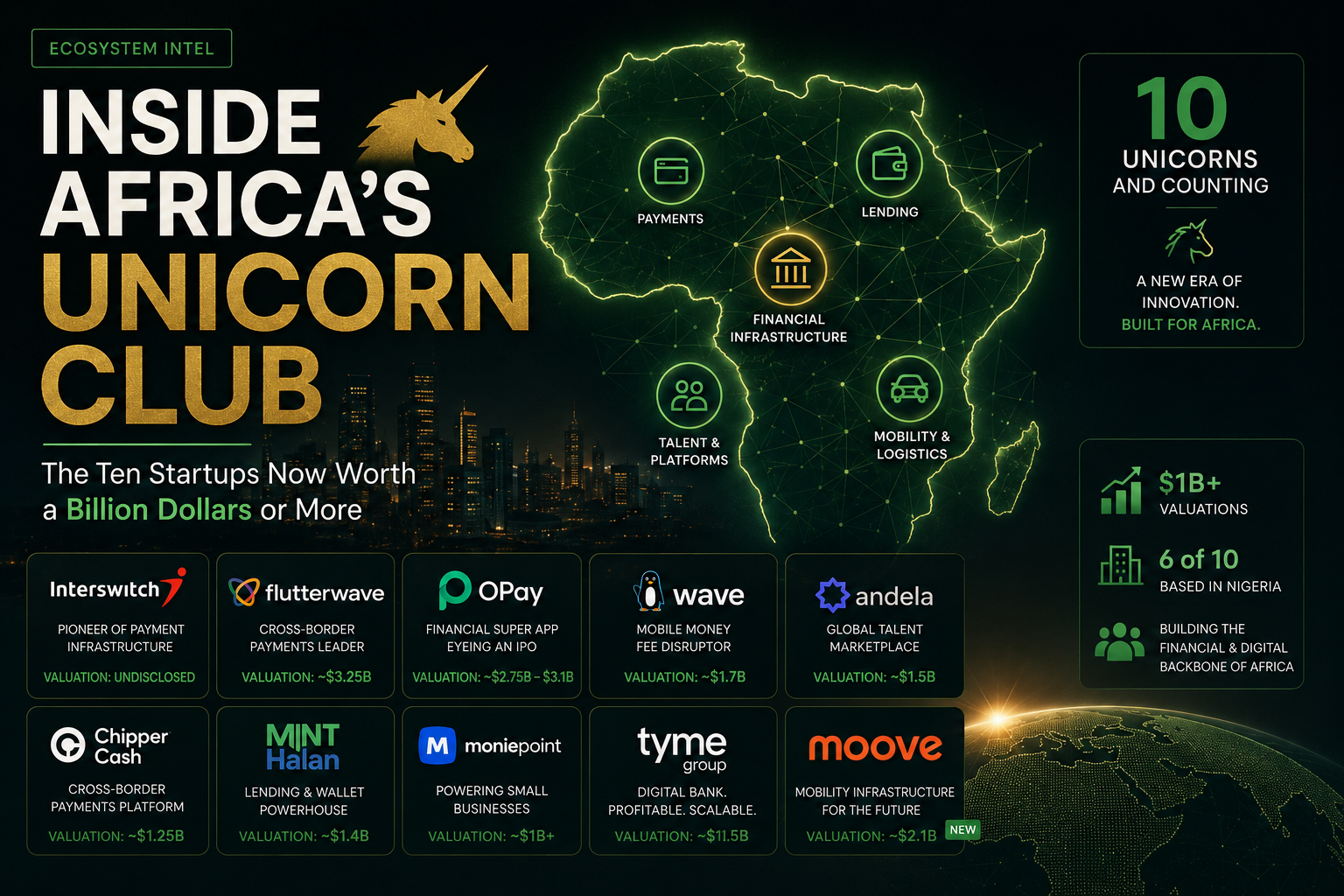
The Acquirer (Flutterwave): Led by Olugbenga “GB” Agboola, Flutterwave has spent the last decade building the “Rails.” With a footprint in over 30 countries and a unicorn valuation, they have the reach but needed the depth. GB’s strategy for 2026 is “Total Domination”—controlling every touchpoint of a transaction, from the moment a user identifies themselves to the moment the money settles.
-
The Target (Mono): Founded by Abdulhamid Hassan, Mono was often described as the “Plaid of Africa.” Despite a challenging global funding environment in 2024–2025, Mono maintained a high-velocity innovation cycle, facilitating over 8 million bank linkages (roughly 12% of Nigeria’s banked population). Hassan’s team will remain independent, acting as an “Innovation Lab” within the Flutterwave empire to avoid stifling their specialized engineering culture.
-
The Transaction Advisor: The deal was advised by Nichole Yembra and Chrysalis Advisors Africa, who were instrumental in bridging the gap between these two ambitious tech giants. For Mono’s investors (including Tiger Global and Y Combinator), this represents a “Quality Liquidity Event” in a market where cash exits have been rare.
The Three Pillars of the “New Flutterwave” Stack
The “New Flutterwave” (post-Mono) is built on three distinct technological pillars that redefine how businesses interact with the 2026 digital economy:
-
Pillar I: “KYC as a Breeze” (Onboarding): Verification that used to take days now happens in seconds. Using Mono’s “Lookup” and “Prove” APIs, Flutterwave can instantly verify government identities and bank account ownership. For an SME, this means they can start selling and receiving money the same day they sign up.
-
Pillar II: Recurring Revenue Reliability (Direct Debit): Businesses can now ask users to “Link their Bank Account” securely for subscriptions, insurance premiums, and loan repayments. This solves the high failure rate of card-based recurring billing (due to expired cards or insufficient funds). Mono’s direct-to-bank connection ensures that payments are pulled directly from the source with user consent.
- Pillar III: The Future of Stablecoins: A quiet but massive part of the 2026 strategy is the move into Open Banking-enabled Stablecoins. By linking Mono’s bank data with Flutterwave’s cross-border rails, they are building the infrastructure for a regulated, digital-currency corridor that allows for instant, authenticated cross-border trade without traditional banking delays.
From National Hubs to Continental Sovereignty
The acquisition isn’t just a “Lagos play”; it is about Pan-African Interoperability.
-
The Regional Expansion: Mono already had a presence in Ghana and South Africa. Flutterwave will use this footprint to standardize Open Banking across the continent. They are creating a unified digital market where a merchant in Accra can verify a customer in Johannesburg as easily as if they were in the same room.
-
The Regulatory Shield: As African central banks (like the CBN and CBK) roll out Open Banking Regulations, Flutterwave is now the only player with a seat at the table and the infrastructure to implement it at scale. They have moved from “following the rules” to “helping define the standards.”
-
The Global Exit Strategy: By consolidating the data and payment layers, Flutterwave is checking the final box for a 2027 IPO. To a Wall Street investor, a company that owns both the “Money Flow” and the “Identity Flow” is an “Infrastructure Utility”—making them much more resilient to market swings.
The Risks of “Platform Congestion”
-
The Monopoly Risk: Regulators may look at Flutterwave’s growing dominance with caution. If one platform owns the data, the identity, and the payments, “Antitrust” conversations could become a hurdle in late 2026.
- Operational Friction: Mono will remain independent to preserve its “Builder” culture, but “Strategic Alignment” is often harder than it sounds. If Flutterwave forces too much corporate bureaucracy on the Mono team, they risk losing the agility that made the acquisition attractive in the first place.
Index Report: Flutterwave-Mono Vitals
| Metric | Data | Strategic Significance |
| Transaction Value | $25M – $40M (All-Stock) | Signals a “Consolidation Wave” in 2026. |
| User Reach | 8M+ Linked Accounts | Instant data depth for Flutterwave’s credit products. |
| Core Utility | Account-to-Account (A2A) | Drastic reduction in reliance on global card rails. |
| Market Position | Vertical Integration | Moves Flutterwave from “Payment App” to “Infrastructure.” |
Sources & References
-
Vanguard News (Jan 8, 2026): Flutterwave acquires open banking startup Mono
-
Flutterwave Blog (Jan 5, 2026): Our Next Step to Redefining African Payments Through Mono
-
Ecofin Agency (Jan 7, 2026): Flutterwave Adds Open Banking With Mono Acquisition
-
Mono Blog (2026): Mono is Joining Flutterwave: A Vision for Open Banking