Nigeria’s economy is powered by a “Patchwork Grid”—a fragmented, chaotic mix of solar, batteries, and over 22 million diesel generators. This redundancy comes with a staggering tax: Nigeria’s manufacturing sector alone spent ₦1.11 trillion ($804M) on alternative energy in 2024, a 42% year-on-year surge. Today, April 10, 2026, a new signal has emerged from Lagos. PowerLabs, an energy-tech startup, has closed a pre-seed round led by Breega to attack the $20 billion annual generator fuel spend by building the continent’s first true “Intelligence Layer.”
From Reactive Monitoring to Active Orchestration
Most energy tools in Africa are “Passive”—they tell you that your power is out after the factory floor has already gone dark. PowerLabs is rejecting this model in favor of Automated Actuation.
-
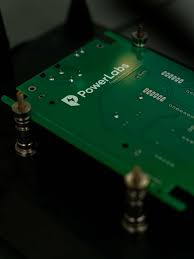
The “Pai Enterprise” Alpha: PowerLabs’ flagship platform isn’t just a dashboard; it’s a hardware-software hybrid that “thinks.” It senses supply fluctuations across the grid, solar, and diesel in real-time and automatically toggles loads to ensure the lowest cost per kilowatt-hour.
-
The Intelligence Layer: Instead of manual changeover switches, PowerLabs uses AI-enabled sensors to model a facility’s demand. If the solar output drops due to cloud cover, the system doesn’t just start a generator; it calculates if it can shed non-essential loads (like ACs) to keep critical machinery running on battery storage first.
-
The “Microgrid” Moat: By coordinating these distributed energy resources (DERs), PowerLabs allows a hospital in Kano or a data center in Lagos to operate as its own Intelligent Microgrid, independent of the national grid’s frequent collapses.
The $20B Market Opportunity
The “Big Signal” here is the sheer scale of the inefficiency PowerLabs is targeting. When businesses spend billions on fuel, they aren’t just buying energy; they are buying Uptime.
-
The Fuel Tax: With the removal of fuel subsidies and the volatility of the Naira, the cost of running a diesel generator has become a “Structural Ceiling” for Nigerian growth.
-
The “Sizing” Alpha: PowerLabs uses its data to help businesses “right-size” their infrastructure. Many firms overspend on massive generators they don’t need; PowerLabs’ analytics prove that with better orchestration, they can achieve the same uptime with 30% less hardware.
-
The Investor Backing: The round, led by Breega with participation from Catalyst Fund, Mercy Corps Ventures, and Kaleo Ventures, highlights a growing VC appetite for “Deep Infrastructure” plays that solve fundamental African productivity bottlenecks.
Decoupling Growth from the Grid
As we move into the middle of 2026, the reliance on the national grid is being viewed by “Neo-Industrialists” as a choice, not a mandate.
-
Sector Diversification: PowerLabs is already deployed across hospitals, banks, factories, and schools. In healthcare, the “Intelligence Layer” ensures that life-support systems never see the millisecond gap of a manual switch.
-
The Team Alpha: Founded by Tobechukwu Arize (CEO) and David Adebiyi (CTO), the team is building the “Connective Tissue” that was missing between the solar installer and the facility manager.
The “Hardware Fatigue” vs. “Software Savings”
-
The Installation Barrier: Unlike pure SaaS, PowerLabs requires physical hardware (the Pai Enterprise sensor) to be installed on-site. Scaling this requires a massive network of trained installers across Nigeria’s 36 states.
-
The “Legacy” Integration: Many Nigerian factories run on aging, analog machinery. PowerLabs’ success depends on its ability to continue making its high-tech “Intelligence Layer” speak the language of 20-year-old diesel engines.
The “Virtual Power Plant” (VPP) Era
By late 2026, PowerLabs isn’t just looking at individual buildings. The long-term vision is a network of Aggregated Energy. If 100 factories in an industrial cluster use PowerLabs, they can theoretically share excess solar or battery capacity with each other, creating a “Virtual Power Plant” that exists entirely outside the traditional utility model.
PowerLabs is proving that the answer to Nigeria’s power crisis isn’t just more “Power”—it’s more Logic. In the 2026 economy, the “Titan” is the one who stops the $20 billion leak.
Index Report: PowerLabs Pre-Seed Vitals
| Component | Status | Strategic Significance |
| Funding | Pre-Seed (Undisclosed) | Led by Breega; focused on Climate-Tech & Deep-Tech. |
| Headquarters | Lagos, Nigeria | Operating at the heart of Africa’s largest energy market. |
| Target Market | $20B Annual Fuel Spend | Attacking the inefficiency of diesel-led self-generation. |
| Core Moat | Pai Enterprise (AI-Orchestration) | Automated switching and real-time energy modelling. |
Sources & References
-
TechCabal (Apr 9, 2026): PowerLabs wants to make Nigeria’s grid think
-
The Next Africa (Apr 10, 2026): PowerLabs Secures Pre-Seed Funding to Improve Energy Reliability
-
BusinessDay NG (Apr 9, 2026): PowerLabs raises pre-seed funding to deploy AI energy platform across Nigeria
The “Index” Take: PowerLabs is building the “Operating System” for the African energy transition. In a world where the grid is no longer a given, software that can orchestrate a “Personal Power Grid” is the most valuable infrastructure on the continent.