For years, Mozambique’s vast gas reserves were “Potential” trapped behind a security and infrastructure wall. Today, April 10, 2026, following the official lifting of force majeure and the January 2026 project restart, that potential is becoming Kinetic. In Maputo, a new cluster of Digital Logistics Hubs has emerged, not as mere warehouses, but as high-fidelity data centers that manage the complex “Gas-to-Power” supply chain.
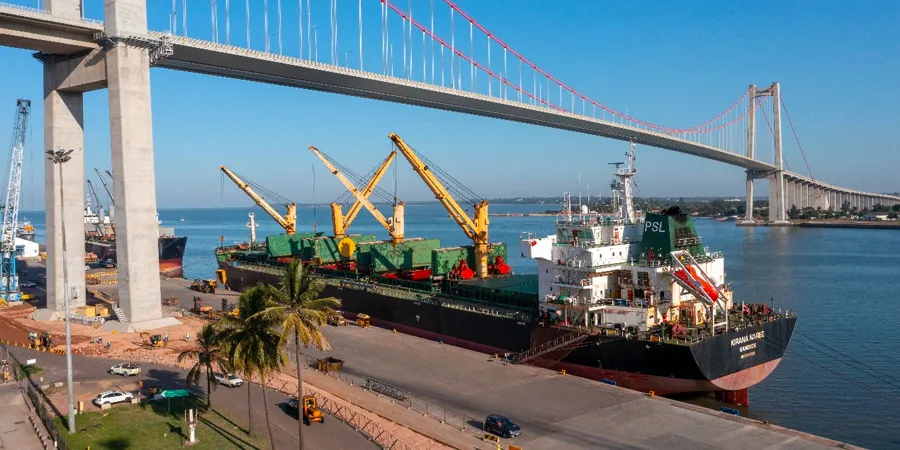
As the Port of Maputo handles a record-breaking 32 million tons annually, the signal is clear: In the 2026 economy, Mozambique is the logistics anchor for the entire SADC region.
The “Maputo Corridor” Alpha
The expansion of these hubs is driven by the Maputo Development Corridor (MDC), which connects the Mozambican coast to the industrial heartlands of South Africa, Zimbabwe, and Eswatini.
-
The “One-Stop” Alpha: These hubs are the first to deploy AI-driven customs clearing and one-stop border tech. By digitizing manifestos and tracking, the time for a truck to transit from the South African border to the Maputo Port has dropped by 40% since 2024.
-
The “Gas-to-Power” Moat: The hubs serve a specific mission: supporting the infrastructure for the Temane Energy Projects. This includes the transport of specialized turbines and high-voltage transmission equipment. These aren’t standard shipments; they require Precision Logistics that only a digital-first hub can coordinate.
-
The “Local Content” Mandate: As part of the $4.5 billion committed to local Mozambican firms by the LNG consortium, these hubs are incubators for domestic logistics startups, ensuring that the “Intelligence” of the supply chain is homegrown.
The “Gas Cliff” Opportunity
Southern Africa is approaching a “Gas Cliff” in mid-2026, where traditional supply from the ROMPCO pipeline is projected to decline. Maputo’s hubs are the “Pressure Valve” for this crisis.
-
The Virtual Pipeline Alpha: Because traditional pipelines take years to build, Maputo is scaling “Virtual Pipelines”—fleets of LNG-trucks coordinated via IoT sensors. These hubs act as the “Neural Centers” for these fleets, ensuring that gas reaches South African industrial hubs just-in-time.
-
The FDI Signal: Major players like DP World and the Port of Maputo Development Company are shifting from “Brick-and-Mortar” to “Port-Tech,” investing in automated container terminals that reduce human error and eliminate the “Logistics Leakage” that previously plagued the corridor.
The “EU-Africa Gateway”
In June 2026, Maputo will host RENMOZ 2026, the largest renewable energy and infrastructure conference in the region.
-
The Investment Pipeline: The focus is on linking European tech with Mozambican project pipelines. The digital hubs being built today are the “Vetting Ground” for these investors—they provide the data that proves Mozambique can handle high-complexity, multi-billion dollar energy components.
-
The “Blue Economy” Integration: These hubs are also being leveraged for the Blue Economy, using digital tracking to manage sustainable fishing and port services alongside energy logistics.
The “Security vs. Scale” Paradox
-
The Cybersecurity Risk: As the logistics chain becomes 100% digital, it becomes a target. Mozambique is currently rushing to update its National Cybersecurity Framework to protect these hubs from state and non-state actors who might want to disrupt the region’s energy flow.
-
The “Digital Divide” Gap: While Maputo is booming, the northern provinces (like Cabo Delgado) still lack the fiber-optic density needed to match this level of efficiency. The “Titan” hubs of the south must eventually bridge the 2,000km gap to the north to create a truly national network.
Toward the “Fifth Largest Exporter”
By late 2026, with the digital hubs in Maputo fully operational, Mozambique is on track to become one of the top six LNG exporters globally. The “Logistics Hubs” are the reason this gas won’t just be exported—it will be used to power a domestic industrial revolution.
Mozambique is proving that in the 2026 economy, the “Titan” is the one who controls the Flow. Maputo has moved from being a “Transit Point” to being the Regional Energy Switchboard.
Index Report: Mozambique Digital Logistics Vitals (April 2026)
| Component | Status | Strategic Significance |
| Project Status | Full LNG Restart (Jan 2026) | Unlocking $20B in infrastructure capital. |
| Port Throughput | 32M Tons (2025/2026) | Record highs driven by digital corridor efficiency. |
| Local Commitment | $4.5 Billion | Reserved for Mozambican firms in the supply chain. |
| Tech Focus | IoT & Virtual Pipelines | Solving the “Gas Cliff” with high-tech truck fleet management. |
Sources & References
-
TotalEnergies (Jan 29, 2026): Mozambique LNG announces the full restart of all activities
-
Club of Mozambique (Mar 17, 2026): Mozambique LNG project presents business opportunities in Maputo
-
Penresa (Apr 3, 2026): Mozambique: Africa’s Next Investment Frontier – Corridor Economics
-
African Energy Week (Apr 7, 2026): LNG and Infrastructure Align to Power Africa’s Industrial Decade
The “Index” Take: Maputo is no longer just a port; it’s a “Smart Port.” By digitizing the logistics of gas-to-power, Mozambique is ensuring that it doesn’t just sell its resources, but uses them to anchor the entire Southern African energy grid.