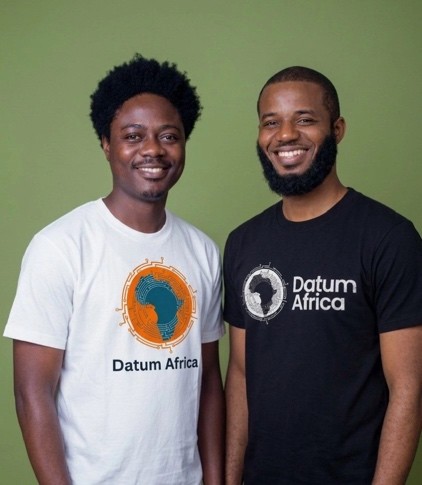
For decades, the primary friction in African AI development and policy-making has been the “Invisibility of Fact.” Decisions have been made using extrapolated global models rather than localized, high-fidelity datasets. Datum Africa, launched in April 2026, is engineering the “Inverse Flip.”
By committing to unlock 10 million datasets by 2036, the initiative is creating the Primary Rail for African AI Training. This isn’t just about volume; it’s about Provenance—ensuring that African data is owned, verified, and accessible to the builders, researchers, and policymakers who need it most.
The 10-Million Dataset Roadmap
Datum Africa operates as a “Clearing House” for the continent’s digital artifacts, moving beyond static, siloed information into Machine-Readable Intelligence.
The Scale: A decade-long roadmap to aggregate data across every high-signal sector, from precision agriculture to urban mobility and genomic health.
Decentralized Discovery: Utilizing a decentralized engine that allows for the discovery of disparate datasets without compromising the security of the original sources.
Verification Standards: Implementing rigorous “Quality of Signal” standards that ensure datasets are accurate, ethically sourced, and formatted for immediate computational ingestion.
Powering the “Local-First” AI
The utility of 10 million datasets is found in the Accuracy of the Model. In 2026, the global AI arms race has shifted toward “Niche, High-Quality Data,” and Africa is the world’s largest untapped reserve.
SME Empowerment: Access to localized market and consumer data allows small-scale founders to build products with “Institutional-Grade” precision, reducing R&D costs by up to 40%.
Predictive Governance: Governments can transition from “Reactive” to “Predictive” models, using Datum Africa rails to simulate the impact of infrastructure, climate, and health interventions.
AI Training Sovereignty: Academic institutions and local tech hubs can bypass “External Data Debt” by utilizing locally hosted and verified datasets for Large Language Models (LLMs) that actually understand African contexts.
Alignment with the African Data Act
This initiative serves as the physical manifestation of the AU Data Policy Framework. It represents a shift toward “Data Dignity,” where the value generated from African information stays within the continental ecosystem.
Ecosystem Resilience: By building a “Single Source of Truth,” Datum Africa reduces the cost of entry for new startups, fostering a “Commons-Based” innovation model.
Global Standing: This mission positions Africa not just as a “consumer market,” but as an Intelligence Hub that the rest of the world must plug into to understand the 21st-century Global South.
The 10-Year Diagnostic
| Pillar | Status (2026) | 10-Year Target (2036) |
| Dataset Volume | 50,000+ (Launch Phase) | 10,000,000 |
| Focus Sectors | Agri-tech, Health, FinTech | All High-Signal Verticals |
| Model Type | Open Access / Federated | Decentralized Data Discovery |
| Key Impact | Reduced R&D for Startups | Full Data Sovereignty |
Index Report: Key Stakeholders (2026)
The Architect: Datum Africa Initiative.
The Policy Anchor: AU Data Policy Framework / African Data Act.
The Beneficiaries: African Founders, Researchers, and Policy Architects.
The Infrastructure: Open-Source Decentralized Discovery Protocols.
Sources & References
News Coverage: Datum Africa wants to open 10m African datasets in 10 years — Vanguard, April 2026
Official Portal: Datum Africa: The African Data Discovery Engine
Policy Context: The African Union Data Policy Framework: Scaling African Data Sovereignty
The “Index” Take: In 2026, data is the new “Land.” You either own it, or you are a tenant on someone else’s server. Datum Africa is effectively the “Surveyor-General” of the new African economy. By aiming for 10 million datasets, they are building the “Infrastructure of Fact” that will power every AI, every smart city, and every sovereign decision on the continent for the next century.