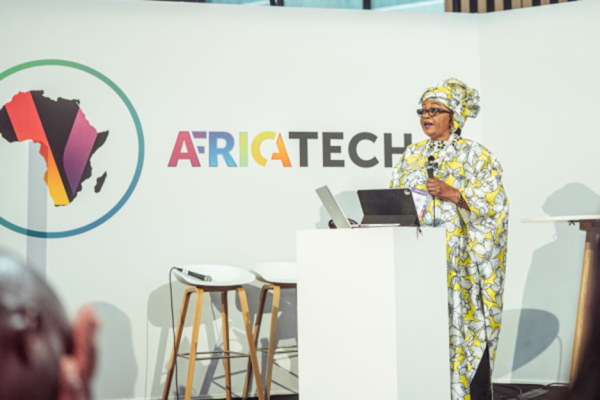
Senegal has made a definitive move to challenge the structural imbalances of the African venture capital landscape. At VivaTech 2026 in Paris, the Senegalese government—via its Rapid Entrepreneurship Delegation for Women and Youth (DER/FJ)—officially launched the $50 million Catalyst DER/FJ fund.
Announced by General Delegate Aïda Mbodji on the AfricaTech stage, the new investment vehicle is designed to deploy early-stage capital directly into Senegalese startups operating at the high-risk pre-seed and seed phases. The fund represents a public-sector intervention aimed at addressing the “missing middle” in Francophone West Africa, where brilliant technical concepts frequently collapse before reaching minimum viable product (MVP) status due to a local capital drought.
The Growth Bottleneck: Africa’s 1.5% Seed Disparity
The macroeconomic rationale driving the Catalyst DER/FJ fund is rooted in a severe structural distortion within the broader African tech ecosystem. While late-stage Series A and B rounds frequently capture global headlines, the foundation of the pipeline is deeply starved.
Data compiled by market intelligence platform Africa: The Big Deal highlights a stark capital allocation deficit across the continent:
| Metric | African Venture Ecosystem | United States Venture Ecosystem | The Structural Impact |
| Seed Financing Allocation | 1.5% of total capital raised | 4% to 6% of total capital raised | Early-stage African founders face a 3x to 4x harder path to initial funding. |
| Capital Focus | Over-indexed on late-stage, de-risked operations. | Balanced distribution across the corporate lifecycle. | Hyper-fragmentation at the ideation stage; high mortality rates for early MVPs. |
| Primary Funding Source | Heavily reliant on foreign DFIs and international VCs. | Deep domestic angel and institutional seed networks. | Local market nuances are often lost in international investment mandates. |
Because international capital pools typically wait for proven traction, local founders find themselves trapped in a paradox: they cannot secure international capital without metrics, and they cannot build the product to generate those metrics without initial funding.
Overturning the Playbook: Public Capital as a Risk Mitigator
Senegal’s strategy relies on deploying public sovereign capital to absorb early-stage risk, creating a crowding-in effect for private institutional investors. Rather than acting as a traditional bureaucratic grant program, the Catalyst DER/FJ fund functions as an agile commercial vehicle.
“Seed financing remains the cornerstone of African innovation, yet it is often overshadowed by massive fundraising rounds. Entrepreneurs frequently face a shortage of capital precisely when teams remain incomplete and products remain at an early development stage.”
— Grégoire de Padirac, CEO of Digital Africa (AFD-Proparco Group)
By anchoring the pre-seed tier with $50 million, the fund aims to achieve three strategic outcomes:
-
Validation Subsidies: Funding technical prototyping, initial engineering hires, and market validation testing.
-
Co-Investment Leverage: Providing clear matching-fund frameworks that allow private regional angel networks to reduce their individual risk exposure.
-
Ecosystem Protection: Preventing early-stage dilution where founders are forced to give away excessive equity slices to predatory local actors just to keep the lights on.
From Framework to Pipeline: The VivaTech Showcase
To demonstrate the immediate readiness of Senegal’s innovation pipeline, five homegrown startups accompanied the state delegation to Paris, pitching directly to international GPs and LPs upon the fund’s conclusion:
-
Andakia: Developing localized software solutions tailored to regional enterprise operational inefficiencies.
-
Baamtu: An established regional pioneer in applied artificial intelligence and natural language processing (NLP) tailored for African languages.
-
SenITI: Accelerating digital transformation and systems integration frameworks across the public and private sectors.
-
FAJMA: Building localized digital supply chain and transactional solutions to modernize informal retail markets.
-
Absar: Creating targeted software platforms addressing systemic access and delivery issues within the regional economy.
The Index Take: Execution Is the True Metric
The Catalyst DER/FJ fund is a highly necessary departure from passive policymaking. For years, African tech ecosystems have relied almost entirely on foreign venture funds to determine which local problems are worth solving. By stepping in with a $50 million public anchor focused entirely on pre-seed and seed stages, Senegal is attempting to take sovereignty over its own tech pipeline.
However, deployment velocity and fund governance will dictate its ultimate success. Government-backed funds are historically vulnerable to bureaucratic friction and delayed disbursement cycles—fatal realities for a pre-seed startup with only three months of cash runway. If DER/FJ can insulate this fund’s decision-making architecture from political cycles and run it with the speed of an institutional seed fund, Senegal may successfully build a blueprint for how state capital can structurally derisk the next generation of African technology leaders.
Sources & Reference Context
-
[1] We Are Tech Africa: Senegal Launches $50 Million Fund to Close Startup Financing Gap
-
[2] Tech In Africa Ecosystem Analysis: Senegal Mobilises $50 Million to Plug the Pre-Seed Funding Gap in Francophone West Africa
-
[3] Africa News Agency Intelligence: Senegal: DER/FJ launches $50 million fund for startups at VivaTech
-
[4] Africa: The Big Deal Research: Ecosystem Data Briefing on African Seed Capital Realities (1.5% Threshold)