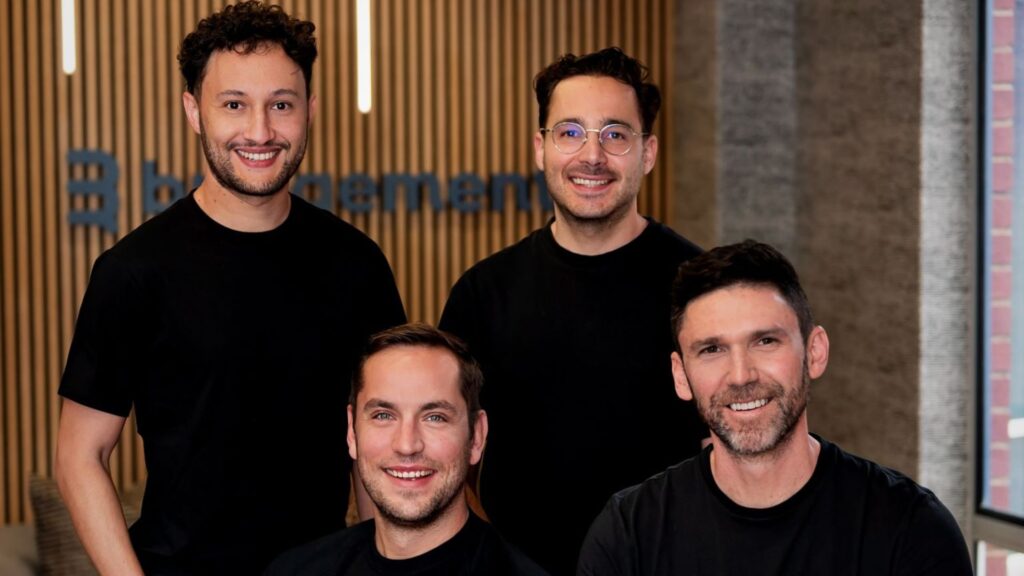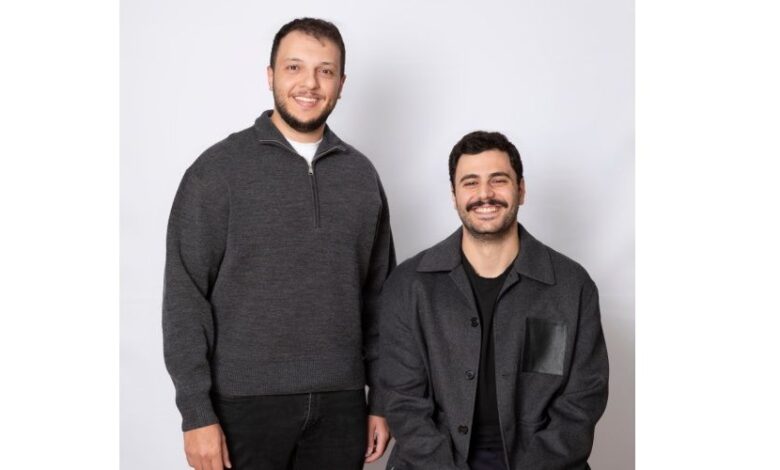
The latest cap table in applied artificial intelligence tells a fascinating story about where global capital is moving. A $30 million Series A round for a one-year-old startup, led by Silicon Valley’s highly selective Lux Capital and backed by the Saudi Public Investment Fund’s Sanabil Investments, says more about the future of geopolitics and tech than any tech conference keynote.
The company is 1001, a London- and GCC-based enterprise founded in 2025 by Bilal Abu-Ghazaleh after his departure from Scale AI. This funding round—which brings 1001’s total capital to $39 million—underlines a massive shift in market conviction: the next decade of AI value will not be won by general-purpose chatbots, but inside the high-stakes control rooms governing global trade, aviation, and energy grids.
The Thesis: Renting Software vs. Owning Sovereignty
For years, the Gulf Cooperation Council (GCC) has been treated by global technology giants as a lucrative target market for imported software. But as artificial intelligence graduates from simple text generation to running physical utilities, the risks of relying on external, off-shore cloud infrastructure become a national security liability. If a foreign software provider changes its terms of service or faces a geopolitical embargo, an economy cannot afford to have its ports or airports go dark.
1001’s core investment thesis treats sovereignty as an operational strategy. By building, housing, and governing AI systems entirely within local infrastructure, regional operators retain complete control over their physical workflows. According to McKinsey, this systematic deployment of AI across heavy industry and infrastructure could inject up to $150 billion into GCC economies—equivalent to roughly 9% of the region’s combined GDP.
The Capital Stack: Tracking 1001’s Capital Ingestion
This Series A combines Tier-1 Western venture capital with local sovereign backing and elite engineering operators, creating a highly strategic distribution of network influence.
| Funding Round | Date | Amount | Key Institutional Backers | Strategic Focus |
| Seed Round | October 2025 | $9 Million | CIV, General Catalyst, Lux Capital | Core architecture build and early recruitment from Stanford, Yale, and Carnegie Mellon. |
| Series A | June 2026 | $30 Million | Lux Capital (Lead), Sanabil Investments, 9Yards, Hanabi | Commercial go-to-market scaling across Saudi Arabia and the UAE; productization of enterprise models. |
| Total Pool | Cumulative | $39 Million | Includes follow-on from General Catalyst, CIV, and Chris Ré. | GTM velocity and engineering expansion to drive international product delivery. |
The Operational Mechanics: Building the Industrial Digital Twin
Rather than trying to train massive, open-ended large language models from scratch, 1001 deploys its technology as an intelligence layer that sits directly on top of an operator’s existing telemetry, supervisory control, and data acquisition (SCADA) systems. It processes data through a structured operational loop designed to pre-empt system failures:
The Investigative Caveat: Escalating Beyond the Service Trap
Despite the impressive funding metrics, a deep look into 1001’s operational model reveals a classic structural tension that frequently plagues early-stage industrial AI startups.
According to investigative reporting from Semafor, 1001’s current deployment strategy relies on temporarily embedding its own elite engineers directly inside the offices of Gulf airlines, port operators, and shipping conglomerates to manually co-develop products and patch operational friction points.
This approach creates a clear strategic trade-off:
-
The Advantage: Embedding engineers gives 1001 unprecedented, high-trust access to proprietary operational data and complex industrial setups that traditional SaaS companies can never replicate.
-
The Risk: Heavy on-site implementation makes it incredibly difficult to escape the gravity of a low-margin, slow-scaling IT consulting model. Concentrated books of state-linked enterprise accounts introduce a unique, highly political risk profile compared to highly diversified, commercial software businesses.
The 12-Month Product Anchor
The real test for Bilal Abu-Ghazaleh and his team lies in their ability to standardize the custom code written inside the Gulf’s busiest ports and aviation hubs. 1001 has set a public timeline to begin exporting these generalized, sovereign industrial products to international markets outside the GCC within the next 12 months.
If they can successfully transform an embedded services model into a highly scalable, repeatable software product, they will have cracked the code for scaling heavy-industry AI. If they fail to generalize the software, they risk becoming a highly specialized, elite defense and utility consultancy for the Gulf—profitable, but falling short of the rapid, exponential scale expected of a Lux-led venture bet.