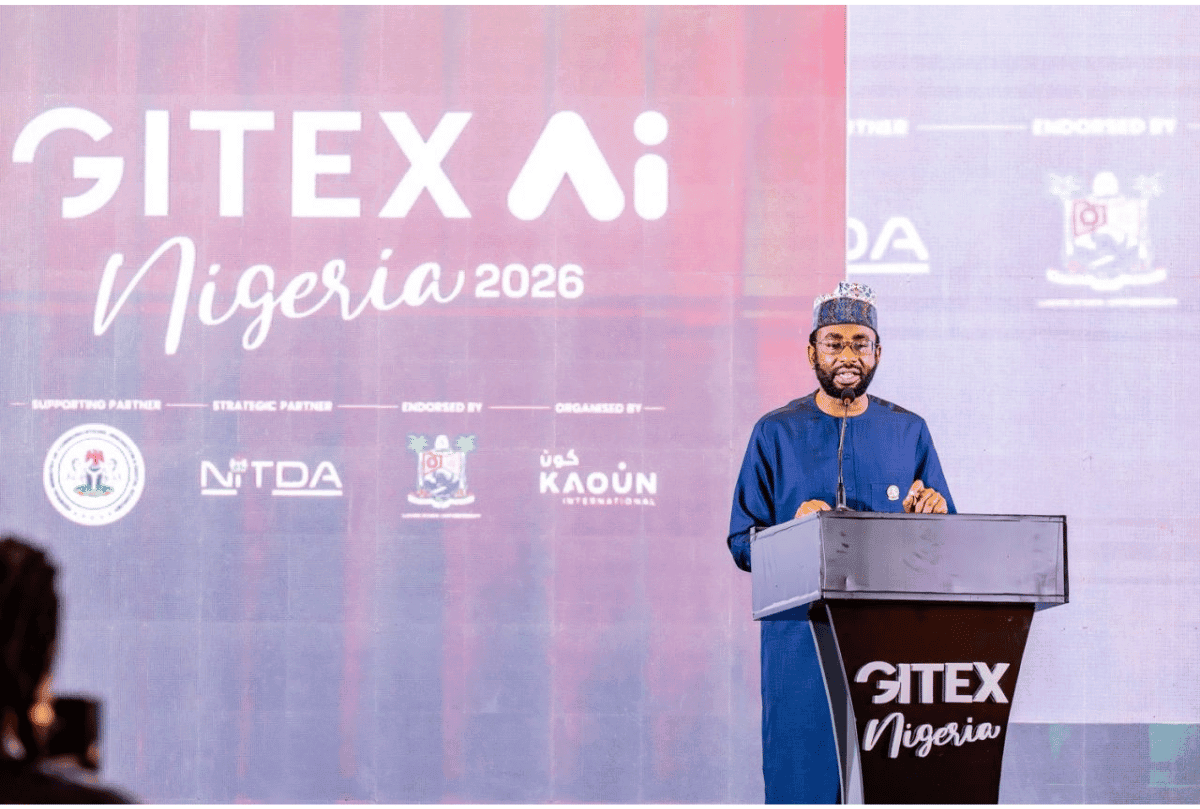
Nigeria used the opening of GITEX Nigeria 2026 to make its clearest public case yet for treating artificial intelligence as a matter of national sovereignty rather than just another wave of consumer technology. Speaking at the event’s opening in Abuja, National Information Technology Development Agency Director-General Kashifu Inuwa Abdullahi delivered a blunt warning to the room of ministers, governors, regulators, and technology leaders in attendance: whosoever controls the AI can hold us hostage.
AI as Infrastructure, Not a Tool
Inuwa’s central argument was that Nigeria has been thinking about artificial intelligence too narrowly. AI, he said, should no longer be viewed simply as another technological tool, but treated as strategic, sovereign infrastructure on par with anything else the country considers essential to its national security and economic resilience. That framing extends across the entire technology stack rather than stopping at the AI models themselves. Inuwa argued that real AI sovereignty has to include internet connectivity, computing capacity, data centres, cloud infrastructure, and data governance, alongside the models people usually picture when they hear the term artificial intelligence. Ownership of any single layer without the others, in his telling, isn’t real sovereignty at all.
Why the Stakes Are Concrete, Not Abstract
Inuwa was careful to make the risk specific rather than theoretical. AI systems, he noted, increasingly generate the intelligence governments and institutions rely on to understand their own economies, citizens, and security environment. When the algorithms shaping something as consequential as financial access, national security decisions, or healthcare diagnostics are designed entirely in foreign jurisdictions, African institutions using those systems are effectively surrendering a meaningful degree of their own autonomy, whether or not that surrender is ever made explicit. That’s the reasoning behind his warning about being held hostage: dependency on foreign-controlled AI infrastructure isn’t just a cost or an inconvenience, it’s a vulnerability that can be exercised against the country relying on it.
A Concrete Commitment Behind the Words
Rhetoric about sovereignty is easy to deliver at a conference and considerably harder to back up with capital, which makes the announcement paired with Inuwa’s remarks worth taking seriously. The federal government confirmed plans to roll out a 90,000-kilometre fibre-optic network starting in October, described by officials as the backbone needed to actually support AI, data centres, digital identity systems, and cloud services at national scale. Inuwa framed the stakes historically, arguing that Nigeria and Africa could not afford to miss the opportunities presented by the Fourth Industrial Revolution the way the continent missed the first three. A fibre rollout of that scale is exactly the kind of underlying physical investment that separates sovereignty as a stated policy goal from sovereignty as something a country actually has the infrastructure to exercise.
Nigeria Isn’t the Only Voice Making This Case
Inuwa’s remarks landed alongside a broader chorus at the same event. Nigeria’s Secretary to the Government of the Federation used his own platform at GITEX to push government institutions, investors, developers, and the private sector to treat the event as a venue for practical partnerships rather than more rhetoric, arguing that Nigeria already has significant pieces of the infrastructure, expertise, and partnerships it needs, and simply requires stronger collaboration to put them to use. Minister of Communications, Innovation and Digital Economy Bosun Tijani struck a similar note, framing the government’s ambition as transforming Nigeria from a consumer of foreign technology into a genuine producer and exporter of digital technologies and AI solutions. Inuwa himself pointed to specific initiatives already underway toward that goal, including the DL4ALL digital literacy programme, the 3 Million Technical Talent initiative, and Project BRIDGE, positioning them as the practical groundwork sovereignty rhetoric needs to actually stand on.
Part of a Bigger Continental Pattern
Nigeria’s sovereignty push doesn’t exist in isolation. Just this week, MTN Group announced a partnership with a Dubai-based investor to build AI-ready data centre capacity in Nigeria and South Africa, while a separate $75 million project in Cameroon is pairing an AI data centre with its own dedicated power plant specifically to solve the electricity reliability problem that undermines high-performance computing across much of the continent. Read alongside those developments, Nigeria’s fibre rollout and sovereignty messaging look less like an isolated national talking point and more like one country trying to move first and loudest in a race several African governments are now running simultaneously: building the physical and regulatory foundation to control AI infrastructure locally, rather than renting all of it from outside the continent indefinitely.
The Real Test Still Ahead
Nigeria’s own Secretary to the Government of the Federation effectively named the risk in his own remarks: the difference between rhetoric and results is exactly where initiatives like this tend to stall. A 90,000-kilometre fibre commitment and a forceful speech about sovereignty are a meaningful starting point, not a finished outcome. Whether Nigeria’s AI sovereignty agenda becomes something the country genuinely controls, rather than another well-articulated ambition still waiting on execution, will be decided over the next several years of fibre construction, data centre investment, and policy follow-through, not by anything said from a stage in Abuja this week.