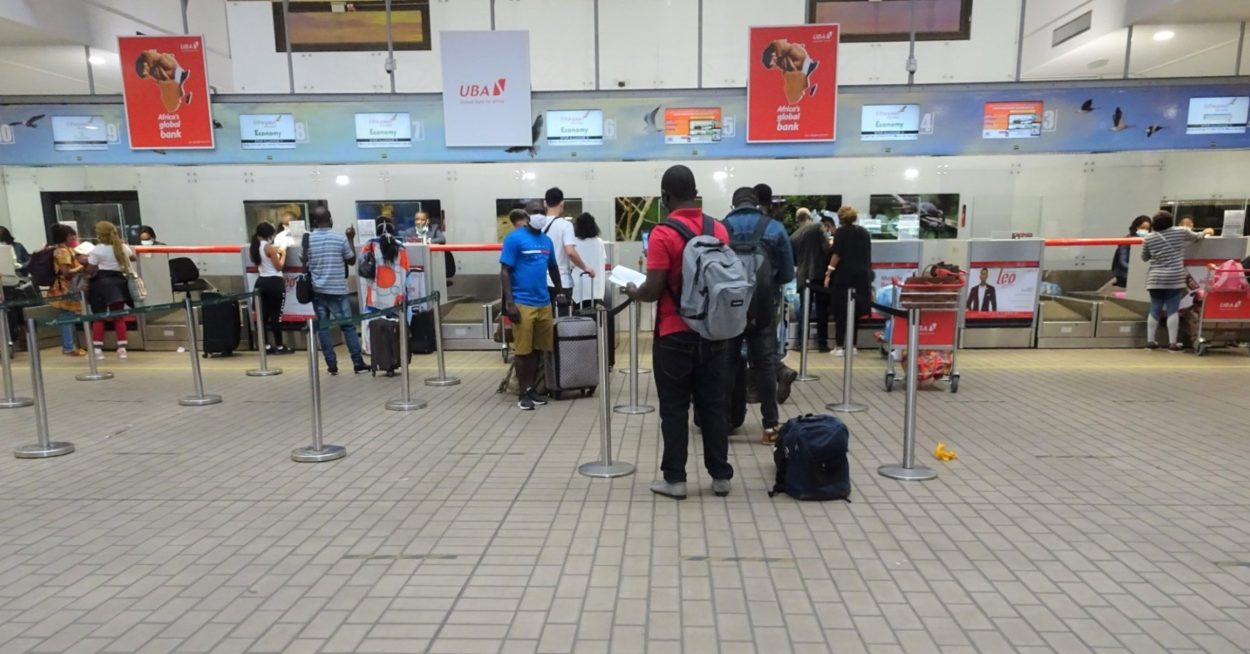
Before your flight reaches Libreville, a border officer may already know who you are, where you booked from and where you are going. Gabon is putting a system in place to make that routine, and passengers will pay $30 each for it.
Gabon is preparing to switch on a digital system that checks the details of international travellers before they arrive. On 12 October, Transport Minister Ulrich Manfoumbi Manfoumbi visited the equipment at Léon-Mba International Airport in Libreville to speed up its launch. The system is supplied by a US company, Securiport LLC, and paid for by a $30 fee on international tickets. Airlines say they were not consulted, and the fee is already contested.
The system is called API-PNR. API stands for Advance Passenger Information, which covers a traveller’s identity and flight details, collected at check-in. PNR stands for Passenger Name Record, the booking data that shows an itinerary. Airlines send both to the authorities, who can then spot profiles that need extra checks before the plane lands. Gabon says the aim is to prevent terrorism, drug trafficking and other cross-border crime. ICAO, the global aviation body, sets standards for this kind of screening.
How it is set up. The government signed a concession deal with Securiport in May 2026. The company supplies the equipment, software and services for collecting and processing passenger data. The plan covers three international airports: Libreville, Port-Gentil and Mvengué, which serves Franceville. In Libreville the equipment is installed, but it is not yet running. We found no launch date.
How it is paid for. Two orders adopted on 10 June 2026 create a $30 fee, about 17,400 FCFA, on international commercial flights leaving or arriving at Gabonese airports. Airlines collect it when they issue tickets. It pays for installing, running and maintaining the platform. Transit and connecting passengers, children under two and crew are exempt. If the fee applies on both the departure and the arrival, our reading is that a round trip from Gabon would carry $60, though we have not seen that confirmed.
What the airlines say. The International Air Transport Association (IATA) wrote to the minister on 6 August. It does not oppose passenger screening in principle. It objects to how this one is funded. Its main points:
- Airlines were not consulted, and the cost has not been clearly justified.
- The fee is due before the system is working, which IATA says goes against the ICAO principle that users should pay only for services they receive.
- At $30, IATA calls it one of the highest fees of its kind in the world, and warns it could cut demand and weaken Gabon’s air links.
- IATA wants the fee suspended, a formal talk with airlines, and three to six months to adapt once the technical rules are published.
We found no public reply from the Gabonese government.
What we could not confirm. Gabon has not published its contract with Securiport, so we do not know how the $30 is divided or how long the concession lasts. We also found no detail on how long passenger data will be kept, who can see it or whether it can be sent abroad. IATA raised exactly those questions. The minister has said the system needs trained staff and rigorous use of data, and the original report adds that the system will only work if officers can act on the alerts it produces.
There is a pattern worth knowing. Securiport has similar deals elsewhere in Africa. In the DR Congo, a leaked contract in November 2025 sparked a row over a $30 fee, and an official said the money would be split 85% to Securiport and 15% to the state. In the Gambia, the government asked its justice ministry in 2022 to review a contract that charges passengers $20. We do not know whether Gabon’s terms match either.
Why it matters. For travellers, the cost lands in the ticket price. For airlines, it can make Libreville a less attractive route. For businesses in tourism, events and trade, higher fares can reduce visitors. And for every passenger, the data question is real: when a government and a foreign company hold your travel records, the rules on storage and access matter as much as the fee.
What to watch next: whether Gabon sets a launch date, whether it answers IATA or suspends the fee, and whether it publishes the contract terms and data rules.
Sources: Gabonreview on the minister’s visit to Léon-Mba; Gabonreview on IATA’s objection; Gabon Media Time on IATA’s request to suspend the fee; Sika Finance on the dispute and the 21 May contract; Ecofin Agency on the DR Congo Securiport fee; The Point on the Gambia review.
A note for startup founders: Don’t practice on investors. Practice on AI first. RaiseReady by Index Prima is an AI fundraising simulator for African founders: upload your pitch deck, get a readiness score and face a tough AI investor before the real meeting. Find this post, and every post we publish, at raiseready.indexprima.com.