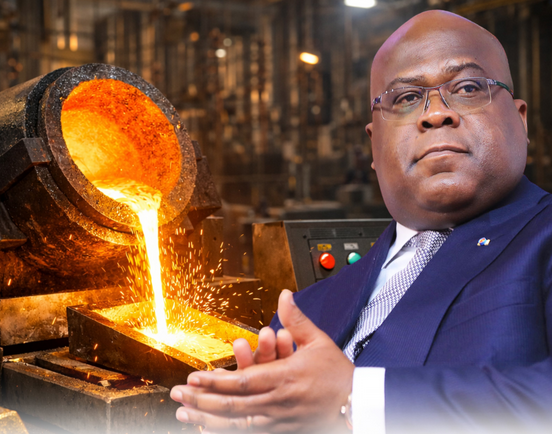
For decades, the Democratic Republic of Congo (DRC) has been a paradox of the global economy—holding vast mineral wealth that largely fuels the international market while slipping through informal, often illicit, back-channels. On March 11, 2026, that narrative began to shift with the official inauguration of the DRC Gold Refinery S.A. in Kalemie, Tanganyika Province.
This is not just another industrial plant; it is a high-tech “Digital Gatekeeper.” By integrating blockchain-based tracking into a 600kg-per-month pilot, the DRC is making its first serious play for the “Green-Tech” supply chain, where ethical provenance is as valuable as the metal itself.
1. The Infrastructure: From Extraction to Bullion
The Kalemie refinery, a strategic partnership between state-owned DRC Gold Trading S.A. and Lunga Mining, is the first of its kind to be backed by the national government.
-
Capacity: The pilot unit processes between 500 and 600 kilograms of gold per month.
-
Standardization: For the first time, the DRC is producing gold bars with a 99.9% purity level, meeting the stringent “Good Delivery” standards required by international bullion markets.
-
Economic Sovereignty: By refining locally, the DRC captures the industrial margin previously lost to refineries in Dubai or neighboring East African hubs, turning Kalemie into a strategic regional center.
2. The Tech Moat: Blockchain Provenance
The true “disruptor” here is the integration of a Blockchain-Based Traceability System. This tech stack addresses the industry’s biggest pain point: “Conflict Minerals.”
-
Digital Passports: Each batch of gold is assigned a unique digital identity (Digital Product Passport) at the point of purchase from artisanal cooperatives.
-
Immutability: Every step—from smelting into branded ingots to final export—is recorded on a decentralized ledger. This creates a tamper-proof audit trail that satisfies OECD Annex II and EU Critical Minerals Act regulations.
-
Direct Payments: The system allows for transparent pricing and traceable payments directly to local miners, cutting out predatory middlemen and ensuring a “Data with a Conscience” approach.
3. The Big Picture: Chasing the 18-Ton Target
The Kalemie pilot is the lead project in an aggressive 2026 roadmap.
-
Volume Targets: The government aims to formalize and export between 15 and 18 metric tons of artisanal gold this year—a massive jump from the 10 tons officially traded over the last three years combined.
-
The Central Bank Play: Under a new agreement signed in February 2026, the Central Bank of Congo (BCC) has priority access to this refined gold to build up national foreign exchange reserves, stabilizing the Congolese Franc.
Strategic Performance Metrics
| Feature | The Legacy Model (Pre-2026) | The “DRC Gold Refinery” Model |
| Output | Raw Ore / Smuggled Dust | 99.9% Pure Certified Bullion |
| Traceability | Paper-based / Speculative | Blockchain-Verified Ledger |
| Pricing | Middleman Dictated | International Benchmark-Linked |
| Economic Value | Exported to Foreign Refineries | Captured Locally in Kalemie |
Sources & References
-
Business Insider Africa (March 12, 2026): DRC unveils first-ever gold refinery with 500-600kg monthly output as it boosts local processing
-
Ecofin Agency (March 13, 2026): DRC Launches Pilot Gold Refinery in Kalemie to Capture More Value Locally
-
Mining.com (March 12, 2026): Congo state company launches country’s first gold refinery
-
Financial Afrik (March 13, 2026): DRC launches its first pilot gold refinery with a capacity of 600 kg per month
The DRC is moving from a model of “extraction and export” to one of “refinement and regulation.” By leveraging blockchain to de-risk its gold, Kinshasa is finally making its minerals “bankable” for the ESG-conscious global investor.