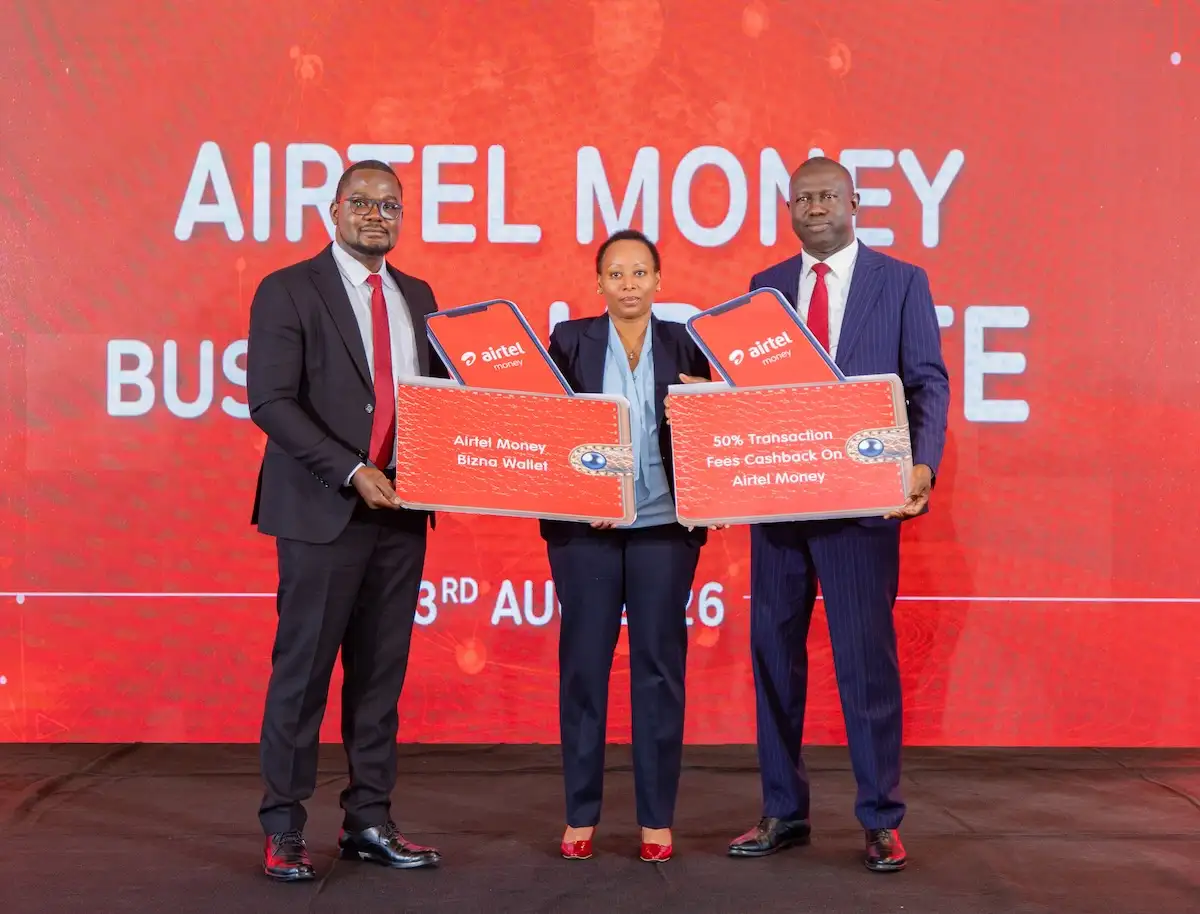
Airtel Money Kenya has entered the merchant-payments race in earnest, unveiling Bizna Wallet, a dedicated business account built to help the country’s micro, small, and medium enterprises keep customer cash separate from personal funds. The product went live on August 3 in Nairobi, positioning Airtel as a direct challenger to Safaricom’s long-dominant Pochi la Biashara.
What Bizna Wallet Actually Does
At its core, Bizna Wallet solves a problem familiar to nearly every kiosk owner, market trader, and boda boda rider in the country: business income and household money living in the same mobile wallet. The new product runs as a second wallet linked to an existing Airtel Money line, letting entrepreneurs receive customer payments, track daily sales, pull mini-statements, and move money between their personal and business balances — all without new SIM cards, hardware, or a separate registration process.
Activation is deliberately frictionless. Customers dial *334# or open the My Airtel App, select Bizna Wallet, and they’re in business. Airtel is also waiving fees on incoming payments up to KSh 250,000, a pricing move clearly aimed at winning over traders who’ve grown used to Safaricom’s merchant ecosystem.
Speaking at the launch, Airtel Money Kenya’s Acting Managing Director, Michael Bonke, said the idea grew directly out of conversations with entrepreneurs who struggled to separate business income from household funds — and that the goal now is to get “every Kenyan, every business” onto the platform.
A Cashback Sweetener, Too
Bizna Wallet didn’t launch alone. Airtel simultaneously revamped its Rudishiwa loyalty programme, moving away from airtime-based rewards toward a straightforward 50% cashback on eligible transactions of KSh 101 (about $0.78) and above. The cashback lands in a dedicated wallet and covers bill payments, bank transfers, and transfers to both other mobile money networks and bank accounts — effectively lowering the real cost of moving money through Airtel’s rails.
Why the Timing Matters
Kenya’s mobile money market is large and still expanding: Communications Authority data puts subscriptions at over 53 million as of the first quarter of 2026, with registered agents up more than 20% year-on-year. Separately, Mastercard’s SME Confidence Index found that 95% of Kenyan SMEs now accept mobile payments — a signal that basic acceptance is no longer the battleground; bookkeeping, cash-flow visibility, and cost of transacting are.
That’s exactly the terrain Bizna Wallet is built for, and it’s also where Safaricom has built a formidable moat. Pochi la Biashara has had a roughly six-year head start and counts over 2 million registered merchants. Airtel, by contrast, holds close to 11% of the mobile money market — a distant second, but not a negligible base to build on, especially with a zero-fee pitch and a cashback programme layered on top.
The Bigger Picture
MSMEs aren’t a side note in Kenya’s economy — they’re arguably its backbone. Research from Strathmore University Business School puts MSME employment at nearly 15 million people, over 90% of registered private enterprises, and roughly a third of national GDP. Any product that meaningfully improves how that segment manages cash flow has outsized reach, which is likely why both Airtel and Safaricom are now competing as much on financial tooling as on network coverage.
Whether Bizna Wallet moves the needle against an entrenched incumbent remains to be seen. But the launch is a clear signal that Kenya’s mobile money competition has shifted from simply acquiring users to deepening merchant relationships — and that the next battleground for East Africa’s telcos will be won or lost inside the business wallets of its smallest traders.