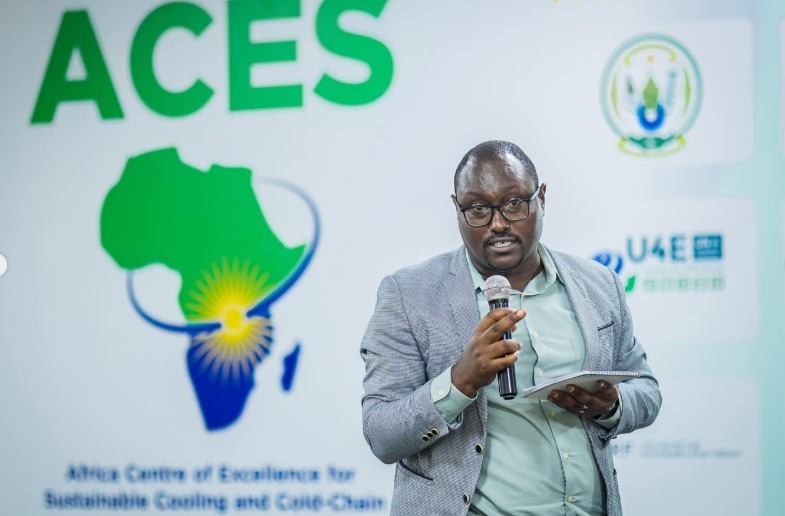
In the global race for digital supremacy, the most critical “layer” of the economy is often invisible. It isn’t found in a server farm or a fiber optic cable, but in the temperature-controlled corridors that keep a nation fed and healthy. As of March 2026, Rwanda has officially stepped into its role as the continent’s primary architect for this infrastructure, turning a 4.8-hectare campus in Kigali into a Pan-African engine for survival.
The Africa Centre of Excellence for Sustainable Cooling and Cold-chain (ACES) is no longer a pilot project—it is a live industrial benchmark. By tackling the staggering 12% of GDP lost annually to food spoilage and inefficient cooling, Rwanda is creating a blueprint for the “Integrated Supply Chain” that the rest of the world is now watching.
1. The “Hub and Spoke” Model: Exporting Intelligence
The genius of Rwanda’s strategy lies in its refusal to be an isolated island of innovation. ACES operates on a Hub and Spoke system designed for rapid, continental scale.
The Kigali Hub: This is the brain of the operation—a world-class testing and certification center where “Tested in Africa, for Africa” becomes a reality. It houses the Environmental Test Centre (ETC) and the Solar Lab, ensuring that cooling tech can survive the specific humidity and heat profiles of the tropics.
The Specialised Outreach (SPOKEs): These are the “boots on the ground.” The first international spoke has already been deployed in Kenya, acting as a direct conduit to bring Kigali’s R&D to rural Kenyan farmers.
The Community Cooling Hubs (CCHs): These are micro-infrastructure points that transform the “Farm Gate” from a place of loss into a point of profit. By giving a smallholder farmer just 48 hours of extra storage, their potential market value can jump by up to 10x.
2. Digital Twins and the AI-Optimized Cold Chain
Rwanda isn’t just building fridges; they are building a Digital Nervous System for logistics. Through a partnership with Heriot-Watt University, the center is utilizing Digital Twin Frameworks and Agent-Based Modeling (ABM).
Predictive Infrastructure: Instead of guessing where to build, policymakers use these simulations to predict the optimal locations for cold rooms based on export targets and population health needs.
Optimization of Waste: The AI models automatically choose the most efficient network arrangements to minimize carbon emissions while maximizing the shelf-life of temperature-sensitive goods like beef, vaccines, and horticulture.
3. The Health Shield: Beyond the Farm
The “Cold Revolution” is as much about the clinic as it is about the farm. With 25% of vaccines wasted globally due to temperature failures, the ACES infrastructure is being integrated into the national healthcare stack.
Vaccine Integrity: The same sustainable cooling protocols used for Rwanda’s flower exports (which currently occupy 72% of the nation’s cold storage) are being pivoted to create a seamless, solar-powered delivery system for life-saving medicines.
Sovereign Standards: By establishing its own certification and training programs—averaging 200 students a month—Rwanda is ensuring that the maintenance of this hardware is handled by local experts, not imported consultants.
The Economic Impact Matrix (2026 Estimates)
| Challenge | The Legacy Cost | The ACES Impact (2026-2030) |
| GDP Impact | 12% Loss annually | Targeted 5% Recovery via export growth |
| Food Loss | ~40% National Average | Projected 60% Reduction in rural “Spokes” |
| Energy Waste | $2.7M/yr in inefficient tech | Switch to Low-GWP, Solar-Integrated Tech |
| Market Access | Local/Immediate Sales only | Tier 1 Export Capability for SMEs |
Sources & Strategic Intelligence
Technical Roadmap: Sustainable Cooling and Cold-Chain Solutions Review 2024-25 (UNEP/ACES, 2025).
Policy Brief: Rwanda Eyes Regional Hub Status in Sustainable Cooling (The New Times/allAfrica, March 25, 2026).
Institutional Insight: Inside Rwanda’s Quest to Fix Cold-Chain Gaps (KT Press, March 24, 2026).
Rwanda has recognized that in a warming world, Cooling is a Human Right. By architecting a regional standard for sustainable cold chains, they aren’t just saving food—they are securing the economic future of the entire East African Community.