Anyone who has sat in a Lagos bank, a Nairobi clinic, or a Johannesburg call centre knows the rhythm. A sentence starts in English and finishes in Yoruba. A conversation slides from Swahili into English and back again without either speaker noticing they’ve done it. This is simply how much of Africa talks, moving fluidly between languages within a single sentence, a practice linguists call code-switching, and it has been a stubborn blind spot for voice AI systems built and trained mostly on Western, monolingual speech patterns. Lagos-based Intron says its newest model, Sahara v2.5, unveiled Tuesday at the Deep Learning Indaba in Lagos, Africa’s largest AI gathering, makes real progress on exactly that problem.
The gap Intron is targeting shows up constantly in high-stakes, everyday settings. A doctor might explain a diagnosis in English before switching to Swahili to reassure a worried patient. A bank customer discussing a loan could start the conversation in Yoruba and finish the sentence in English. A courtroom proceeding might move between languages depending on who’s speaking at any given moment. Most existing voice AI systems weren’t built to follow any of that. They drop words mid-switch, mangle meaning, or force people to repeat themselves in a single “clean” language, friction that compounds badly in a hospital consultation or a loan collection call where getting the details right actually matters.
Sahara v2.5 introduces bilingual code-switching speech recognition across roughly a dozen African languages, including Zulu, Hausa, Swahili, and Luganda, letting the model track a conversation as it naturally shifts between a local language and English or French rather than treating the switch as an error to correct. The most technically ambitious piece of the release is a trilingual model that can follow speech moving between Kinyarwanda, English, and French within the same conversation, which Intron describes as the first model of its kind built for African languages, and has filed for US patent protection covering the underlying approach. Beyond the code-switching work specifically, the company says its overall language coverage has grown too, adding languages including Nupe, Kanuri, Nigerian Fulfulde, Tigrinya, Kikuyu, Dholuo, and Somali to what the platform already supported.
Intron’s own published benchmarks claim Sahara v2.5 beats Google’s Gemini, ElevenLabs, and Meta across all twelve code-switching languages it tested, posting an average word error rate of 34.3% against 53.8% for Gemini 3.6, a gap the company frames as a 36% relative improvement. It’s worth sitting with what that number actually means in practice rather than just the comparison. A 34.3% word error rate means Sahara still gets roughly one word wrong in every three, a meaningfully better result than its rivals but still far from flawless, and a useful reminder that beating the competition on a hard, underserved problem doesn’t automatically mean the problem is solved. More independently credible is a separate evaluation Gooey.ai ran for the Gates Foundation and CLEAR Global, which found Sahara performed on par with or better than transcription alternatives, including Gemini and Meta’s Omnilingual model, on several Nigerian languages tested for medical question answering, a genuinely neutral third-party benchmark rather than a comparison Intron ran and published itself.
The company’s real-world deployments give the technology more grounding than the benchmarks alone. At Meridian Hospital in Enugu, where doctors and patients speak mostly Igbo, Intron’s earlier English-only model meant a doctor had to finish an entire consultation before dictating notes separately in English afterward. The updated model captures the actual Igbo-language consultation directly, turning the doctor’s job from writing notes from memory into editing an already-drafted transcript, a small workflow change that adds up across dozens of patients a day. Intron has also deployed offline models running on Nvidia hardware at PAMO Clinics in Port Harcourt through a donor-funded project, useful in settings where regulatory rules or unreliable connectivity rule out cloud-based alternatives, and the company points to use cases as specific as voice-based bookkeeping for African market traders who run their businesses by talking rather than typing.
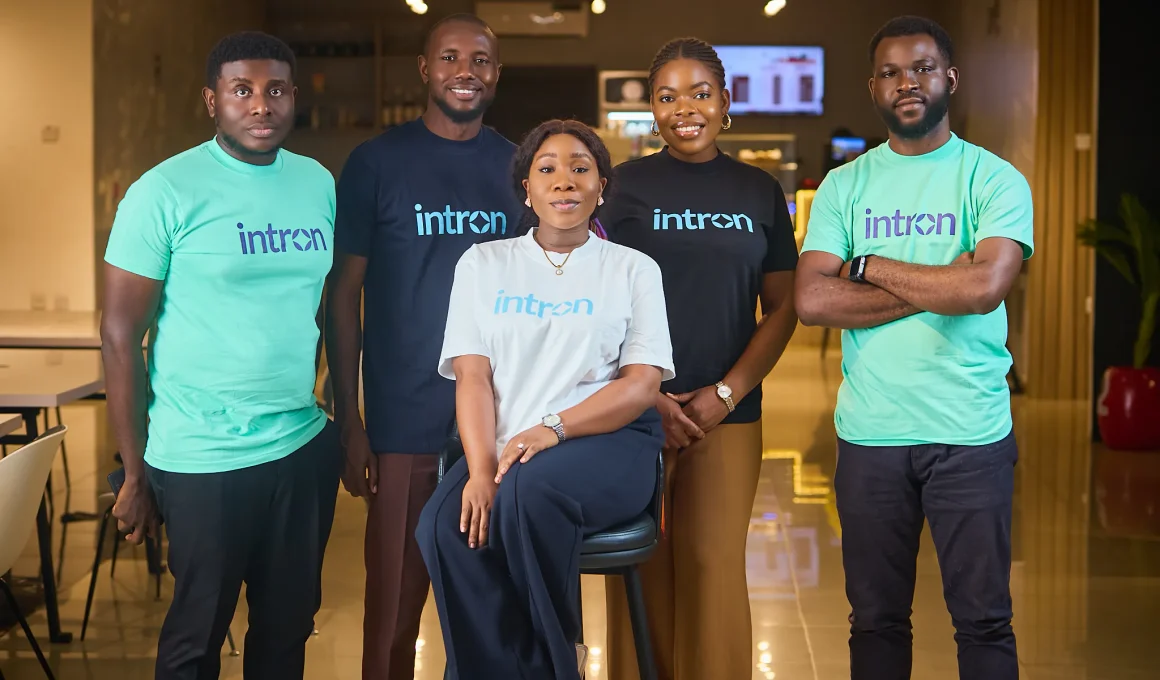
None of this happened by accident. Intron was founded in 2020 by Tobi Olatunji, a Nigerian-trained doctor, and Kunle Asekun, originally to solve a much narrower problem: medical transcription paperwork inside hospitals. The company raised $1.6 million in pre-seed funding in July 2024, led by Microtraction, and has since expanded from that healthcare starting point into call centres, government agencies, and now a broader push to make voice AI genuinely usable across the continent’s linguistic reality. Olatunji has been direct about the philosophy behind that expansion: Africa needs AI built for how Africans really speak, rather than technology that expects people to flatten their accent, avoid local expressions, or translate themselves into a single clean language just to be understood by a machine.
That framing is really the heart of why this release matters beyond Intron’s own roadmap. Voice AI adoption across Africa has been held back less by a lack of enthusiasm for the technology and more by systems that simply don’t work the way people actually talk. A model that can follow a real conversation as it moves between languages, even imperfectly, closes a meaningful part of that gap, and it puts a Lagos-based startup, not a well-resourced global lab, at the front of solving a problem that Western AI companies had mostly left unaddressed.