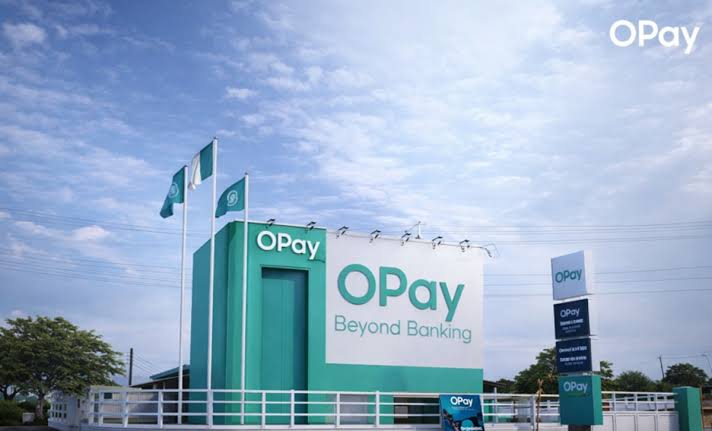
OPay, the digital bank and payments platform that dominates mobile money in Nigeria, has made its plan to list on the New York Stock Exchange public, and the filing is the clearest look yet at how much of a $500 million-class listing rests on one country. The company, which trades under the planned symbol OPAY, first filed confidentially with the US Securities and Exchange Commission on February 12, 2026, according to Renaissance Capital, and filed its public registration on October 9. The $500 million raise is Renaissance Capital’s estimate, not the company’s: the preliminary prospectus leaves the price, share count and proceeds blank, so the size of the deal is not yet known. Shares would be sold as American depositary shares (ADSs). Citi, Deutsche Bank, Standard Bank and CICC are the joint bookrunners.
The numbers inside the filing are strong, and mostly reported the same way across outlets. Revenue was $806 million for the 12 months to June 30, 2026. For calendar 2025, revenue rose 161% to about $536.3 million from $205.7 million in 2024, and in the first half of 2026 it climbed to $467.1 million from $197.5 million a year earlier. The company swung from a loss of roughly $51 million in 2024 to a profit of about $72.5 million in 2025, and one report puts first-half 2026 earnings at $90.9 million against $21.7 million, though a second outlet describes that figure as earnings without naming the measure, so check the filing’s definition. OPay reports 50.1 million monthly active users and 26.8 million daily users as of July 31, 2026, up from 39.3 million monthly users in 2025, and says it was Nigeria’s second most-used app across all categories by daily users. Transaction figures differ because they cover different periods: one account gives $358 billion of gross transaction value for 2025, while another cites 90.1 billion transactions worth $558 billion in the 12 months to June 2026.
The risk is concentration, and the filing says so plainly. Nigeria produced about $472.6 million, or 88.1%, of 2025 revenue, and the share was reported at 89.5% in the first half of 2026. Indonesia (loan facilitation), Egypt (merchant acquiring) and Pakistan (merchant acquiring and consumer wallets) supply the rest. That leaves OPay exposed to the naira, which fell sharply after the 2023 currency float, and to Nigerian regulators. Its Nigerian business runs through OPay Microfinance Bank, OPay Digital Services, a mobile money operator, and Soti Payment, and it relies on independent agents for account opening, cards, point-of-sale setup and cash handling. The filing notes Central Bank of Nigeria identity rules requiring a bank verification number or national identity number for wallets, and deposit insurance limits of ₦5 million for mobile money wallets and ₦2 million for microfinance bank deposits.
Calling this an African listing deserves care. OPay Limited is a Cayman Islands holding company headquartered in Singapore, and its founder and chairman, James Zhou, also chairs the browser company Opera, which is an early backer and a shareholder. The announcement that this is the biggest US listing by an African tech company since Jumia’s 2019 debut is a framing: the business is African in where it earns its money, not in where it is incorporated. Its history matters for investors too. OPay began as a broader “super-app” that included motorcycle ride-hailing and food delivery before narrowing to financial services, a path many African super-app attempts have not survived.
Valuation is the open question. According to earlier reports, OPay’s last priced round was a $400 million Series C in August 2021 led by SoftBank Vision Fund at a $2 billion post-money valuation, and it has raised about $570 million in total, though we did not trace those figures to the filing. In May, TheCable and BusinessDay reported, citing unnamed sources, that it was targeting about $4 billion for the IPO, and nothing in the filing sets a price. Opera’s own accounts offer a clue, but the figures reported do not agree. An April 2026 report said an Opera filing valued its 9.7% stake at $294.6 million, which implies roughly $3 billion. The version circulating now cites an 8.6% stake worth about $300.9 million and a valuation of about $3.17 billion, but those two numbers imply nearer $3.5 billion, so one of them is probably misreported. Treat anything between $3 billion and $4 billion as a range, not a fact, until the price range is published.
One investor is already lined up. The filing discloses a separate private placement in which Stanbic Africa Holdings, part of Standard Bank Group, will buy shares at the IPO price. The amount is the lowest of three limits: $200 million, a figure tied to 0.98% of Standard Bank Group’s qualifying regulatory capital, or a 4.99% stake after the offering. Bloomberg put it at about $185 million, and it depends on the IPO going ahead and on regulatory approval. Standard Bank has agreed to a 12-month lock-up, its Africa regions chief Lungisa Fuzile will join OPay’s board once the deal closes, and a separate non-binding agreement covers collaboration on merchant acquiring, wealth products and foreign exchange. OPay has also said it plans a later listing on the Nigerian Exchange, which would let Nigerian investors buy in.
The timing is mixed for African listings. In November 2025, Optasia raised about $345 million on the Johannesburg Stock Exchange, valued at $1.4 billion, and Morocco’s Cash Plus raised about $82.5 million in Casablanca, two listings BusinessDay described as ending a long drought. Airtel Money, the mobile money arm of Airtel Africa, began conditional trading in London on October 9 after pricing at £1.96 a share, a roughly $7 billion valuation, in a sale of about 270 million existing shares worth about $703 million. That sale goes to selling shareholders such as Mastercard, TPG’s Rise Fund II and Qatar Holding, so the company receives none of it. The version of this story that circulated elsewhere puts the proceeds at about $800 million and says the valuation was cut from a $10 billion target, and we could not confirm either figure. Past African tech listings have been rocky, with Jumia and Swvl both reported to have fallen sharply after listing (we did not re-check current prices), and cautionary tales are close to hand: Ghana’s Dash collapsed in 2023 after reports of false user and transaction metrics and mismanagement, and Nigerian open banking firm Okra wound down its operations in 2025, with naira depreciation cited among the pressures.
What happens next will be specific. The price range, share count and valuation will show what US investors will pay for 90% Nigeria-driven growth, and the first weeks of trading will show whether the numbers hold. For founders and investors across Africa, a clean debut would strengthen the case that African fintechs can list abroad at scale and profitably, and a weak one would reinforce a discount for single-country exposure. Either way, the filing is worth reading for what it discloses about unit economics, regulation and agent networks, because those are the same questions any Nigerian payments company will face at the next funding round.
Sources: Renaissance Capital on the OPay filing; TechCity on the F-1 contents; TechCentral on the Standard Bank placement; TheCable on the NYSE application; Yahoo Finance/Bloomberg on the $185 million placement; Condia on Opera’s OPay stake; BusinessDay on the Optasia and Cash Plus listings; SAHI on the Airtel Money London IPO; The Exchange Africa on Dash; Nairametrics on Okra.
A note for startup founders: you can find this post, and every post we publish from here on, at raiseready.indexprima.com.