In the history of African fintech, few stories are as polarizing as the relationship between PayPal and Nigeria. It is a saga of exclusion, missed opportunities, and a eventual “homecoming” that looks less like a favor from a global giant and more like a tactical surrender to a market that learned to thrive without it.
As of January 2026, the narrative has shifted completely. PayPal is no longer just a “send-only” tool for Nigerians; it has fully integrated into the local ecosystem through a landmark partnership with Paga.
1. The Era of Exclusion (2004–2024)
For nearly two decades, Nigeria was the “Digital Pariah.” In 2004, PayPal effectively blacklisted the country, citing extreme fraud risks and a lack of robust national identification systems. While other nations gained full access, Nigerians were restricted to a “Send-Only” model.
-
The Human Cost: An entire generation of freelancers and remote workers were locked out. Payouts from platforms like Upwork or Fiverr had to be routed through expensive “middle-man” accounts in the UK or UAE, or traded via risky informal Telegram groups.
-
The “Accidental” Benefit: This exclusion was the catalyst for the Nigerian Fintech Boom. Because PayPal wouldn’t build the rails, companies like Flutterwave, Paystack, and Paga had to build them from scratch. They solved the hard problems—identity (BVN), fraud detection, and instant settlement—while PayPal watched from the sidelines.
2. The Present: The 2026 Paga-PayPal Masterstroke
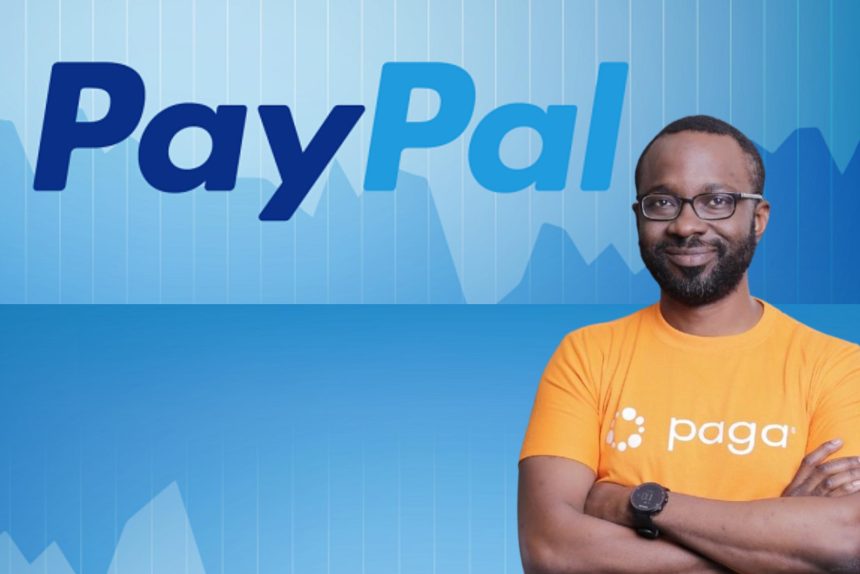
On January 27, 2026, Paga CEO Tayo Oviosu announced the “live” status of an integration 13 years in the making. This is not a standard bank partnership; it is a deep-layer infrastructure play.
-
The Integration: Users can now link their PayPal accounts directly to their Paga Wallets. This unlocks the “Inbound” floodgates:
-
Instant Naira Withdrawal: Funds received on PayPal can be converted at market rates and settled instantly into a Paga wallet or a Nigerian bank account.
-
Venmo Interoperability: For the first time, Nigerians can receive money directly from Venmo users in the US, routed through the PayPal-Paga bridge.
-
-
The Scale: Paga enters this deal with 21 million users and a 2025 transaction volume of ₦17 trillion ($11 billion). PayPal isn’t “bringing” the market; they are plugging into an already matured one.
3. Regulatory & Policy Landscape: The “Willing Buyer, Willing Seller” Era
The Central Bank of Nigeria (CBN) has moved toward a more liberalized FX regime under Governor Olayemi Cardoso. This policy shift was the final green light for PayPal’s return.
-
The IMTO Rule: Revised 2024/2025 guidelines for International Money Transfer Operators (IMTOs) mandate that all inbound remittances be paid in Naira only, unless they exceed specific thresholds. The PayPal-Paga integration complies with this by using the prevailing “Willing Buyer, Willing Seller” rates.
-
The BVN/NIN Shield: The maturation of Nigeria’s identity stack (Bank Verification Number) gave PayPal the “compliance comfort” it lacked in 2004. Fraud is now trackable to a physical individual, lowering the risk profile of the entire country.
4. The “IndexPrima” Analysis: Too Little, Too Late?
While the headlines are sensational, the analytical reality is that PayPal has lost the “First-Mover Advantage.”
-
The Competition: During the exile, YellowCard and various stablecoin (USDC/USDT) rails became the preferred method for high-value freelancers. Crypto offers near-zero fees and instant global liquidity—something PayPal’s 3–5% fee structure struggles to match.
-
The Trust Deficit: There remains significant resentment. Many founders remember the 2010s when PayPal would freeze accounts with $10,000+ for 180 days with no recourse. The 2026 return is being met with “cautious utility” rather than the worship of a savior.
Key Data: The PayPal-Nigeria 2026 Matrix
| Feature | Pre-2026 Status | 2026 Status (via Paga) |
| Inbound Payments | Restricted / Blocked | Fully Enabled |
| Naira Withdrawal | Not Possible | Instant via Paga Wallet |
| US/EU Merchant Access | Send-Only | Full Checkout Capability |
| Merchant Integration | High Friction (API issues) | Direct Gateway via Paga Business |
| Funding Source | Select Intl. Cards | Any Linked Nigerian Card/Wallet |
The Future: PayPal World & Satellite Hubs
Moving into late 2026, PayPal is expected to roll out “PayPal World” in Africa. This initiative aims for full interoperability between local digital wallets (like M-Pesa in Kenya or Paga in Nigeria) and international merchants, removing the need to even have a “traditional” PayPal account.
Sources & Intelligence References:
-
Official Press: PayPal Goes Live In Nigeria Through Paga (BusinessDay/TechCabal, Jan 2026).
-
Regulatory Record: CBN Revised Guidelines for International Money Transfer Services (CBN.gov.ng, 2024-2026).
-
Ecosystem Analysis: How PayPal’s Exit Built Nigeria’s Fintech Sovereignty (IndexPrima, 2026).
-
Corporate Statement: PayPal Middle East & Africa Regional Strategy 2025/2026 (Otto Williams, SVP).
PayPal’s return is a validation of Nigerian fintech resilience, not a rescue mission. The “Big Deal” isn’t that we can use PayPal; it’s that PayPal needs to be here to stay relevant in the global south.