1. The Risk Architecture: The Four-Tier Framework
The Bill adopts a “Risk-Based Regulatory Model” heavily inspired by the European Union’s AI Act. Instead of a one-size-fits-all rule, your compliance burden is determined by what your AI actually does.
-
Unacceptable Risk (Prohibited): Any AI system that manipulates human behavior to cause harm, conducts mass surveillance that violates human dignity, or uses “social scoring” by the state is banned. If your startup builds these, you face immediate shutdown and criminal prosecution.
-
High Risk (Rigorous Oversight): Systems that significantly affect life, safety, or fundamental rights. This includes AI used in critical infrastructure, education, employment, and law enforcement. These require mandatory registration, impact assessments, and human-in-the-loop oversight.
-
Limited Risk (Transparency Mandate): Systems with moderate risk, such as chatbots or deepfake generators. The law requires clear labeling: your users must know they are interacting with an AI, not a human.
-
Minimal Risk (Permitted): Basic automation like spam filters or video games. These can be deployed without prior registration, subject only to existing data protection laws.
2. The Sector Hit-List: Why Finance & Healthcare Face the Most Paperwork
If you are building in Fintech or Healthtech, your “High-Risk” classification is almost guaranteed. The Bill specifically targets systems that “determine access to essential services.”
-
In Finance: AI-driven credit scoring and fraud detection are now under the microscope. Regulators want to ensure that your algorithms aren’t accidentally discriminating based on gender, tribe, or location.
-
In Healthcare: AI used for diagnostics or surgical assistance is now a “safety-critical” asset.
-
The Burden: Founders in these sectors must maintain detailed records of training data for five years, undergo annual audits, and provide “explainability” reports—meaning you must be able to prove why your AI made a specific decision.
3. The “AI Commissioner”: Your New Chief Auditor
The Bill establishes the Office of the Artificial Intelligence Commissioner. This isn’t a ceremonial role; the Commissioner has teeth.
-
Powers of Inspection: The office can inspect your systems, summon your CTO for evidence, and access your proprietary datasets upon notice.
-
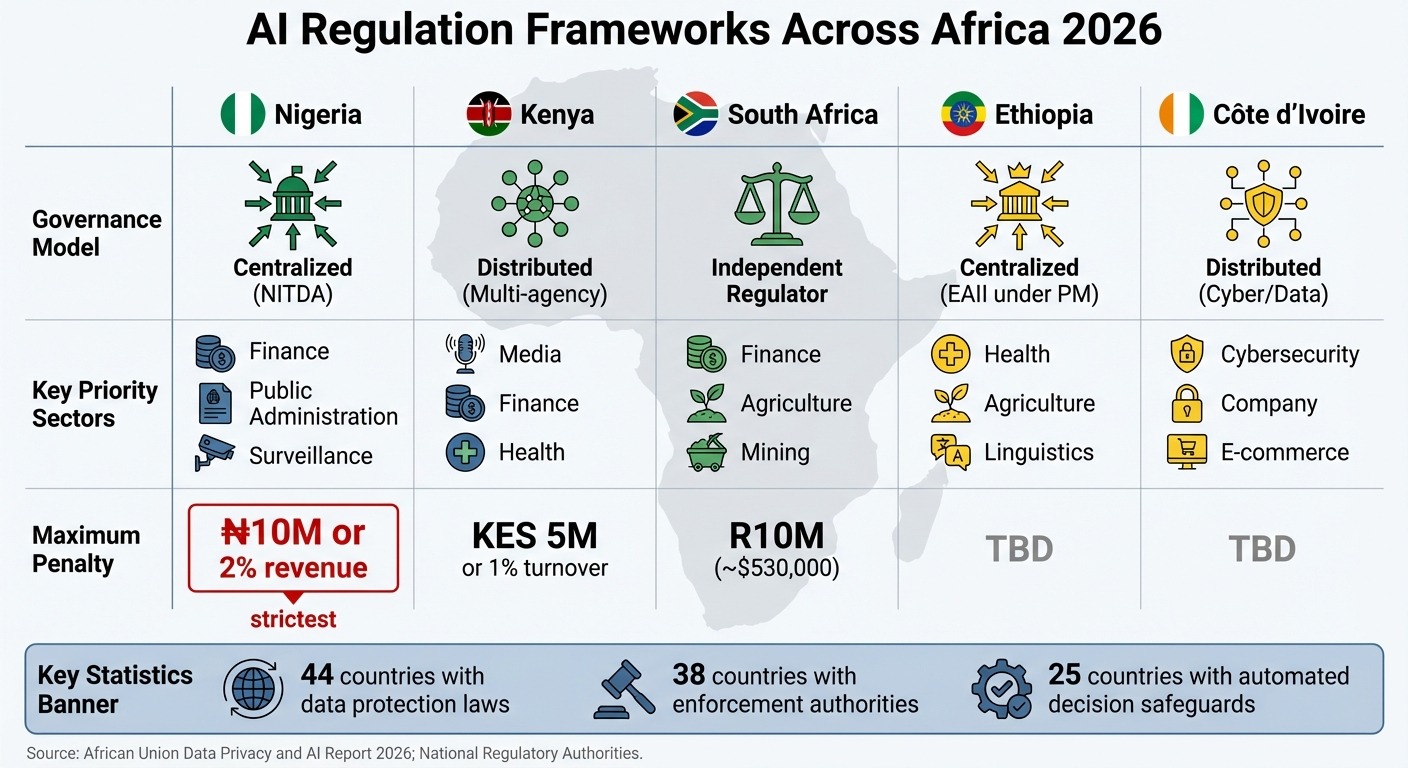
The Stick: Non-compliance can result in fines of up to Ksh 5 Million ($38,000) or a two-year prison sentence for company directors.
-
The Registry: A public register of all “High-Risk” systems will be maintained. If you aren’t on the list, you aren’t legally operating.
4. The Regulatory Sandbox: Turning Compliance into a Competitive Advantage
It’s not all penalties. The Bill introduces AI Regulatory Sandboxes—controlled environments where you can test “disruptive” AI models under the supervision of the Commissioner without the immediate threat of full-scale fines.
-
How to use it: Founders can apply to the Sandbox to validate their models’ safety and ethics. Successfully “graduating” from a sandbox serves as a massive trust signal for investors and enterprise clients. It proves your AI is “Regulator-Approved.”
5. The Global View: Why This Makes Kenya “Safe” for European Capital
The timing of this Bill isn’t accidental. It coincides with the EU-Kenya Digital Dialogue launched in March 2026. By aligning with the EU’s risk-based standards, Kenya is positioning itself as the “Safe Harbor” for Western capital.
-
De-risking for VCs: European and American investors are often hesitant to back AI in unregulated markets due to “reputational risk.” With this Bill, Kenya provides a predictable legal environment.
-
The “GDPR” Effect: Just as the Data Protection Act made Kenya a hub for outsourcing, the AI Bill 2026 makes it a hub for Ethical AI Development.
The Verdict
Kenya is no longer waiting for the future; it is codifying it. While the threat of jail time for directors is a heavy “stick,” the “carrot” is a market that is transparent, audited, and ready for global investment.
The Index is watching. Are your algorithms compliant?
Sources & Strategic Links:
-
Legislative Status: Kenya Tables AI Bill Proposing Regulator, Risk Rules and Penalties (CIO Africa)
-
Sector Impact: TechCabal: Kenya targets “high-risk” AI use with jail terms and fines
-
Strategic Alignment: TechTrendske: EU-Kenya Digital Dialogue and AI Infrastructure
-
Official Commentary: African Antitrust: Building a Practical Framework for AI Regulation