For nearly a decade, digital “crowd-farming” was heralded as the definitive bridge across Africa’s staggering agricultural financing gap. By allowing retail investors to bypass traditional financial gatekeepers and directly bankroll everything from cattle herds to macadamia orchards via a slick mobile application, platforms promised a harmonious alignment of social impact and double-digit financial returns.
That thesis has officially collapsed under the weight of severe asset asset-liability mismatches, investor grievances, and fatal balance sheet insolvency.
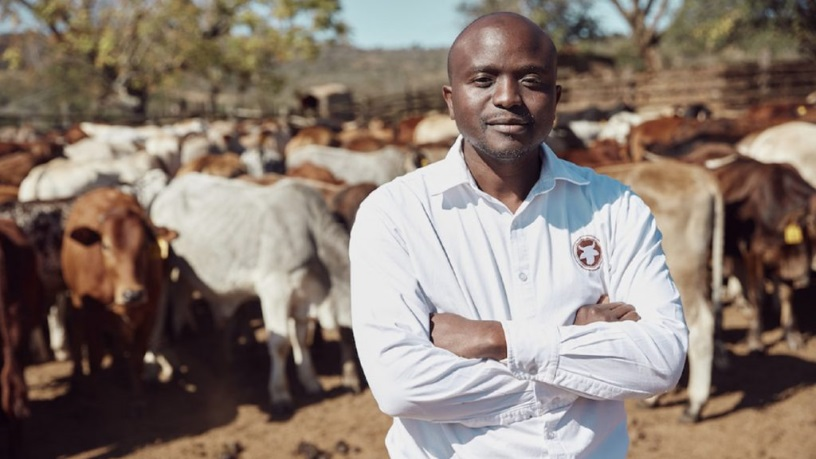
Livestock Wealth, South Africa’s pioneer and highest-profile agricultural crowdfunding platform, has been placed under final liquidation by the Gauteng High Court. The ruling electronically delivered by Acting Judge JF Pretorius systematically dismissed an aggressive, last-ditch business rescue application brought by the platform’s founder and sole director, Ntuthuko Shezi. The court drew a definitive line under months of operational paralysis, ruling that the company was both commercially and factually insolvent, and labeling its proposed corporate rescue plan as little more than “speculation and broad optimism”.
The corporate demise of a platform that at its peak managed over ZAR 100 million (~USD 6 million) in retail assets marks the definitive end of the public-facing agro-crowdfunding era in Africa.
1. Anatomy of the Crash: The ZAR 3 Million Convertible Loan Trigger
While Livestock Wealth’s public narrative maintained an aura of operational stability, its internal balance sheet had been fracturing for over two years. The structural decay accelerated significantly following a highly publicized corporate governance showdown with institutional capital.
The primary catalyst for the liquidation process traces back to July 2022, when the company secured a ZAR 3 million ($61,000) investment from the Mineworkers Investment Company’s (MIC) Khulisani Ventures vehicle. The capital injection was structured as a convertible loan agreement, giving MIC extensive information rights, a board observer seat, and the unilateral right to demand immediate repayment or equity conversion upon maturity or default.
               THE LIQUIDATION ESCALATION CASCADE

  [July 2022: MIC ZAR 3M Convertible Loan]
                     ⬇
  [Nov 2023: Enterprise Room Appointed to Audit Balance Sheet]
                     ⬇
  [Feb 2024: Default Triggered; Platform Requests Cash to Pay Retail Yields]
                     ⬇
  [Nov 2025: Shezi Files Business Rescue to Evade MIC Liquidation Suit]
                     ⬇
  [May 2026: Gauteng High Court Orders Final Winding-Up]
According to High Court records, the friction turned terminal when Livestock Wealth failed to provide adequate financial records to a specialized service provider, Enterprise Room, appointed to reconstruct the startup’s reporting obligations and verify its balance sheet. When MIC issued a formal demand to remedy the information default by February 5, 2024, Livestock Wealth responded not with audited books, but with a request for an additional emergency loan specifically designed to “pay out overdue investor returns”.
Realizing that retail investor redemptions were being funded by fresh corporate injections—rather than actual biological yields from farm operations—MIC initiated liquidation proceedings in 2024. Shezi attempted to block the winding-up by filing for business rescue in November 2025, a legal maneuver the court ultimately deemed an abuse of process designed to delay the inevitable.
2. The Regulatory Blindspot: Why the FSCA Investigation Missed the Real Crisis
As early as January 2024, South Africa’s Financial Sector Conduct Authority (FSCA) issued an urgent public warning, cautioning citizens that Livestock Wealth might be unlawfully promoting investments with unrealistic returns. However, when the regulator concluded its intensive two-year investigation in early 2026, the enforcement outcome inadvertently created a false sense of security for the market:
-
The Asset Exclusion: The FSCA legally determined that physical cattle, pregnant cows, and macadamia trees do not meet the statutory definition of “financial products” under the Financial Advisory and Intermediary Services (FAIS) Act.
-
The Jurisdictional Boundary: Because the core crowd-farming mechanism sat outside traditional financial products, the platform did not technically require a Financial Services Provider (FSP) license to operate.
-
The Slap on the Wrist: The regulator merely slapped Livestock Wealth and Shezi with a modest ZAR 50,000 fine each for misleadingly displaying a dormant subsidiary’s lapsed FSP license number on its public-facing website to manufacture institutional credibility.
The Structural Gap: Because the FSCA focused strictly on licensing compliance, its final enforcement notice completely bypassed the severe operational crisis unfolding beneath the surface. While the company boasted of being “cleared” of operating an illegal investment scheme, a massive wave of retail investor grievances was actively freezing. Regular users, community stokvels (informal savings pools), and syndicates reported long-delayed redemptions and entirely opaque accounting, with single community groups tracking missing payouts of nearly ZAR 140,000.
Sector Matrix: The Continental Agro-Crowdfunding Demise
The collapse of Livestock Wealth is not an isolated instance of corporate mismanagement; it is the final chapter in a systemic, continent-wide failure of the retail agricultural crowdfunding model.
| Platform Name | Origin Market | Peak Operational Vector | Ultimate Structural Outcome |
| Livestock Wealth | 🇿🇦 South Africa | Retail crowd-farming of cattle herds and macadamia assets. | Final Liquidation ordered by the High Court due to factual insolvency. |
| Farmcrowdy | 🇳🇬 Nigeria | Digital crowd-sourcing for smallholder poultry and crop farms. | Defunct Playbook; forced to completely abandon crowdfunding to pivot to unscaled B2B value-chain logistics. |
| ThriveAgric | 🇳🇬 Nigeria | Retail funding for localized grain and livestock farmers. | Survived Near-Collapse; dropped retail public crowdfunding completely to focus purely on institutional capital and an enterprise Agricultural Operating System. |
| Agropartnerships | 🇳🇬 Nigeria | High-yield retail crowdfunding for agro-processing and commodity export. | Total Collapse; defaulted permanently on billions in retail investor capital. |
3. The Unforgiving Macro Matrix: Tech Expectations vs. Biological Realities
The systemic liquidation of these platforms points directly to a fundamental macroeconomic mismatch. Venture capital and retail fintech platforms operate on linear, highly predictable digital horizons. Agriculture, particularly in sub-Saharan ecosystems, is entirely bound to volatile, non-linear biological timelines.
               THE INHERENT MARGIN CRUNCH

  RETAIL FINTECH EXPECTATIONS:
  [Guaranteed Payouts] ➔ [Fixed 12-Month Cycles] ➔ [Consistent 15%-25% Yields]

  REAL-WORLD AGRI-PRODUCTION:
  [Rainfall Volatility] ➔ [Disease Vectors] ➔ [Delayed Maturity] ➔ [Thin Processing Margins]
When disease outbreaks hit poultry runs, drought stalls cattle weight gain, or underlying farmers face logistics chokepoints, the biological asset fails to generate cash on schedule. Because these platforms disclaimed direct liability and claimed they were merely connecting investors to independent farmers, they had no balance sheet reserves to absorb production shocks.
To keep the platform functioning and avoid fatal viral pushback on social media, distressed platforms frequently fall into the trap of using capital from new investors or emergency corporate loans to service legacy withdrawals. The moment macro liquidity tightens and new retail capital slows down, the entire architecture implodes.
The Index Take
The liquidation of Livestock Wealth marks the necessary, overdue death of retail agro-crowdfunding as a viable venture concept in Africa. For too long, the tech ecosystem pretended that adding a mobile app user interface to a highly volatile, capital-intensive farm could magically bypass the fundamental laws of agricultural economics.
Agriculture on the continent faces a massive $65 billion to $80 billion annual financing deficit. However, that gap cannot be sustainably plugged by fractionalized retail capital chasing short-term, double-digit tech yields. Farming is a long-horizon, thin-margin enterprise subject to unpredictable weather patterns, biological disease vectors, and complex supply chain chokepoints.
The few survivors of this harsh market correction—such as Nigeria’s ThriveAgric—only survived by aggressively executing a clean break from retail users and shifting toward institutional development finance, sovereign grants, and enterprise software systems. Capital always follows the path of least resistance. For early-stage investors and builders, the lesson is clear: if you want to build defensible agritech, build the enterprise data infrastructure, the cold-chain logistics networks, or the B2B supply software. Leaving the biological risk of individual cows and crops exposed to the direct expectations of retail bank accounts is a proven recipe for corporate bankruptcy.
Sources & References
-
[1] Launch Base Africa Corporate Governance Desk: South African Agri-Fintech Livestock Wealth Placed Under Liquidation After Failed Rescue Bid
-
[2] WeeTracker Capital Intelligence Report: Africa’s Crowdfunding Agritech Woes Worsen In Collapse Of SA’s Top Platform
-
[3] SAFLII Official Judgments Registry: Shezi v Livestock Wealth (Pty) Ltd and Others (2025/222413) [2026] ZAGPJHC 525 (8 May 2026)
-
[4] Launch Base Africa Regulatory Briefing: Mineworkers-Backed Agritech Livestock Wealth Fined, Loses Licence in South Africa
-
[5] Moneyweb Financial Investigations: FSCA ‘Clears’ Livestock Wealth of Wrongdoing but Investor Grievances Mount