South Africa’s commercial transport and logistics sector is facing an expensive operational crossroads. Heavily reliant on diesel fleets to move goods across vast logistics corridors, corporate operators are highly exposed to international oil price spikes and volatile domestic fuel markets. While the global shift toward electric vehicles (EVs) offers a compelling solution to lower emissions and optimize running costs, South Africa’s persistent grid limitations and high upfront capital expenditure have historically made fleet managers highly cautious.
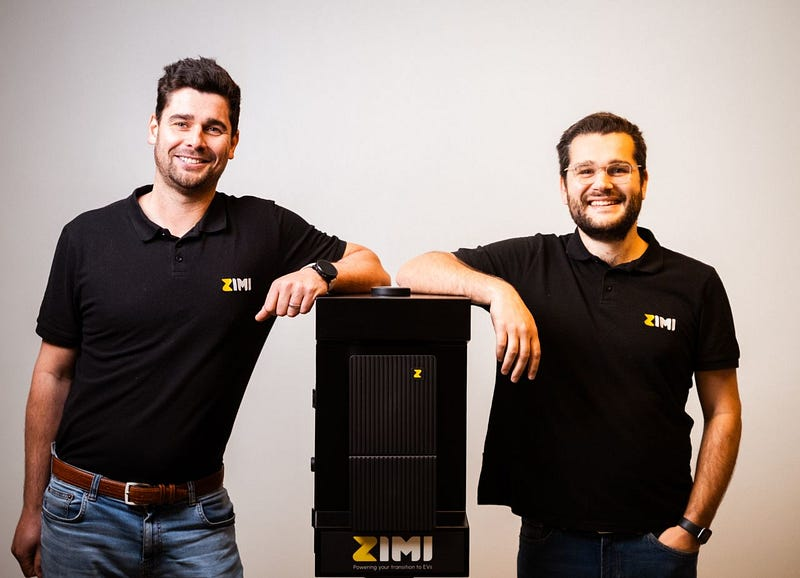
To de-risk this transition for the private sector and accelerate the rollout of reliable charging ecosystems, the Development Bank of Southern Africa (DBSA) has led a R50 million (~$2.6 million) funding round for Stellenbosch-based e-mobility pioneer Zimi. The Series A round, which includes participation from Keyo Ventures and a group of strategic angel investors, marks a decisive institutional move to build alternative green energy utilities for the country’s enterprise logistics layer.
1. The Portfolio Playbook: How the DBSA is Re-architecting Clean Transit
The DBSA’s R50 million investment in Zimi is not an isolated experiment. Instead, it signals a calculated portfolio approach by the state-backed development finance institution (DFI) to address the two distinct components of South Africa’s EV charging deficit:
-
The Public Highway Moat: In May 2025, the DBSA injected R100 million ($5.6 million) into Zero Carbon Charge. That project explicitly focuses on a macro rollout of off-grid, ultra-fast public charging stations placed roughly every 150 kilometers along major national highways to solve consumer range anxiety.
-
The B2B Enterprise Depot: By backing Zimi, the DBSA is targeting private commercial fleets directly where they return to rest. Zimi’s deployment strategy focuses on building localized charging hubs inside private corporate depots, ensuring that high-utilization commercial delivery vans and trucks have dedicated, un-interrupted power supplies.
-
DFIs Filling the VC Vacuum: This consecutive deployment of development capital highlights a broader trend: DFIs are stepping into the deep-tech infrastructure gaps where traditional, short-horizon venture capital funds remain hesitant to allocate capital due to long asset-payback cycles.
2. Unpacking the B2B Value Proposition: EV-as-a-Service
Founded in 2021 by Michael Maas and Stefan Nel, Zimi has built a vertically integrated framework designed to eliminate the friction of corporate change management. Rather than forcing a company to buy an electric vehicle from one vendor, source chargers from another, and manage grid connections via a third, Zimi bundles the entire system into an EV-as-a-Service utility:
                  THE ZIMI VERTICALLY INTEGRATED CAPEX MOAT

  THE TRADITIONAL CORPORATE GRID IMPASSE:
  [Procure EV Fleet] ➔ [Source Independent Chargers] ➔ [Exposed to Eskom Outages] ➔ [High CapEx Stagnation]

  THE ZIMI FLEET MATRIX:
  [Full Maintenance Lease (FML)] ➔ [Depot Solar + Batteries] ➔ [Vehicle-to-Grid (V2X) Energy] ➔ [90% cost/km Reduction]
By pairing electric delivery vehicles directly with micro-solar generation arrays, stationary battery storage buffers, and proprietary energy management systems, Zimi protects fleet operations from local municipal grid instability.
Furthermore, the model leverages a Full Maintenance Lease (FML) framework. This converts what would be an incredibly heavy upfront asset capital expenditure into predictable monthly operational expenses. According to data verified by Zimi’s pilot projects, corporate fleets transitioning to this bundled structure can realize up to a 90% reduction in energy costs per kilometer from day one, entirely decoupling themselves from volatile fossil fuel networks.
Strategic Architecture: Public Networks vs. Commercial Fleet Depots
| Strategic & Technical Vector | Highway Public Charging Infrastructure (e.g., Zero Carbon Charge) | Corporate B2B Fleet Depots (e.g., Zimi Ecosystem) |
| Primary Target Market | Long-distance commercial commuters and private consumer EV drivers. | High-utilization intra-city logistics networks and corporate delivery fleets. |
| Grid Reliance Profile | 100% off-grid solar arrays coupled with large-scale stationary battery banks. | Hybrid grid-tied configurations backed by localized solar buffers and V2X mobile power. |
| Financial Procurement | Direct transactional pay-per-charge retail pricing architectures. | Flexible Full Maintenance Leases (FML) converting CapEx into predictable OpEx. |
| 18-Month Target Metric | Comprehensive nationwide corridor presence every 150 km. | Deploy ~200 commercial depot charging stations and scale ~2,000 active fleet EVs. |
| Core Operational Moat | Securing premium roadside land rights along major national freight corridors. | Embedding proprietary energy management software into corporate enterprise resource planning (ERP) tools. |
3. Scaling the Blueprint: Ambitious Targets and Execution Hurdles
The fresh R50 million capital injection will instantly fund the expansion of Zimi’s active enterprise pilot schemes and existing customer hubs. Over the coming 18 months, the company has set an aggressive industrial roadmap: deploying approximately 200 dedicated fleet charging nodes and facilitating the delivery of 2,000 commercial electric vehicles across South Africa’s key urban trade centers.
To sustain this growth rate, Zimi’s R&D division is focusing on Vehicle-to-Everything (V2X) and mobile power management capabilities. This framework allows plugged-in fleet vehicles to act as distributed battery nodes for the corporate depot itself during peak electricity pricing windows or blackouts, turning a logistics fleet into an active grid-resilience asset. However, the company will have to navigate real-world constraints, including international vehicle manufacturing procurement lead times, localized municipal solar installation delays, and the slow change-management timelines of traditional corporate logistics structures.
The Index Take
The DBSA’s strategic backing of Zimi highlights an essential truth regarding green infrastructure deployment in emerging economies: the path of least resistance for EV adoption is not through the retail consumer, but through the corporate balance sheet. For years, critics argued that electric vehicles were a Western luxury completely unsuited for a country grappling with consistent power utility crises. That analysis missed the underlying math of commercial logistics.
A private consumer buys an EV to save on fuel, but their car sits idle 90% of the time, making the payback period on charging infrastructure painfully long. Conversely, a commercial delivery fleet operates on strict, high-volume mileage routines where fuel lines are a massive, daily operational drain.
By creating a bundled lease model that abstracts away the technical headaches of solar configuration and energy software management, Zimi changes the conversation from an environmental ideal into a cold, hard fiscal calculation: saving up to 90% per kilometer on energy costs from day one. By combining these fleet depot nodes with their previous investment in cross-country highway chargers, the DBSA is methodically laying down the physical tracks for a sustainable, grid-independent transport economy that will outlast legacy fossil fuel dependency.
Sources & References
-
[1] Launch Base Africa Industrial Desk: DBSA Doubles Down on EV Charging With Backing for Zimi
-
[2] Energize South Africa Energy Ledger: DBSA Backs EV Fleet Infrastructure Rollout with R50m Investment
-
[3] MyPressportal Southern Africa Bureau: Development Bank of Southern Africa Supports Expansion of Electric Mobility Infrastructure Through Strategic Investment into Zimi’s EV Ecosystem
-
[4] Logistics News Strategic Brief: Local EV Solution Provider Closes R50m Funding Round to Scale Turnkey Fleet Ecosystems
-
[5] Zero Carbon Charge Media Portal: Zero Carbon Charge Secures R100 Million Investment from DBSA for Off-Grid Highway Network
Off-Grid EV Charging Solutions in South Africa
This news package tracks the wider evolution of off-grid and alternative energy infrastructure within South Africa’s transport landscape, showing how developers are navigating utility constraints to build resilient, cleaner mobility links.