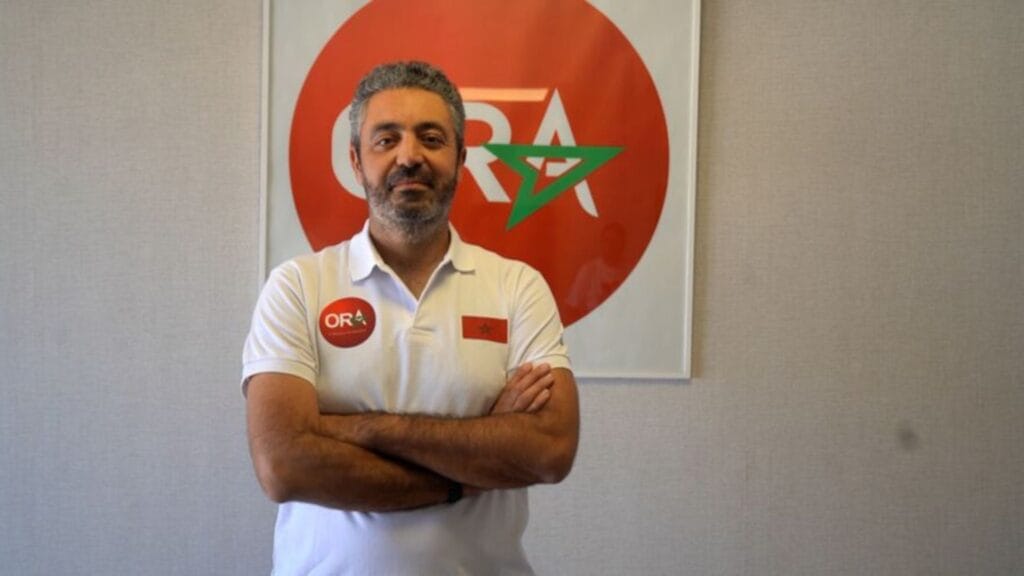
The Sovereign Super App: How ORA Technologies Raised a $10M Series A to Control Morocco’s Digital Rails
In fragmented, cash-dominant economies, building a standalone consumer fintech product is a notoriously expensive uphill battle. High customer acquisition costs (CAC) paired with slow digital payment adoption rates often bleed early-stage platforms dry before they can achieve sustainable transaction volumes.
To bypass these hurdles, Moroccan super app ORA Technologies has pioneered a unified ecosystem that bundles digital wallets, on-demand delivery, and e-commerce logistics into a single, cohesive consumer experience.
The startup has closed a $2 million Series A extension—backed by domestic capital—bringing its total Series A to $10 million and its total funding to date to nearly $12 million since launching in 2023. Led by the Azur Innovation Fund alongside private local investors, this fresh capital injection establishes ORA as one of Morocco’s most formidable, well-capitalized technology players.
The Funding Matrix
Unlike many African tech hubs that rely heavily on international VC funds, Morocco is engineering its own domestic venture playbook. ORA’s funding trajectory highlights a steady, locally backed climb:
| Funding Phase | Date | Capital Raised | Lead & Strategic Investors |
| Seed Round | March 2024 | $1.5 Million | Local private angels & funds |
| Pre-Series A | March 2025 | $1.9 Million | Local private networks |
| Series A (Base) | July 2025 | $7.5 Million | Azur Innovation Fund & local strategic backers |
| Series A (Extension) | July 2026 | $2.0 Million | Azur Innovation Fund & private domestic investors |
| Cumulative Funding | 2023 – 2026 | ~$11.9 Million | Highly Concentrated Domestic Capital |
The Value-Chain Formula: Connecting Payments, Food, and Fleet
Under the leadership of founder and CEO Omar Alami, ORA is intentionally executing an infrastructure-first super-app model. Rather than operating separate, siloed applications, ORA integrates three core pillars that systematically feed and de-risk one another:
-
ORA Cash (Payments): A mobile wallet built to tackle Morocco’s cash-heavy commercial environment. It has emerged as a key tool for delivery riders to digitize cash-on-delivery payments, signing up over 50,000 users within just five months of its debut.
-
Kooul (Consumer Demand): An on-demand food-delivery platform designed to generate high-frequency user engagement. Kooul successfully logged 15,000+ active customers within its initial ten months of operation.
-
Cathedis (Logistics Engine): Acquired by ORA in November 2025 in partnership with Azur Innovation Fund, Cathedis is a premier national player in e-commerce logistics and last-mile delivery. This acquisition effectively closed the loop, allowing ORA to own the entire physical and digital transaction cycle from payment to doorstep delivery.
The Macro Shift: The Rise of Domestic Venture Autonomy
Beyond ORA’s individual traction, this Series A extension signals a deeper, structural pivot in North Africa’s venture capital landscape.
Historically, African startups seeking multi-million dollar growth capital have had to court foreign funds in London, San Francisco, or Paris. However, ORA’s entire $10 million Series A has been structured and financed directly by local Moroccan institutions and private players. This homegrown alignment insulates the startup from the volatile macroeconomic shocks of the global “funding winter” while ensuring its investors intimately understand the specific, cash-reliant operational realities of Moroccan consumers.
As Omar Alami remarked at the time of the Cathedis acquisition:
“We’re not just building apps; we’re building infrastructure to make e-commerce accessible to everyone. Cathedis fits perfectly into this vision of a sovereign, connected, and forward-looking digital Morocco.”
The Strategic Takeaway
By unifying digital payments, high-volume consumer services, and national e-commerce logistics, ORA is attempting to solve the ultimate puzzle of consumer tech in Africa: making unit economics work in a cash-first market.
With nearly $12 million in aggregate funding now backing its vision, the startup is uniquely positioned to transition Morocco’s cash-on-delivery infrastructure into a highly efficient, digital-first marketplace. The blueprint has been successfully laid; the remaining challenge is pure operational execution.