Khalifa Aminu Built AI Smart Glasses to Help Blind Nigerians Navigate Without a Cane or a Guide
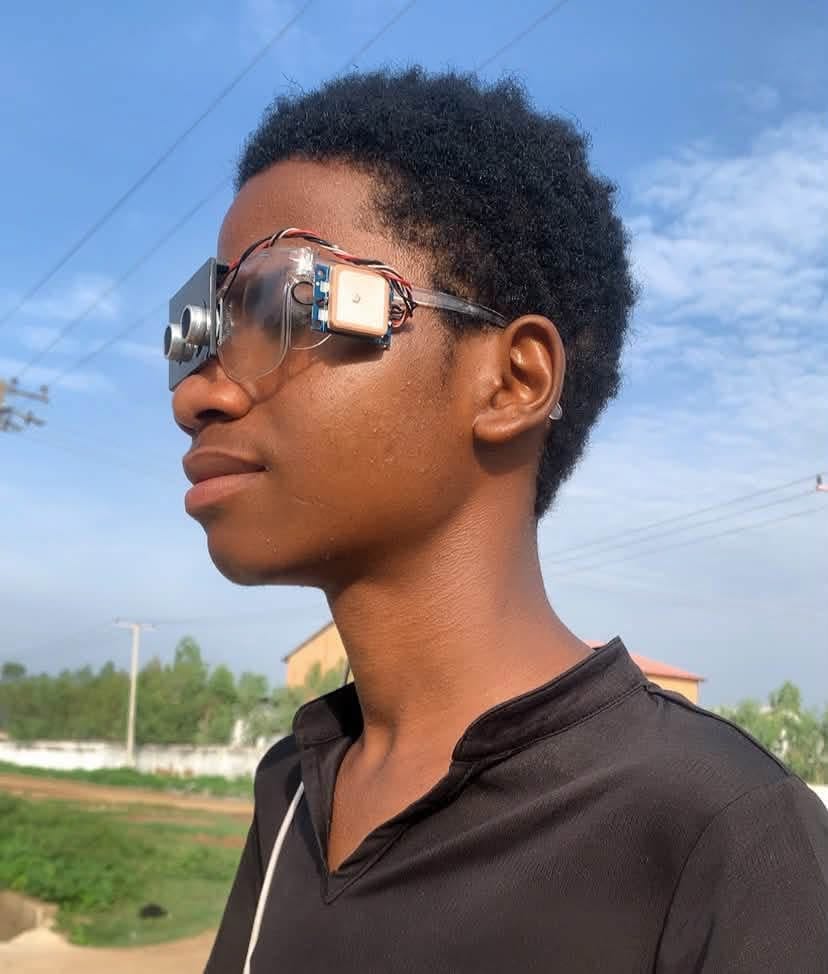
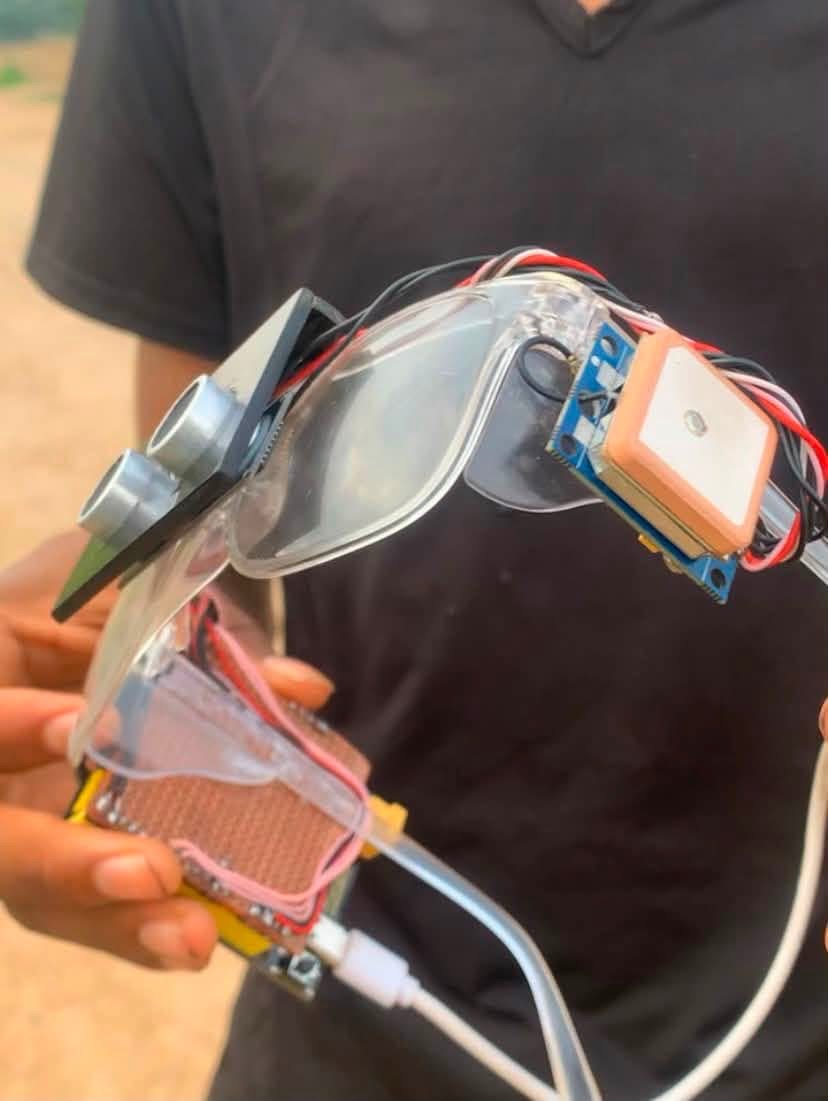
Khalifa Aminu has just unveiled the second version of a device he first started building in 2023 as a teenager in Kano. Glass V2 combines AI, sensors, and GPS to help blind users detect obstacles in front of them, understand their surroundings, and know their own location in real time. If a wearer gets lost, the glasses can share their location with a caregiver’s phone over WhatsApp or email, and Aminu is now working on adding voice AI so the device can actually talk users through what’s around them rather than relying on alerts alone.
The current version is a long way from where this project started. Aminu, now 20, grew up in a Kano community with visually impaired neighbors and built his first prototype using affordable, locally sourced electronics like ultrasonic and infrared sensors, entirely self-taught and without external funding or materials for mass production. He wasn’t new to inventing by then either. Before the glasses, he had already built a canoe, a small FM radio station with a transmitter reaching about 10 kilometers, a bomb detector for scanning explosives, and an automatic water spray system for farmers, all on his own.
What set the glasses apart from his earlier projects was who tested them. A blind man in Aminu’s community tried the first prototype and gave feedback that directly shaped what came next: swap the alert beeps for clear voice prompts, shrink the hardware, and add wireless controls instead of wired ones. That kind of real world input from an actual visually impaired user, rather than a purely theoretical accessibility design process, is a big part of why the device has continued to evolve rather than stalling out as a one time science project.
The work has drawn institutional attention along the way. CITAD, a Kano based organization, gave Aminu access to a lab and equipment he couldn’t afford on his own, filling a gap that stops a lot of promising young inventors well before their ideas reach a usable prototype. A separate drone project he built caught the interest of the Nigerian Army, which discussed a contract for security equipment and sent an officer from Abuja to meet him directly. Nigeria’s National Commission for Persons with Disabilities has also engaged with his work formally, inviting Aminu to Abuja to demonstrate his invention alongside other assistive technology innovators as part of the country’s first commemoration of the International Day for Assistive Technology.
None of this makes Glass V2 a finished commercial product yet, and Aminu himself has said he’s still looking for funding to improve the device with better materials and move it toward wider production. But the trajectory is hard to ignore. A teenager building sensor glasses from spare parts in Kano has become a young inventor whose device is now being tested, refined, and formally reviewed by a national disability commission, entirely through iteration driven by feedback from the people it’s actually meant to serve. That’s a rarer thing than the AI headline suggests, a piece of assistive technology built from the ground up by someone who grew up watching the exact problem it’s trying to solve.