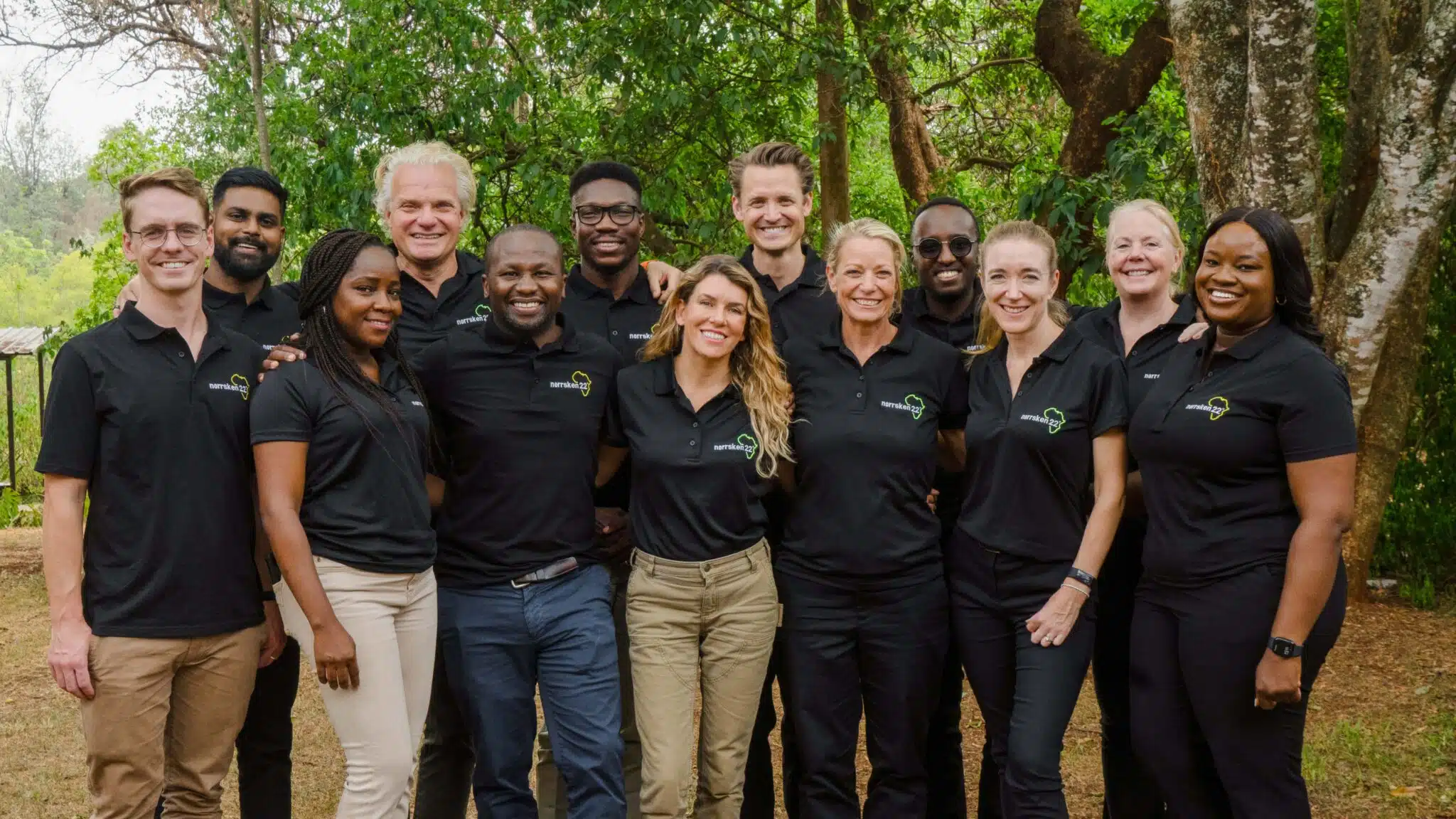
If you are raising a Series A or later in Africa, you will soon meet a fund like Norrsken22. Bernard Ghartey, a principal at the fund, told Techpoint Africa what it looks for. His answers are useful because they are specific. The first cheque is typically $2 million to $10 million, with a sweet spot of $6 million to $10 million. The fund backs growth-stage companies, usually Series A to C, and keeps a smaller allocation for scouting promising early-stage startups. This post covers what he said, where other reports differ and what founders can do with it.
The first criterion may surprise you. Ghartey said his top priority is a founding team that is open to collaboration. In his view, such teams handle challenges better and work better with investors. Market size comes next. He put it bluntly: “A decent product in a large market will almost always do better than a perfect product in a small one.” He also named unit economics, domain expertise and product-market fit. These are common investor criteria, but his ordering is worth noting: the team and the market come before the product.
On sectors, he named fintech, market enablement, medtech and edtech. He is drawn to businesses where the real economy meets technology, such as commerce, cross-border payments and mobility. For geography, he said most money goes to Nigeria, South Africa, Kenya and Egypt, while the fund also looks for what he calls the “next big four”: countries with large populations and growing addressable markets. He did not name them. If your market is outside the big four, the message is not to give up. It is to show how large your market can become.
Norrsken22 was founded in 2022 by Niklas Adalberth and Hans Otterling, backed by the Norrsken Foundation. The interview does not give the fund’s size. Earlier reports say it closed at $205 million in 2023, above a $200 million target, with backing from more than 30 unicorn founders and development finance institutions. Ghartey listed 19 portfolio companies, including Yellow Card, Nala, Raenest, GoTyme Bank, Stitch, Autochek, Orca and Arc Ride. Other sources give different counts: LaunchBase Africa reported 17 companies in December 2025, and British International Investment’s page lists 20. Some deals are unannounced, so treat the count as roughly 17 to 20.
Not every figure matches. LaunchBase Africa’s December 2025 interview with partner Lexi Novitske gave a first-cheque range of $4 million to $10 million, averaging about $5 million. Ghartey’s range starts at $2 million. A lower floor could reflect scouting deals or a change in practice, but we could not tell which. The same report says the fund splits capital roughly 60% to new investments and 40% to follow-ons. By our rough calculation, 60% of $205 million is about $123 million, before fees. Spread across the roughly 25 companies it aims for, that is close to $5 million each, which fits the average. This is a back-of-envelope check, not a figure from the fund.
The advice for founders is practical. Ghartey warned against clinging to a failing path because of time or money already spent, and said knowing when to pivot is a strength. He also urged founders not to withhold information from the board and shareholders. His advice is to reach out early and ask investors for help. He treats losses as part of the model, aiming for big winners and moving on quickly from misses, which means a struggling company should expect honesty and speed, not endless patience.
If you want to approach the fund, Ghartey says to send a short LinkedIn message describing what you are building, or email info@norrsken22.com. If there is alignment, the next step is an introductory call. A good message states what you do, your market size, your traction and what you are raising. The interview does not give response times or the share of pitches that get a call.
One more caution. Novitske told LaunchBase Africa that valuations have been far too high, and that exit expectations have to match entry prices. She also flagged a Nigerian tax change taking effect on January 1, with a capital gains rate above 20% for international investors, as a concern when combined with currency risk. Founders should expect investors to push on price and returns. Do not assume that a fund with $205 million will pay any price.
Sources: Techpoint Africa, How Norrsken22 invests in Africa; LaunchBase Africa interview with Lexi Novitske; bne IntelliNews on the $205 million close; British International Investment on Norrsken22.
A note for startup founders: Don’t practice on investors. Practice on AI first. RaiseReady by Index Prima is an AI fundraising simulator for African founders: upload your pitch deck, get a readiness score and face a tough AI investor before the real meeting. Find this post, and every post we publish, at raiseready.indexprima.com.