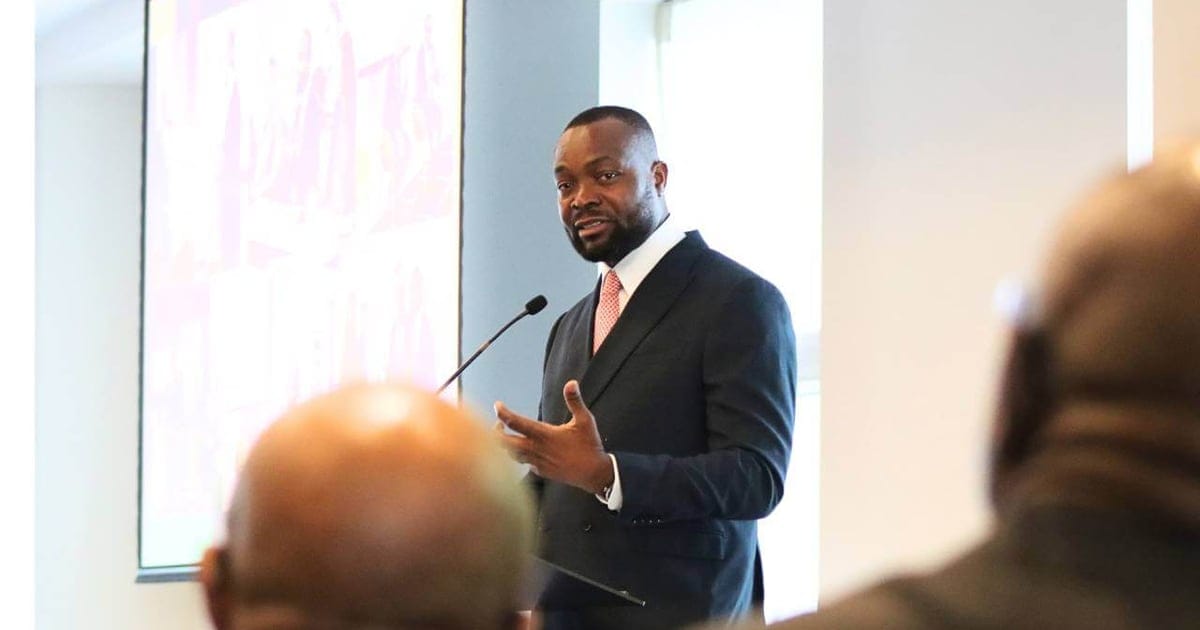
Speaking at a side event during the 81st session of the United Nations General Assembly (UNGA) in New York, Nigeria’s Minister of Communications, Innovation and Digital Economy, Dr. Bosun Tijani, highlighted the rapid investor momentum surrounding Project Bridge (Building Resilient Digital Infrastructure for Growth).
The national digital backbone initiative, designed to deploy 90,000 kilometers of new fiber-optic cable across the country, has generated significant international investor interest, backed by institutional funding commitments including $200 million from the African Development Bank Group and $500 million from the World Bank Group.
Despite strong institutional tailwinds, private sector operators at the summit stressed that driving capital into African digital infrastructure requires unyielding commitments to transparency, legal compliance, and ethical corporate governance.
Sam Darwish, co-founder, chairman, and CEO of IHS Towers, noted during a fireside chat that while the market opportunities within Nigeria’s digital ecosystem are immense, private enterprise must be conducted with absolute integrity. He emphasized that maintaining high ethical standards remains the foundational requirement for securing long-term capital from global institutional investors.
Echoing these views, Kazeem Oladepo, Senior Vice President and Chief Operating Officer at IHS Towers Nigeria, underscored the regulatory and governance frameworks necessary to channel domestic and foreign debt or equity investments into major infrastructure projects. He pointed out that compliance through statutory bodies like the Securities and Exchange Commission (SEC) protects cross-border investments and strengthens investor confidence.
Oladepo also framed Project Bridge as a strategic regional catalyst that extends far beyond Nigeria’s borders. By establishing direct fiber connections to Atlantic subsea cable landings, the expanded national backbone can deliver high-capacity international internet transit to landlocked West and Central African nations, including Niger, Chad, Burkina Faso, and parts of Cameroon.
World Bank Group Vice President for Digital and AI, Sangbu Kim, affirmed Nigeria’s central role in fostering regional digital integration. Kim stressed that cross-border digital infrastructure is essential for establishing regional trade efficiency and economic competitiveness, while noting that overcoming geopolitical friction through collaborative infrastructure sharing is critical for long-term stability.
Addressing the economic impact of the project, Ojoma Ochai, Managing Director of Co-Creation Hub (CcHUB), pointed out that expanding nationwide high-speed broadband will decentralize digital production across Nigeria. She explained that reliable connectivity in secondary and tertiary cities will unlock opportunities for creative entrepreneurs, content creators, and digital workers outside traditional urban centers like Lagos and Abuja.
The creative and digital technology sectors continue to demonstrate rapid expansion in Nigeria. Recent economic metrics from Strategy& (part of the PwC network) reveal that the arts, entertainment, and recreation sector contributed 165.1 billion Nigerian Naira to national GDP in Q3 2025, growing at 9.13% year-on-year—driven largely by rising internet penetration and digital content consumption.
World Bank estimates project that the full execution of Nigeria’s national fiber-optic rollout could unlock up to $5 billion in tax revenues while creating over 229,000 jobs across telecommunications, civil engineering, and digital services.
Concluding his address, Minister Tijani reiterated that the administration’s digital strategy focuses on building lasting public infrastructure rather than short-term political posturing, establishing a digital foundation that ensures future generations of African youth actively participate in the global digital economy.