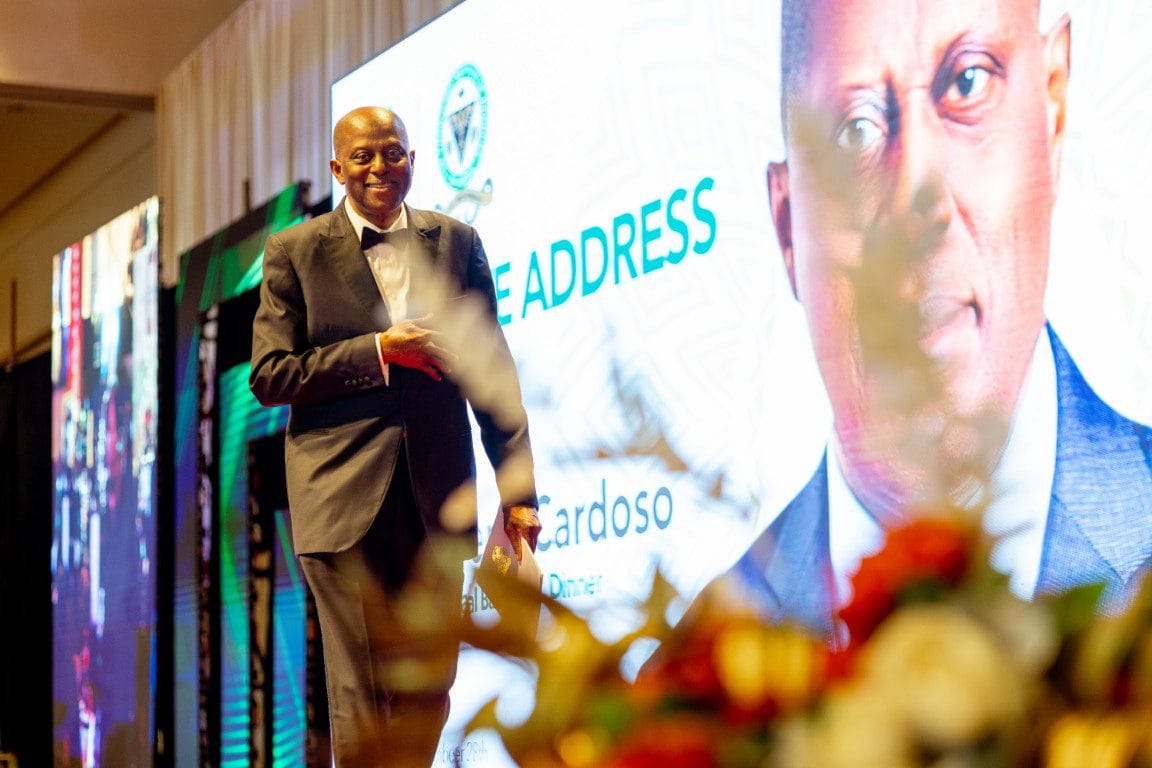
Three years after Olayemi Cardoso took charge of the Central Bank of Nigeria (CBN) in September 2023, the institution’s balance sheet and operational mandate look fundamentally different.
Between clearing massive legacy backlogs, executing an 875-basis-point interest rate hike cycle, pushing through a historic bank recapitalisation program, and expanding foreign reserves by over $21 billion, Cardoso’s tenure marks a decisive shift away from quasi-fiscal interventions toward traditional monetary discipline.
However, for Nigerian households and business owners, the defining number remains the exchange rate: moving from ₦768.73 to approximately ₦1,329.15 per dollar over thirty-six months.
Key Macroeconomic Indicators (October 2023 vs. September 2026)
| Economic Metric | October 2023 (Baseline) | September 2026 | Net Structural Impact |
| Official Exchange Rate | ₦768.73 / $1 | ₦1,329.15 / $1 | Shift to a unified, market-determined FX window. |
| Gross External Reserves | ~$33.60 Billion | ~$54.61 Billion | Increased liquidity buffer driven by portfolio inflows & remittances. |
| Monetary Policy Rate (MPR) | 18.75% | 26.50% (Peak: 27.50%) | Aggressive monetary tightening to curb structural inflation. |
| Verified FX Backlog | ~$7.00 Billion | Cleared ($0) | Audited legacy claims resolved; $2.4B invalid claims set aside. |
| Bank Capitalization | Legacy Baseline | 32 Banks Compliant | Mandated ₦500B capital threshold met ahead of deadline. |
The Three Operational Phases of the Cardoso Reforms
1. Year 1: System Reset & Unification (Late 2023 – 2024)
Cardoso inherited a central bank carrying over $7 billion in uncleared foreign exchange obligations, which severely damaged investor confidence. Following a forensic audit by Deloitte, the bank identified approximately $2.4 billion in invalid or improperly documented claims, resolving the remaining verified balance to restore institutional credibility.
Simultaneously, the CBN ended the import ban on 43 items, introduced a willing-buyer, willing-seller model, and unleashed an intense 875-basis-point tightening cycle that lifted the MPR from 18.75% to a peak of 27.5% by late 2024.
2. Year 2: Market Infrastructure & Recapitalisation (2024 – 2025)
Moving beyond emergency stabilization, the CBN focused on structural FX transparency by launching the Electronic Foreign Exchange Matching System (EFEMS) and enforcing the Nigerian Foreign Exchange Code.
To support President Tinubu’s vision of a $1 trillion economy, the bank mandated new capital requirements—setting a ₦500 billion threshold for international commercial banks. By late March 2026, 32 banks had successfully met these requirements. The bank also expanded diaspora liquidity channels by introducing Non-Resident Ordinary Accounts and remote Bank Verification Number (BVN) registration through NIBSS.
3. Year 3: Cautious Easing & External Buffer Growth (2025 – 2026)
With inflation decelerating, the Monetary Policy Committee initiated cautious rate cuts, bringing the MPR down to 26.5% by early 2026. Boosted by diaspora remittances, improved oil earnings, and portfolio inflows, Nigeria’s gross external reserves expanded to $54.61 billion by mid-September 2026—surpassing initial benchmark projections.
To secure digital finance infrastructure, the CBN launched Payments System Vision 2028 (PSV 2028), prioritizing system interoperability, instant settlement security, and automated fraud mitigation.
Macroeconomic Reality: Policy Success vs. Cost of Living
While monetary authorities have successfully rebuilt external liquidity buffers, stabilized foreign exchange volatility, and strengthened the banking system’s loss-absorbing capacity, the structural transmission to real economy prices remains uneven.
Central bank policy can influence money supply and interest rates, but it cannot resolve supply-side bottlenecks in agriculture, power infrastructure, or logistics. As the CBN completes its market-stabilization phase, sustaining long-term purchasing power now rests heavily on fiscal execution, energy sector performance, and domestic industrial productivity.