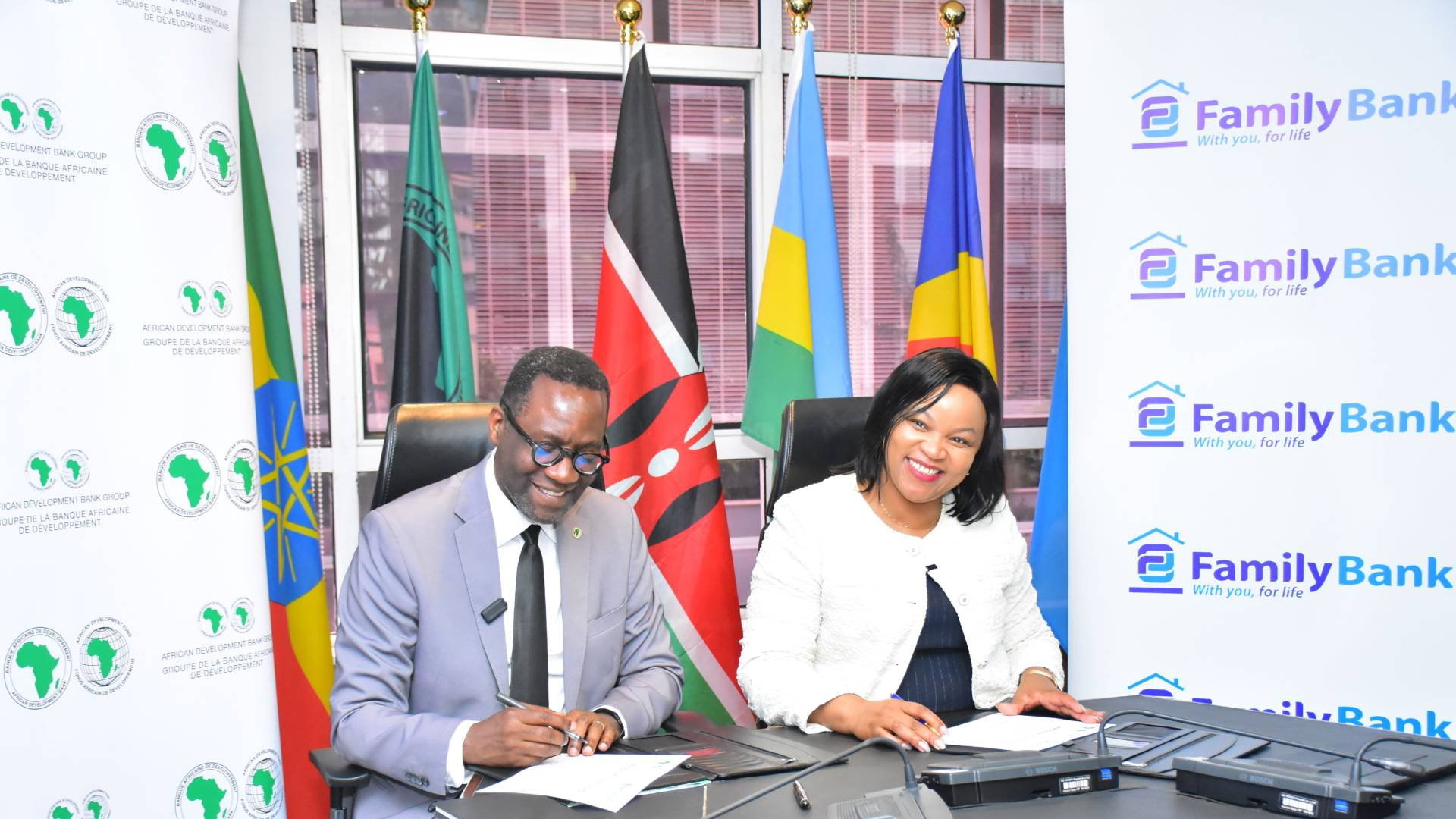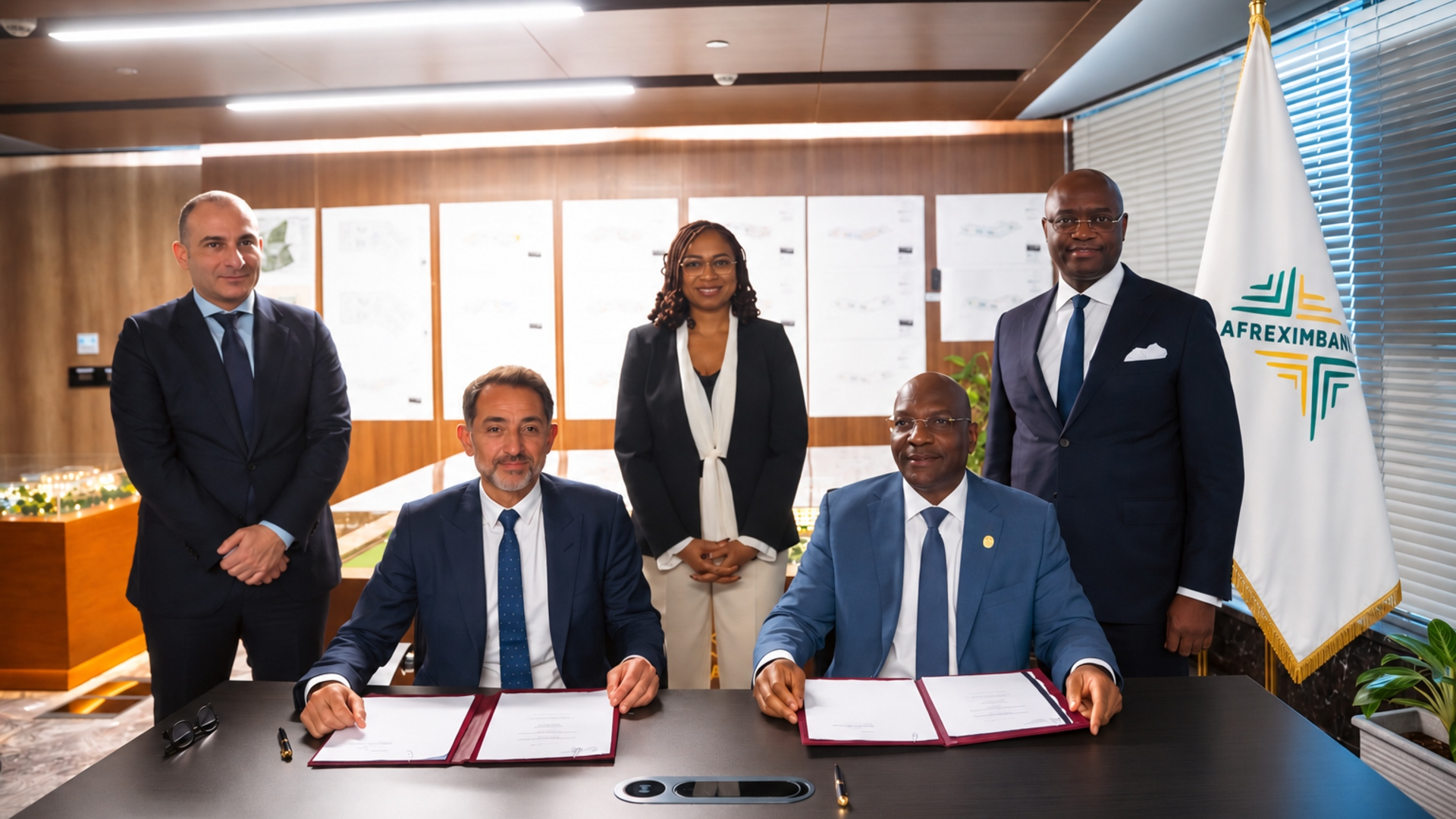
The African Export-Import Bank has extended a $45.6 million revolving working capital facility to Prometal SA, a Cameroonian industrial group built around steel production and agribusiness. The two sides signed the agreement on September 28 at Afreximbank’s Cairo headquarters, with Denys Denya, the bank’s Senior Executive Vice President, and Hayssam El Jammal, Prometal SA’s chief executive, putting their names to it. The facility gives Prometal the financing and guarantees it needs to cover working capital, freeing up cash to keep raw materials flowing into its plants rather than tying up capital waiting on receivables.
Prometal runs two distinct business lines under one roof. Prometal Acier, its steel and metallurgy arm, now operates seven industrial plants with a combined annual production capacity of roughly 360,000 metric tons of finished steel, turning semi-processed steel into agricultural equipment and construction materials for a country building out its infrastructure and housing stock. NOVIA Industries, established in 2018, has grown into a significant agribusiness player in its own right, producing an estimated 500 tons of edible oil and 160 tons of soap daily, placing Prometal among Cameroon’s notable manufacturers of refined palm oil products. El Jammal, often described in Cameroonian business press as the country’s “king of steel,” has built the group from a handful of plants into a conglomerate that reportedly employs more than 1,200 people, and has diversified further into furniture retail and real estate along the way.
El Jammal framed the Afreximbank deal as the next stage in a deliberate growth strategy rather than a one-off financing event. “Our mixed-matrix strategy combines vertical integration across the value chain, from the processing of raw materials to the production of finished goods, with horizontal expansion into new markets,” he said. “The clear ambition is to produce in Africa goods that are still largely imported today. In doing so, we aim to strengthen African production capacity, reduce dependence on imports and retain greater value within our economies.” Afreximbank president Dr. George Elombi echoed that framing, calling Prometal one of the “African industrial champions” the bank is working to capacitate as part of its broader push to help the continent capture more value from its own natural resources.
The facility lands amid a run of Afreximbank activity in Cameroon and across the continent. Just a week earlier, the bank issued a $29 million guarantee to BSMART Technology to scale the East African Community’s customs bond programme, and around the same period it signed a $500 million global credit facility with the Africa Trading and Distribution Company and extended $10 million to Tanzania’s Azania Bank to widen SME access to trade finance. Afreximbank’s exposure to Cameroon specifically has grown fast, with the bank’s own disclosures showing it becoming one of the country’s largest commercial creditors over the past two years as it backs industrial groups the government has flagged as national priorities.
That growth is worth reading alongside a less flattering storyline that has played out in Cameroonian press this year. Prometal’s steel operations are among the heaviest electricity consumers in the country’s manufacturing sector, with demand that has climbed from roughly 26 megawatts in 2024 to 40 megawatts in 2025 and is projected to reach 90 megawatts by 2027 as new plants come online. That growth has made Prometal a central figure in a tense standoff within Cameroon’s electricity sector: the company has been negotiating to buy power directly from state hydropower operator EDC over the national grid, a deal Socadel, the recently renationalized former Eneo and the country’s main electricity distributor, has publicly opposed, warning it would lose a customer that generated an estimated 42 billion CFA francs in billings between 2016 and 2025 at a time when Socadel itself is managing roughly 800 billion CFA francs in sector-wide debt. Regional outlets also reported separately that Prometal’s main steel subsidiary had stopped paying its monthly electricity bills, which routinely exceeded 900 million CFA francs, for several months into 2026, accumulating arrears estimated near 10.5 billion CFA francs before the dispute became public. Neither Prometal nor Afreximbank has addressed that reporting directly, and it isn’t clear whether the new facility has any bearing on it, but it’s relevant context for a company whose growth story and credit profile are increasingly intertwined with the outcome of Cameroon’s unresolved power sector reforms.
None of that necessarily undercuts the logic behind Afreximbank’s bet. Industrial import substitution, the goal both El Jammal and Elombi invoked, genuinely needs patient, large-scale capital behind it, and Prometal’s physical footprint, seven steel plants and an agribusiness arm turning out edible oil and soap at real volume, is the kind of asset base that gives a trade finance institution something concrete to underwrite. Whether that bet pays off as cleanly as the signing ceremony suggests may depend less on Prometal’s balance sheet than on how Cameroon resolves who gets to sell its industrial giants electricity, and at what price.