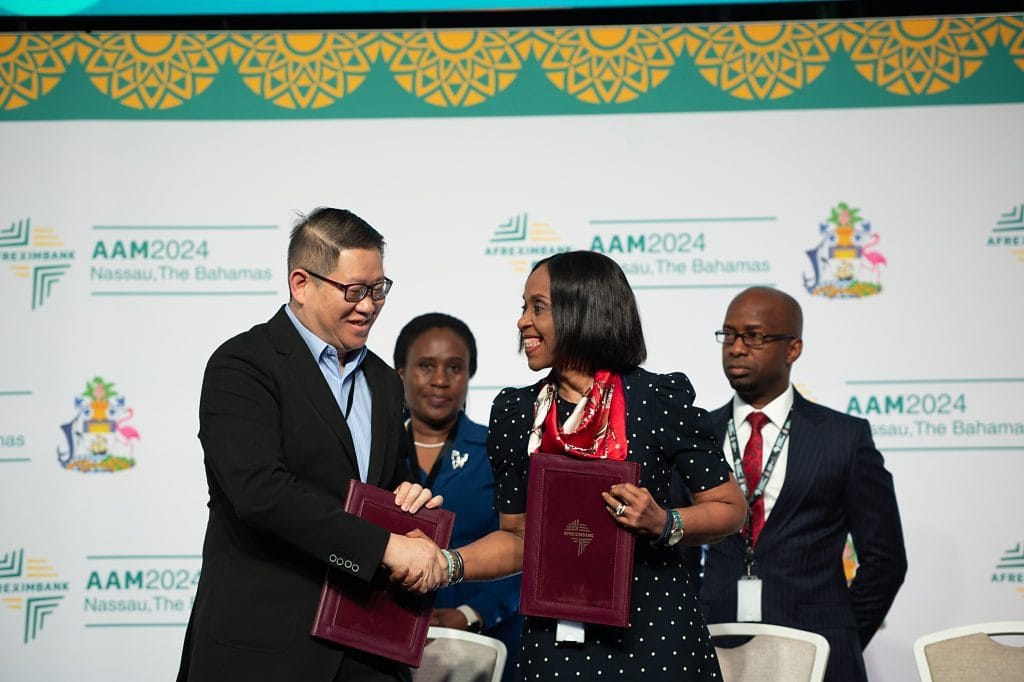
The African Export-Import Bank has issued a $29 million guarantee to BSMART Technology Ltd to scale up the East African Community Customs Bond, a digital system built to remove one of the more tedious frictions in regional trade: having to secure a fresh customs guarantee every time goods cross a new border.
Customs bonds exist to give authorities financial security for duties and taxes that may become payable while goods are still in transit. Traditionally, that has meant clearing and forwarding agents dealing with fresh paperwork and a fresh guarantee at every single border post along a multi-country route, a system that slows shipments down and adds cost at each crossing. The EAC Customs Bond replaces that with a single digital process, letting agents, guarantors, and customs authorities obtain and process the guarantee electronically instead of filing physical documents at each stop. Afreximbank’s new guarantee is meant to strengthen the financial capacity behind that system and push wider adoption among the businesses and customs officials who would actually use it.
The bond itself has moved fast for a piece of regional trade infrastructure. The EAC Secretariat began piloting it in Uganda in August 2025, Rwanda and Burundi joined that January, and it received its official launch at the EAC Heads of State Summit in March 2026, taking it from a single-country pilot to a genuinely regional system in under a year. Afreximbank’s Executive Vice President for Intra-African Trade and Export Development, Kanayo Awani, framed the guarantee as support for exactly that kind of simplification, cutting costs and improving the efficiency of customs procedures for businesses moving goods across the region. BSMART Technology’s Managing Director, Stephen Teang, described the guarantee as reflecting strong confidence in the platform and support for the company’s growth ambitions.
This deal sits inside a larger programme worth understanding, since it explains why Afreximbank is backing a single technology vendor’s platform rather than building something of its own. The guarantee runs through Afreximbank’s African Collaborative Transit Guarantee Scheme, which exists specifically to reduce the need for separate customs guarantees along regional transit routes rather than solve the problem country by country. The EAC Customs Bond is the scheme’s East African expression, and the bank has said this support deepens its relationship with the EAC Secretariat and the wider regional economic commissions working on similar friction points elsewhere on the continent.
The commercial logic behind digitising customs bonds is straightforward once you consider who actually pays for the old system’s inefficiency. Every border crossing that requires fresh paperwork and a fresh guarantee adds time and cost that ultimately gets absorbed somewhere in the price of the goods moving through it, whether that’s a manufacturer, a trader, or eventually a consumer. A single digital bond that holds across multiple countries doesn’t just save agents administrative work, it removes a real cost layered onto intra-African trade at a moment when the continent’s own trade agreements are explicitly trying to make moving goods between African countries cheaper and faster, not harder.
Whether $29 million in additional financial backing actually translates into meaningfully wider adoption will depend on how quickly more EAC member states plug into the system and how reliably it performs once transaction volumes grow past a pilot’s scale. But the sequencing here, a real pilot in one country, expansion to two more, a formal regional launch, and now a substantial guarantee to fund scale-up, is a considerably more disciplined rollout than many regional trade technology initiatives manage, and gives this particular fix a genuine shot at becoming the default rather than one more pilot that never quite reaches the businesses it was built for.