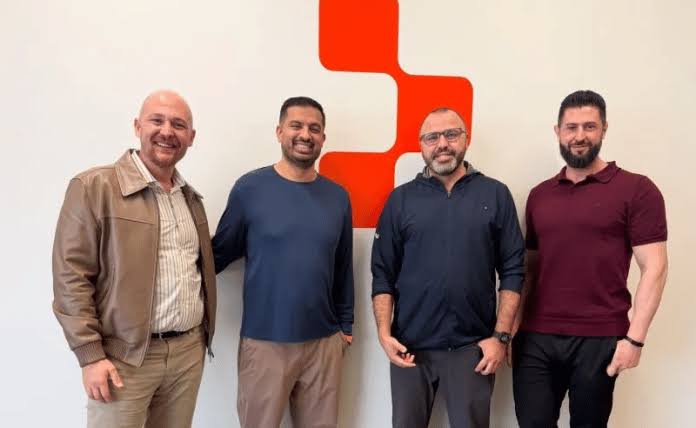
Replit, the San Francisco-based platform that lets people build software through plain-language chat, has acquired Atta, a business-analysis and charting startup co-founded by Omar Shaik and Amine Ben Khalifa, both of whom are joining Replit as part of the deal. The acquisition was announced on September 25, financial terms undisclosed, and the first result is already live: inside a Replit chat, users can upload a dataset or connect a data source, ask a question in plain language, and get back an interactive chart built on Atta’s engine rather than a wall of numbers, a waterfall chart for a revenue swing, a heatmap for a retention pattern, no SQL required.
It’s worth being precise about what “Egyptian-founded” means here, because the two don’t point to the same story. Shaik, Atta’s CEO, was an early engineer on Apple’s Vision Pro team before co-founding the company; Ben Khalifa, its chief AI scientist, holds a machine-learning PhD and previously worked at Adobe and Apple. Atta itself was backed by Menlo Ventures and angel investors tied to Dropbox, Replit and Google, a Silicon Valley cap table built on Silicon Valley careers. Nothing in the available record points to Atta operating out of Cairo or anywhere else in Egypt. This reads as a diaspora success story, Egyptian-origin founders building inside the American tech industry, rather than a homegrown Egyptian startup getting bought out of the local ecosystem, and that distinction matters for what it actually signals about Africa’s tech scene versus its technical talent pipeline abroad.
The path to the deal is a decent story on its own. About two years before the acquisition, Shaik cold-emailed Replit’s CEO, Amjad Masad, asking for investment. Masad and Replit’s president, Michele Catasta, looked at an early demo of what Atta called an “infinite canvas” approach to charts and data apps, and the relationship that grew out of that pitch eventually turned into an acquisition instead of a check. Replit frames the long-term goal as “self-driving companies” where data analysis is woven into everyday work rather than sitting in a separate specialist tool, and says the immediate payoff is more mundane but real: teams no longer redoing slides and charts before a leadership review because the chart was already generated correctly, labelled and resized to fit, inside the conversation where the question was asked.
The timing isn’t incidental. The Atta deal lands two and a half weeks after Replit opened its first office outside the United States, in London’s King’s Cross, with plans to double its European headcount and investment within a year and a coding-skills partnership aimed at 100 young Londoners outside education or employment. Replit is currently valued at around $9 billion with more than 60 million users, and counts Atlassian, Adobe, Accenture, Visa and Databricks among its enterprise customers alongside partnerships with Google, Microsoft and Slack. Both moves, the international office and the acquisition, read as a well-capitalised platform spending to widen what it can do and where it can do it. For African tech specifically, the more interesting thread to watch isn’t whether this was a Cairo exit, it wasn’t, but whether Egyptian and other African-origin engineers keep surfacing inside deals like this one from within Silicon Valley’s own networks, which is a different kind of pipeline than a homegrown startup scaling locally, but a real one all the same.