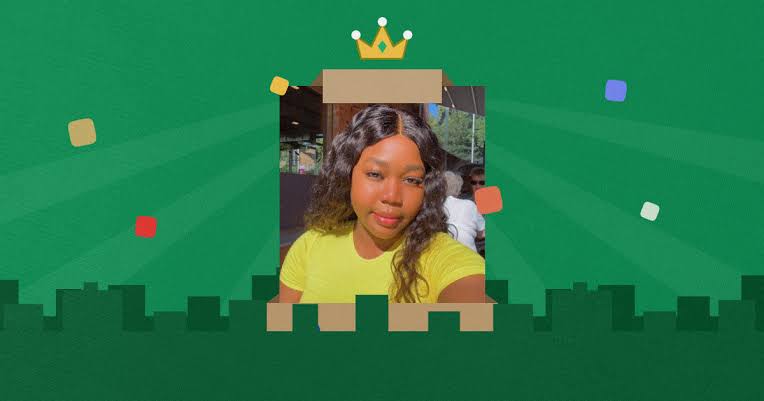
Vatar Inc., the company behind the free browser game Lagos Life, has raised $500,000 from three of Africa’s best-known tech founders at a reported $10 million valuation, just nine days after the game went live on October 1. The round was led by Olugbenga “GB” Agboola, CEO of Flutterwave, through his fund Resilience17, with Nathan Nwachuku, CEO of Terra Industries, Abdulhamid “AB” Hassan, CEO of Mono, and angel investor Oo Nwoye also taking part. The company says the round opened and closed in a single day. Founder Shalom Rayhamen announced the deal on social media, and the numbers around it come from her and the company, so every figure below should be read as self-reported unless stated otherwise. A $500,000 cheque for a 5% stake at a $10 million valuation is an early-stage bet on one developer’s ability to turn a viral moment into a lasting business, not a verdict on the business itself.
Start with the traction, because it is the reason the round happened and the part that needs the most care. Lagos Life’s own page claims 4.5 million players, more than 1.5 million average daily players and 10.8 million unique visitors, while its page description and the funding announcement say 4.7 million players in nine days. Other reports give lower and earlier figures that fit a fast climb: Technext counted 1,173,086 total players at 7:15 a.m. on October 5, WeeTracker reported more than 2 million that day, and Techpoint, citing TechCabal, put it at 4.3 million by October 8. The gap between 4.5 million players and 10.8 million visitors shows the difference between people who opened the game and people who played it, and the counts do not say how long anyone stayed. Viral browser games often lose most of their audience once the novelty fades, and no outlet we found had retention data. The company also says players come from 15 countries, mostly Nigeria, followed by the United States, the United Kingdom, Ghana, Canada and the Netherlands. None of that has been independently audited.
The origin story is part of the appeal and is consistent across reports. According to the company, Rayhamen, a UK-based Nigerian developer with nearly a decade of JavaScript experience, started building at 9 p.m. on September 30, napped, and released the game at 7 a.m. on October 1, Nigeria’s Independence Day. She says she used AI tools, including Anthropic’s API, for research and coding. The game was inspired by The Sims 3 and by Lagos Run, a browser game in which players drive a danfo bus, built by Berlin-based engineer Opeyemi Adeniran. Players create characters, find jobs, earn virtual naira, pay rent, ride danfos, buy generators for power cuts and take part in a virtual government, with an in-game clock that follows real Lagos time. Some outlets, including Condia and WeeTracker, name the developer as Shalom Mathew, while TheCable and Technext use Rayhamen. They appear to describe the same person, but we could not confirm the relationship between the two names, so check which one she prefers before publishing elsewhere.
On money, the company has been unusually specific, which helps readers test it. Rayhamen posted that the game earned $46,900 in its first four days and says Vatar has “earned and contracted” more than $170,000 since launch. That phrase combines cash received with signed deals, so it is not the same as $170,000 in the bank. Revenue comes from virtual billboards, which Techpoint saw rise from ₦5,000 ($3.77) to ₦50,000 ($37.66) a week, in-game land sales, branded integrations, musician placements in virtual clubs and optional currency top-ups, which the announcement says Flutterwave processes. It also says Chowdeck appears as an app on every character’s in-game phone. We could not confirm either partnership beyond the company’s announcement. Costs are visible too: Techpoint reports roughly $2,000 a month on AWS and $4,000 on Cloudflare, about $6,500 spent so far, and $10,000 in AWS credits from a supporter, though total running costs were not disclosed. Profitability has not been stated.
Several details complicate the tidy version of this story. Reports differ on when the company was formed: the announcement says Vatar Inc. was incorporated on October 6, while Techpoint cites state records showing October 5 and describes it as a Delaware company. Either way the legal entity appeared days after the game, and the round closed three days after that. The $10 million valuation also sits oddly beside Rayhamen’s October 7 comment, reported by Techpoint, that she turned down a $100,000 offer because “Lagos Life is valued at $1 billion.” And the in-game economy has had real problems. An exploit let some players generate huge balances, accounts with only received transfers were flagged and some were zeroed, and Rayhamen has said “we have too much money in the game,” with an income tax planned. The game’s terms describe virtual naira as non-redeemable, so players asking to cash out will not be able to, for now. An October 2 outage was met with ₦100,000 of in-game cash for players, which has no real-world value.
The market context explains why investors moved fast. WeeTracker, citing GamesIndustryAfrica, reports more than 46 million active gamers in Nigeria and a market growing about 12% a year, with about 87% of African gamers on smartphones and credit card use near 3.5%, which makes paid downloads and in-app purchases hard. A free game that runs in a browser, needs no app store and earns from local advertisers and brands avoids that barrier. Copycats are already appearing, including a London red bus game and a Port Harcourt life simulator, so the lead is thin. The funding is meant for a premium interface, more game depth and new worlds, and Techpoint reports plans for a second game within 30 to 90 days and Android and iOS apps possibly by the end of October. Port Harcourt and Abuja have been added, and the company says it will build social worlds for real cities one by one.
The open questions decide whether this is a business or a moment. Retention, revenue that survives the first month, and the cost of serving millions of simultaneous visitors are all unknown, and the round’s terms, including whether it is priced equity or a convertible note, have not been published. Brands and artists pay for attention, so the real test is whether the audience stays once the next viral game arrives. For founders watching from Lagos, Nairobi or Accra, the lesson is less about the AI-assisted overnight build and more about what came after: revenue from day one, investors reached within hours, and a public dashboard that invited scrutiny. For readers deciding how much to believe, the best advice is to wait for a second set of numbers a month from now.
Sources: TheCable; Techpoint Africa; Condia; Condia profile of the developer; Technext; WeeTracker; Vatar, Lagos Life page;