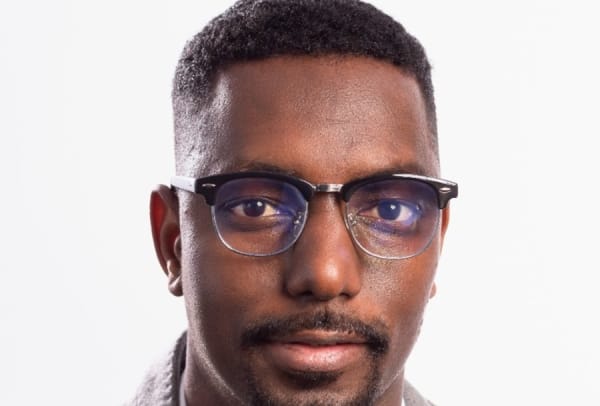
Mohamed M. Diallo, a Mauritanian biochemist and entrepreneur based in Canada, is building a company that wants to change how laboratories find harmful bacteria and fungi. He is the CEO of Bioeureka, which he founded in 2022, and its pitch is simple: replace slow lab culture methods with artificial intelligence that reads microscope images. Bioeureka says its main platform, AIMO, analyses microscopic images and returns results in minutes rather than the several days that traditional methods can take. A second product, MicroSelect, is meant to speed up the pre-culturing of targeted microorganisms, and together the two are designed to automate repetitive tasks for lab technicians. The company says it serves water, soil and air quality control in the agri-food sector, as well as research centres and universities. Those performance claims come from the company and the original profile, and this newsroom could not find published accuracy figures or independent validation for either product.
What can be confirmed is the company’s standing in Canada’s AI ecosystem. Mila, the Quebec AI institute, announced a partnership with Bioeureka in October 2024, describing a portable app launched in April 2023 that runs on a smartphone or computer and detects pathogens, with Diallo named as co-founder and CEO. In June 2026, IVADO, the Canadian AI research consortium, announced an alliance in which it will supply data science and machine learning expertise to help Bioeureka develop and validate its identification algorithms. Bioeureka is part of IVADO’s 2026 cohort of its DémultiplIA programme. At the time, Diallo called the partnership “a statement of intent,” and Zoé Ducourau, the company’s AI Product Manager, said it would help train models that are “more robust, more interpretable, and above all more reliable under real-world conditions.” That wording is useful: it suggests the models are still being validated for real-world use. Neither announcement mentions AIMO or MicroSelect by name, and neither gives results.
On money, the public record is thin. A deal-tracking site lists a $1.1 million pre-seed round announced in May 2024 from five investors, among them National Bank of Canada, Centech, Privateer Holdings, BioPharma Credit and the Canadian Innovation Center. That listing was last updated in May 2024, so treat it as dated, and the company has not published later funding figures that this newsroom could find. Trackers place Bioeureka in Montreal, while the original profile says only that Diallo is based in Canada.
The problem Bioeureka is chasing is real, and it is crowded. Traditional contamination testing can mean sending samples to outside labs and waiting 5 to 20 days, according to a report on London-based Spore.Bio, which says its AI detects bacteria in minutes and raised a $23 million Series A in February 2025. Established players such as bioMérieux and Bio-Rad rely largely on molecular methods that can still take around 48 hours. For a small company, the hard part is less the idea than the proof: food, water and health customers generally want evidence that a new method matches or beats the accepted one before they change how they test. Regulatory status is not described in any source this newsroom reviewed.
Diallo’s own route is the part African readers may find most useful. According to the profile, he studied marketing in Quebec from 2013, earned a bachelor’s degree in biochemistry and molecular biology from the University of Ottawa in 2017, and a university diploma in biological engineering in 2020. He ran an event marketing company, Projets Outaouais, from 2018, and worked as quality manager at Hexo Corp, a consumer goods firm, from 2021 to 2023. He is also general manager of Attani, a joint venture that creates and runs technology companies. Those details come from the original profile and have not been independently confirmed. The mix of lab science, quality control and marketing shows in the company’s focus on technicians and routine testing rather than on research.
The Mauritania angle is a diaspora one. Bioeureka is a Canadian company, and nothing reviewed here says it operates in Mauritania. The home ecosystem is small: African Business reported in February 2026 that fewer than 100 tech-enabled startups are active there, annual startup investment is below $5 million, and early funding is mostly grants of $5,000 to $50,000. In September 2026, Mauritania’s diaspora in Canada, estimated at more than 4,000 people, also gained a bilateral chamber of commerce, the CMCCI, which aims to turn the diaspora into an economic asset. Bioeureka has made no announcement connecting it to either, and the company’s own stated ambition is to become a standard tool for microbiology labs worldwide, including in developing countries and remote areas. If it reaches them, rapid, low-cost testing could matter most where lab access is limited.
EllaLink Lands 670km Subsea Branch to Triple Mauritania’s Digital Capacity