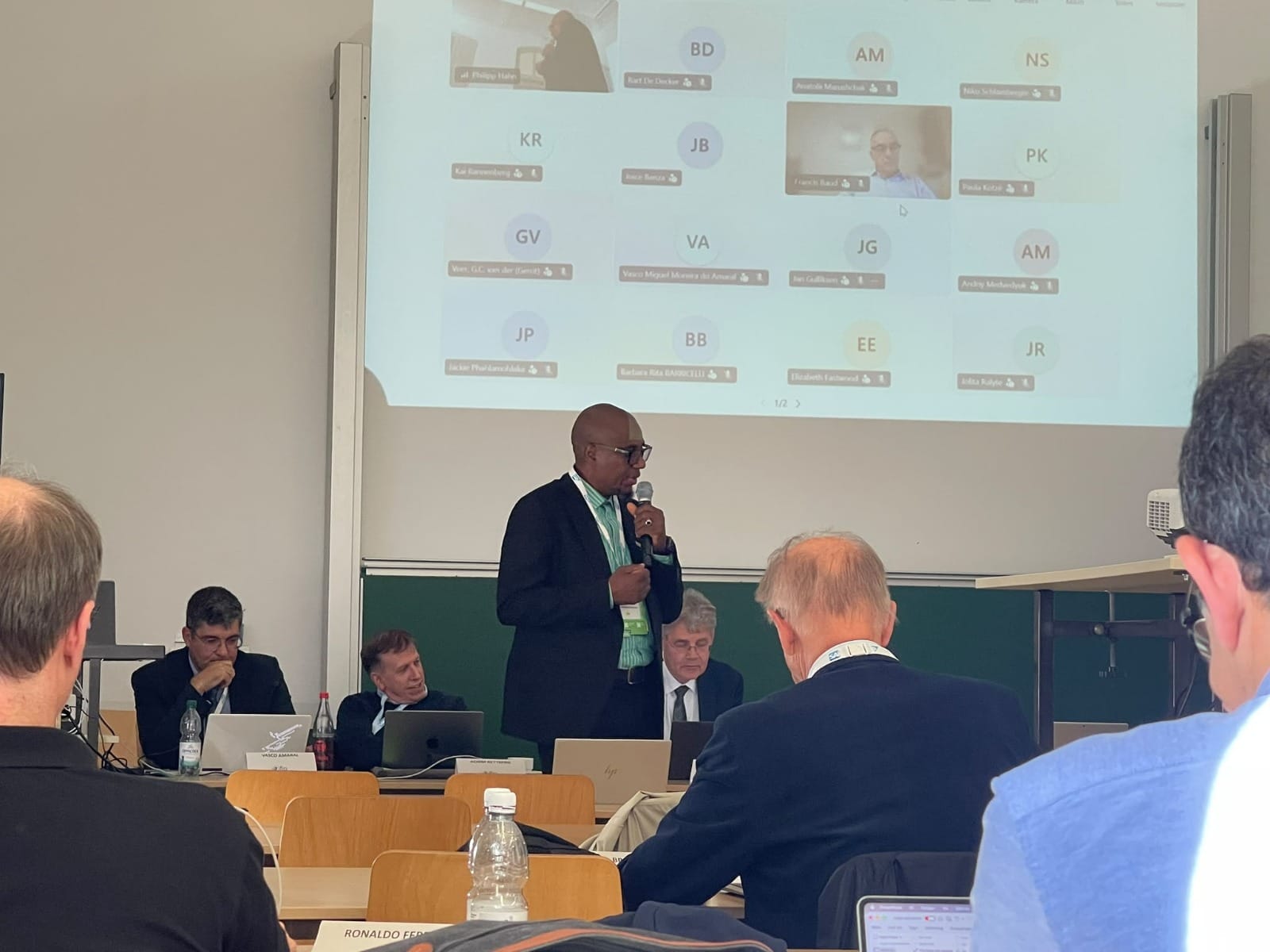
Professor Muhammad Sirajo Aliyu, president of the Nigeria Computer Society (NCS), has been elected a Councillor of the International Federation for Information Processing (IFIP) for the 2026 to 2029 term. According to the NCS statement, the election took place at the IFIP General Assembly in Dresden, Germany, where representatives of the international information-processing community gathered. He then received an official letter confirming the result, signed by IFIP General Secretary Prof. Anatolii Marushchak. The NCS says the position gives the Society a chance to raise its visibility and involvement within the international professional and computing community. The statement reached this newsroom cut off mid-sentence, so the rest of its wording could not be read. The election has not yet appeared in any IFIP publication this newsroom could find, and the dates of the Dresden assembly could not be confirmed, so the account rests on the NCS statement and the confirmation letter it describes.
IFIP is not a household name outside the profession, but it has a long record. It was founded in 1960 under the auspices of UNESCO, after the first World Computer Congress in Paris in 1959, as a non-governmental, non-profit umbrella body for national information-processing societies. IFIP says it represents societies from more than 40 countries or regions across five continents and holds consultative partnerships with UNESCO, the International Telecommunication Union (ITU), UNIDO and the UN’s Economic and Social Council. It runs technical committees and working groups on subjects from security to ethics to computers in education, and its General Assembly brings together national representatives, committee chairs and officers.
The Councillor role sits near the top of that structure. IFIP’s own pages say its General Assembly elects the President, four Vice-Presidents, an Honorary Treasurer, an Honorary Secretary and eight Councillors, who together form the IFIP Board. The federation’s bylaws say Councillors are nominated by at least four voting members and take office at the end of the General Assembly where they are elected. The bylaws excerpt this newsroom could read does not state a term length, so the 2026 to 2029 period comes from the NCS statement, and the number of Councillor seats filled at this assembly was not published. The last published results this newsroom found, from the 2024 assembly in Lisbon, show two Councillors elected, Alastair Irons and Moira de Roche. The same assembly elected Zimbabwe’s Joice Benza as a Vice-President, which makes African representation on the Board a recent pattern rather than a first.
Aliyu already has a formal link to IFIP. IFIP’s February 2026 bulletin lists the NCS, based in Lagos, as the federation’s Nigeria Country Representative Member, with Aliyu as its representative. So the election moves him from representing Nigeria in the General Assembly to sitting on the Board that governs IFIP. His profile is well documented in Nigerian media. He is the 15th NCS president and the first from Northern Nigeria to hold the post, and Techeconomy reported in August 2025 that he was re-elected for a second term at the Society’s annual general meeting in Kano. Wikipedia lists him as head of ICT at the Federal University Dutse, a member of the board of the National Information Technology Development Agency (NITDA) and a member of the National Council for Digital Innovation and Entrepreneurship. His title also differs between sources: the NCS statement calls him Professor, while Wikipedia lists him as Associate Professor, so check the preferred form before publishing.
What the seat will deliver is the open question. A Board position can give Nigeria a say in IFIP’s priorities, from professional standards to digital skills and AI governance, and a route for Nigerian experts into its committees and conferences. It does not by itself bring funding, and the NCS has not said which programmes or committees it plans to push. For Nigerian technologists, the practical test is whether the Society uses the platform to open IFIP’s working groups and events to members outside Lagos and Abuja, and to bring international standards and training back home.