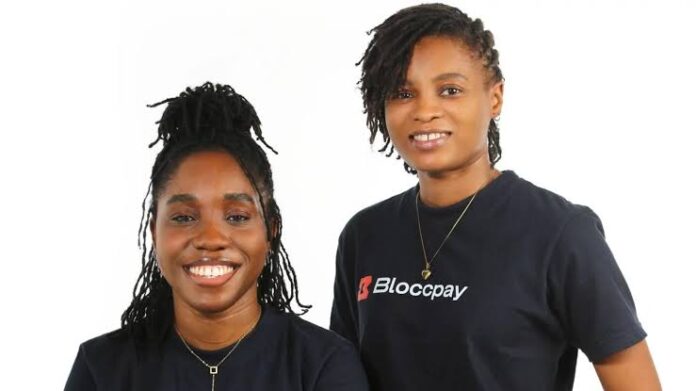
Getting paid in dollars is only half the problem for an African remote worker, and the other half is proving the money is yours. Bloccpay, a Nigerian-founded payroll and invoicing platform, is built around that second problem. It pays contractors and staff in stablecoins, and it generates itemised digital pay slips and invoice receipts so that a bank, landlord or visa office has something more readable than a crypto wallet history. The idea came from co-founder Jennifer Echenim’s own experience after she moved from Nigeria to the United Arab Emirates while working remotely for international firms. By her account, one payment platform gave her proof of earnings but was slow and charged poor exchange rates, while a popular crypto exchange paid instantly but produced raw ledger histories that UAE banks rejected as proof of income. Her monthly workaround was to send funds through a friend with a US dollar account, convert them to stablecoins, move them to her wallet and trade peer to peer for local currency, which she called a “convoluted dance.”
Here is how the product works, according to the company’s coverage. Employers verify their business and an administrator, then add full-time staff or contractors and set weekly or monthly pay runs funded in fiat or crypto. Workers can be paid to a bank account, a crypto wallet or, in some markets, mobile money. Each payroll cycle produces an itemised pay slip, and contractors can issue invoices with contract attachments, proof-of-work files and Value Added Tax calculations, while clients pay through a link without needing an account. Pricing, as reported by Disrupt Africa and TechCabal, is $15 a month per contractor for payroll, 1% on invoices and 1% on withdrawals, with deposits free. The reports do not say whether the employer or the worker bears each fee. As a rough illustration, a contractor paid $2,000 a month who withdraws it all would face about $35 in Bloccpay fees, or 1.75%, before any exchange-rate spread or bank charges, assuming the payroll fee and withdrawal fee each apply once and no invoice fee is charged. The company says the withdrawal fee is meant to encourage people to keep funds in its system, and its longer-term plan is a financial hub offering health insurance, travel booking, utility payments and similar services built on verified income histories.
What the company says it has achieved is early and self-reported. Bloccpay is still in private beta. Disrupt Africa reports more than $400,000 in gross transaction volume and close to 300 users, WeeTracker reports that Q2 2026 volume grew sevenfold on the previous quarter and that by mid-2026 it had matched all of 2025, and the product is said to be live in Nigeria, Kenya, Ghana and South Africa, with payouts in Uganda and Tanzania. Its business customers are mainly in the United States and the United Kingdom. WeeTracker also reports one customer growing from about $1,500 to $22,000 a month. The company is largely bootstrapped, with a $100,000 Stellar Community Fund Build Award, a place in Techstars’ Founder Catalyst programme and membership of Circle’s alliance programme, and no priced funding round or investors have been disclosed. These numbers come from the company and have not been audited, and quarter-on-quarter jumps from a small base are easy to produce, as the co-founders themselves note when they separate new sign-ups from customers who trust the platform with more payroll.
Several details differ between reports, so treat them with care. TechCabal says the idea formed in 2022 and a private beta ran in 2023, while Disrupt Africa says the company was registered in 2022 and began operating with a private beta in 2024. Roles are also reported differently: Disrupt Africa names Ajoke Asunmonu as chief executive and Echenim as chief technology officer, while the TechCabal feature leads with Echenim as the founder with a blockchain engineering background, and WeeTracker adds that Asunmonu previously managed enterprise payments accounts at Flutterwave. On the technology, TechCabal calls the platform chain-agnostic, the company’s homepage lists eight networks including Ethereum, Solana, Base, Arbitrum and Tron, and WeeTracker names Stellar, Base, BSC and Solana, so confirm which networks are live for your use. The homepage also invites visitors to sign up free, while coverage describes a private beta, so ask whether you can get access. TechCabal’s figure of about 20,000 Nigerians working for domestic and international outsourcing firms could not be traced to a source, and WeeTracker cites a much wider estimate of 15 to 20 million African workers earning across borders, so the market size is unsettled.
The central claim, that these records will be accepted, is the part still unproven. TechCabal’s introduction describes “bank-grade” pay slips, but its own reporting and others say the founders acknowledge that banks and consulates may not accept the documents, and Business Tech Africa notes that acceptance varies by institution and country. A pay slip from a startup is a useful supporting document, but a UAE bank, a landlord or a visa officer decides for itself what it will treat as proof of income, and some will want employer letters, tax records or bank statements as well. Stablecoins also do not remove every cost, because workers may still pay to convert and withdraw. Regulation is another gap: none of the coverage we reviewed names a licence, regulator or compliance approval for a business that holds employer funds and pays out to bank accounts and mobile wallets, and Echenim says the team underestimated compliance in early design. The company lists a Delaware address on its website. Its competitors include Request Finance, Bitwage and Rise Works, and its pitch is deeper work on African banking corridors, which Echenim describes as each being “its own piece of work” because Nigeria does not work like Kenya.
For remote workers and the companies that hire them, the practical advice is to use the tool as one input and check requirements first. Ask your bank, landlord or embassy exactly which documents they accept before relying on any pay slip, keep contracts and tax records alongside it, and compare total costs including exchange rates, not only headline fees. Employers should ask about licensing, who holds the funds and what happens if a payout fails. For the wider ecosystem, Bloccpay is a test of whether a record of payments can become a trusted financial identity for people who earn across borders, and the evidence that will settle it is not volume but whether banks and consulates start accepting these documents. Worth watching are an exit from private beta, a named regulator or licence, and any institution that publicly accepts Bloccpay records.
Sources: TechCabal feature on Bloccpay; Disrupt Africa; WeeTracker; Business Tech Africa; Bloccpay website. Workers and employers can create a Bloccpay account here, subject to the beta access noted above.
A note for startup founders: you can find this post, and every post we publish from here on, at raiseready.indexprima.com.