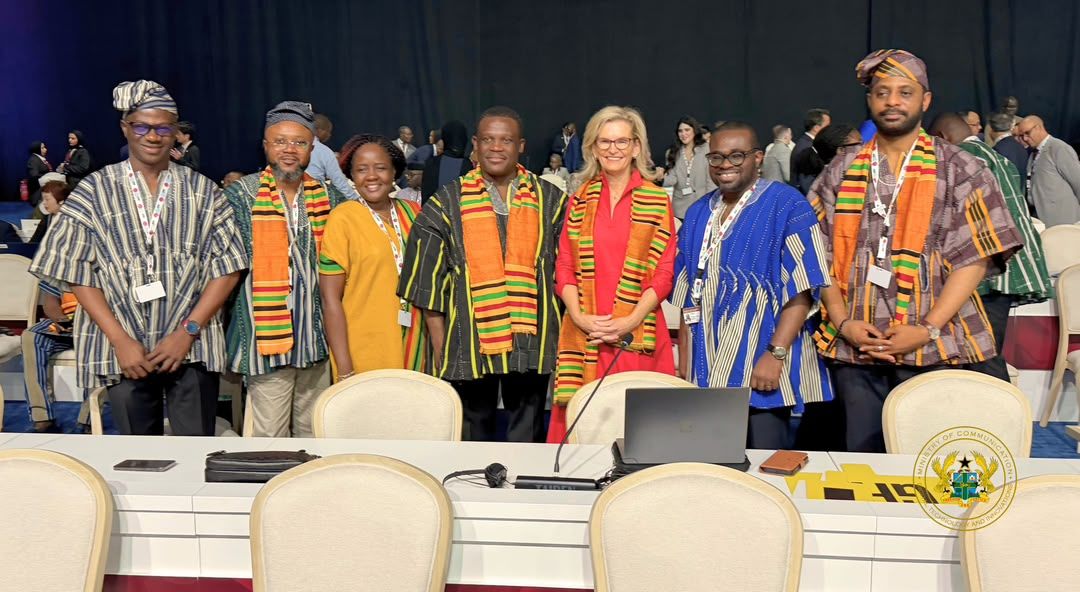
Ghana’s communications minister, Samuel Nartey George, voted in Doha as the International Telecommunication Union (ITU) re-elected its chief and picked a new deputy. None of the five top jobs decided so far went to an African.
The ITU is the United Nations body for telecoms and digital policy. Its 194 member states each hold one vote. It is meeting in Doha, Qatar, from 9 to 27 November. This Plenipotentiary Conference sets its direction and picks its leaders every four years. The new team is due to take office on 1 January 2027. Votes are secret, so how Ghana voted is not known.
Here is how the top races went, as posted on the conference results page.
| Post | Winner | Votes |
|---|---|---|
| Secretary-General. | Doreen Bogdan-Martin, United States. | 164 of 173 cast. |
| Deputy Secretary-General. | Adel Darwish, Bahrain. | 90 of 177 cast, in the fourth round. |
| Radiocommunication Bureau. | Eric Fournier, France. | 94, against 75 for Germany’s candidate. |
| Standardization Bureau. | Seizo Onoe, Japan. | 169, unopposed. |
| Development Bureau. | Nele Leosk, Estonia. | 93, against 83 for Zimbabwe’s candidate. |
The Secretary-General vote was not close. Bogdan-Martin won a second four-year term with 164 of 173 votes, which is about 95% by our sums. She says she is “deeply honoured” by the trust member states placed in her. “Together, we can make sure the digital future leaves no one behind,” she said.
The deputy race was tighter. Darwish has run the ITU’s office for Arab States since 2020. He beat Stephen Bereaux of the Bahamas by 90 votes to 85 in the last round. The winner needed 88.
The result Africans will notice is in the Development Bureau. That bureau helps countries expand networks and close the digital gap. Cosmas Zavazava of Zimbabwe won the post in 2022 with 101 votes. This time he lost to Estonia’s Nele Leosk, 93 votes to 83. A candidate needed 89. The Herald reported that Zimbabwe’s government had rallied African countries behind his bid.
What did Ghana say? Minister George said that more than half of Africa’s people were still offline in 2026. He called for more global cooperation and investment to close the gap. He wants the ITU’s next four-year plan to set measurable goals, especially for last-mile connectivity and fair access to spectrum and satellite orbits. He also pointed to Ghana’s plan for a national AI computing centre and its One Million Coders programme. Ghana sits in the top tier of the Global Cybersecurity Index, he said, and he offered to share its experience with cyber response teams and child online protection.
Ghana also has its own seats on the ballot. It is seeking re-election to the ITU Council, which governs the union between conferences. Africa has 13 of the Council’s 48 seats for 2027 to 2030. Nineteen African countries are competing for them. Ghana’s Edmund Yirenkyi Fianko, who heads its National Communications Authority, is one of four African candidates for three African seats on the Radio Regulations Board. That board oversees how countries use radio spectrum and satellite orbits. The other three candidates are from Egypt, Botswana and Morocco. When we checked, the results page did not yet show results for the Council or the Board.
Why it matters: The ITU’s leaders shape how the world sets rules for spectrum, satellites, AI and cybersecurity, and how money for connectivity gets spent. Africa has many people still offline and many seats at the table, but it won none of the five top jobs. The Council and Board votes now decide how much weight African countries carry for the next four years. Ghana’s pitch pairs local steps on AI, skills and cybersecurity with calls for fairer access to spectrum and orbits. It shows what African members will push for.
What to watch next: the results of the Council and Radio Regulations Board votes, and whether Ghana and its candidate Fianko win. Watch how many of Africa’s 19 Council candidates succeed for 13 seats. Watch whether Leosk and Darwish give priority to last-mile connectivity and to countries with many offline users. Watch what the ITU’s strategic plan for 2027 to 2030 says on measurable goals. And watch how African countries respond, since the continent has now lost the Development Bureau post.
Sources: Ghana News Agency on Ghana’s role in the ITU elections, November 2026; ITU on the re-election of Doreen Bogdan-Martin; ITU on the election of Adel Darwish; ITU PP-26 election results; ITU PP-26 candidates; ITU on the election process; Ghana News Agency on Ghana’s priorities in Doha; ITU PP-22 result for Director of the Development Bureau; The Herald on Zimbabwe’s campaign.
A note for startup founders: Don’t practice on investors. Practice on AI first. RaiseReady by Index Prima is an AI fundraising simulator for African founders: upload your pitch deck, get a readiness score and face a tough AI investor before the real meeting. Find this post, and every post we publish, at raiseready.indexprima.com.