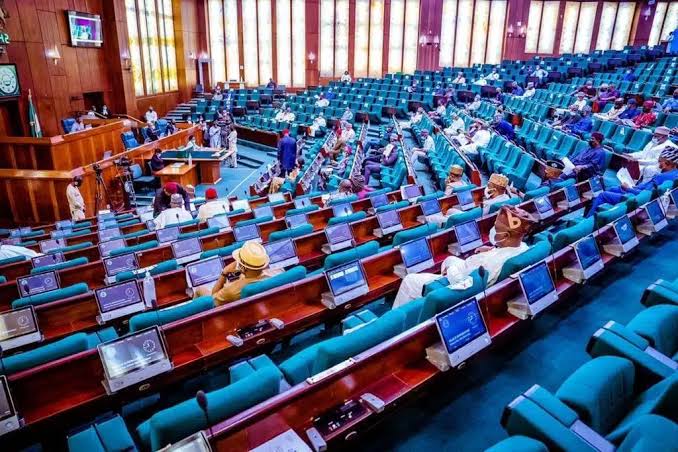
Nigeria’s National Assembly has passed a bill that would let the Central Bank of Nigeria (CBN) name large non-bank financial firms as “Systemically Important Institutions”. Once named, a fintech would face tougher rules on security, governance, reporting and stress tests, and the central bank could look into its systems.
The bill is not yet law. Reports say it now goes to President Bola Tinubu for his signature.
Here is the short version. The Senate passed the bill on 10 November 2026, and the House of Representatives passed it on 18 November. It amends the Banks and Other Financial Institutions Act of 2020 and adds a new Section 62A. The CBN governor would decide who is on the list. Size alone does not settle it. The governor can weigh market share, user numbers, transaction value, links to banks and payment systems, the risk to financial stability if the firm fails and the public interest. The CBN has not said which firms it would name first.
Here is what the bill would do, as reported.
| Item | Detail |
|---|---|
| Law changed. | The Banks and Other Financial Institutions Act, 2020, with a new Section 62A. |
| Who decides. | The CBN governor. |
| Who can be named. | Licensed non-bank institutions, including major fintechs. |
| What counts. | Size, market share, users, transaction value, links to banks and payment systems, risk if the firm fails and the public interest. |
| Duties once named. | Stricter governance, cybersecurity safeguards, operational resilience, technology-risk plans, regular stress tests, data checks and fuller reports. |
| Access. | Direct CBN access to operational systems. |
| Transparency. | A public register of named firms and tighter disclosure of who owns them. |
| Penalties. | Sanctions for breaking the rules. |
| Not stated. | Which firms will be named, when the rules start and the fines. |
Why now? Senator Tokunbo Abiru, who chairs the Senate banking committee and led the Senate bill, said some fintechs now operate at scales that “rival mid-sized banks”. He warned that a non-bank firm could pose risks equal to or greater than a bank because of its market power, its data or its technology. He also raised worries about foreign-owned structures, offshore servers and hidden owners, which make it harder for regulators to see who controls what. In the House, sponsor Julius Ihonvbere said new fintechs emerge every day, some with more advanced methods. On OPay, he said: “At this stage in our country, we can’t afford to leave one institution out.”
Which firms could be affected? The bill names none. BusinessDay reports that OPay was used as an example by lawmakers. OPay had about 50 million monthly active users at the end of July 2026, the same report says, and Nigeria made up 88.1% of its 2025 revenue. Moniepoint was also named in the Senate debate. In January 2026, the CBN upgraded OPay, Moniepoint, PalmPay, Kuda and Paga to national microfinance bank status. Being large does not put a firm on the list on its own. The governor must make the call, and the Senate version lets a named firm challenge it in the Federal High Court within 30 days.
An earlier description of the Senate bill by TheCable gives more detail on how designation could work. It says the CBN would publish its criteria and update a public register at least once a year. Firms already seen as systemic would get a provisional label of up to six months. The CBN would send a provisional list within 60 days of the law taking effect, and a transition period of 12 months would follow. TheCable also describes powers to review foreign ownership and to act on market competition. Check the final text, because the House and Senate versions may differ, and the reports do not say whether the two have been merged.
What would change for customers? In the best case, quite a lot. A firm that must run regular stress tests, show it can survive an attack and file fuller reports should be less likely to fail without warning. That matters when tens of millions of Nigerians rely on a few apps for daily payments. It also matters because outages elsewhere, such as Microsoft’s email failure this month, have shown how one fault can spread. The bill’s supporters say stronger safeguards against cyberattacks and service breaks would protect users.
For the fintechs, the cost side is clear. BusinessDay says the new duties could raise compliance costs and force changes to governance and technology management. Stress tests, system access and data checks need staff and budgets. Large firms can pay for that. Smaller rivals who are close to the line may find the step up hard. Backers of the bill say the aim is to make scale safe, not to slow it down.
There are open questions. The Federal Competition and Consumer Protection Commission, according to The Nigeria Lawyer, urged lawmakers to keep prudential rules, competition law and consumer protection separate. Other CBN steps are already in motion. BusinessDay notes that in June 2026 the CBN limited how much of both card issuing and merchant acquiring one firm can hold. It also notes that payment operators must disclose their ultimate owners by 31 December 2026. Together, these show a regulator tightening its grip on big payment firms.
Why it matters: Nigeria’s fintechs now carry a large share of daily payments, so their failure could hurt people and banks alike. Giving the CBN a clear way to name and watch the biggest ones brings them closer to bank-style rules. The trade-off is cost and control. Heavier rules could slow product launches and shut out smaller firms, and direct access to a firm’s systems raises questions about data privacy and who sees what. How the CBN uses the power will matter more than the bill itself.
What to watch next: whether President Tinubu signs the bill, and when. Under the Constitution, a president has 30 days after receiving a bill to sign it or withhold assent. Watch whether the Senate and House texts are merged. Watch the CBN’s first list of named firms and the rules on access to systems. Watch whether fintechs ask for clearer limits, a longer phase-in or a role for courts. And watch whether other African regulators move to name large non-bank firms as systemic.
Sources: BusinessDay, “Nigeria’s fintech industry faces tighter regulation as Reps pass BOFIA amendment bill”, 18 November 2026; BusinessDay, “Nigeria moves to extend systemic oversight beyond banks”; Techpoint Africa on the bill; Blueprint on the Senate vote, 10 November 2026; The Nigeria Lawyer on SB. 959; TheCable on the highlights of the BOFIA amendment bill; AllAfrica on the Senate debate of 4 December 2025.
A note for startup founders: Don’t practice on investors. Practice on AI first. RaiseReady by Index Prima is an AI fundraising simulator for African founders: upload your pitch deck, get a readiness score and face a tough AI investor before the real meeting. Find this post, and every post we publish, at raiseready.indexprima.com.