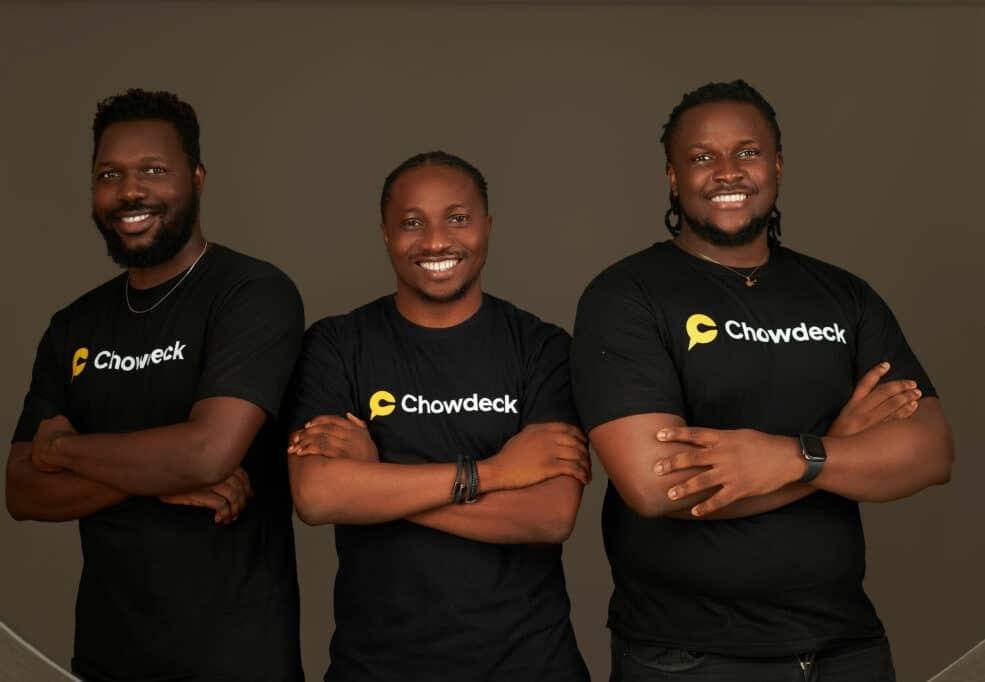
Chowdeck started in Lagos in 2021 with three motorbikes, three riders and two restaurants. Now its three co-founders, Femi Aluko, Olumide Ojo and Lanre Yusuf, have been selected as Endeavor Nigeria entrepreneurs. Endeavor Nigeria’s own network page lists all three, with photos dated October 2026. BusinessDay reports that they were chosen through a multistage process with regional and international panels of entrepreneurs, investors and business leaders. The selection date and the exact criteria were not published.
Membership is about access, not cash. The reports describe peer advice from founders who have already faced the same problems, plus an expectation that members will support other entrepreneurs in return. Aluko said the network will connect Chowdeck with leaders who have entered unfamiliar markets, hired senior executives and managed growth across currencies and regulations. None of the reports mention any money from Endeavor. For a company already operating in 14 cities across Nigeria and Ghana, that advice may be most useful for the next steps abroad.
Here are the figures Chowdeck gave BusinessDay: more than 800,000 active customers, about 1.2 million orders a month, nearly 9,000 vendors and about 8,000 riders. The report does not define “active customer” or explain how any of the numbers were measured. They also sit awkwardly beside earlier reports. In August 2025, TechCrunch reported 1.5 million customers and more than 20,000 riders. In December 2025, BusinessDay reported more than 2 million registered users and more than 20,000 riders. Different words can explain some of this, since registered users are not active users. But the rider count fell from over 20,000 to about 8,000 with no explanation. It may reflect a switch to counting only active riders, and the company should say.
Orders need the same care. Techpoint reported in November 2025 that Chowdeck had reached 1 million orders a month. BusinessDay reported in December that it was working toward 1 million monthly orders. The two reports do not match. If 1 million was reached in late 2025, then 1.2 million a year later is growth of about 20%. If it was not, the climb is faster. Either way, the new figure is a company claim.
The business case looks stronger than the numbers. Chowdeck raised a $2.5 million seed round in 2024 and a $9 million Series A in August 2025, led by Novastar Ventures with Y Combinator and others. TechCrunch reported that the company had been profitable since before that round, according to Aluko, and that it enters a new city or product only if it expects to break even within a couple of weeks. Nobody has published accounts to check those claims. The company also said it entered Ghana in May 2025 and reached 1,000 daily orders within three months without paid advertising. It aimed for 5,000 a day by the end of September 2025, and we found no report of whether it did.
Chowdeck is no longer just food. It has expanded into quick commerce, groceries, parcel delivery, merchant tools, advertising and financial services. The reports do not give revenue by business line, say whether the newer services make money or explain the rules behind the financial products. In August 2025, Chowdeck also planned 40 dark stores by the end of that year and 500 by the end of 2026, but the latest reports give no count of what has opened.
The competitive picture has helped. TechCrunch reported that Jumia left food delivery and that some foreign rivals, including Glovo, Bolt Food and Yango, have since withdrawn from certain markets. The Endeavor executive quoted by BusinessDay said some international competitors have pulled back from Africa while Chowdeck kept expanding. That is a point of view from someone who has just welcomed Chowdeck into the network, and the reports do not list which exits happened where.
So can Chowdeck turn its footprint into a lasting business? The challenges named in the coverage are practical ones: keeping delivery fast and reliable as volume grows, building skills for several services at once and turning more users into a sustainable business. The signs to watch are a clear definition of active customers and riders, results from Ghana, proof that groceries and financial services are profitable and any audited numbers. Time will tell, as the saying goes, but investors and founders can ask for better data now.
Sources: BusinessDay on Chowdeck and Endeavor; Endeavor Nigeria entrepreneurs page; TechCrunch on the $9M Series A; BusinessDay on 2 million registered users; Techpoint Africa on 1 million monthly orders.
A note for startup founders: Don’t practice on investors. Practice on AI first. RaiseReady by Index Prima is an AI fundraising simulator for African founders: upload your pitch deck, get a readiness score and face a tough AI investor before the real meeting. Find this post, and every post we publish, at raiseready.indexprima.com.