In the economics of sub-Saharan agriculture, the primary threat to food security and smallholder profitability isn’t merely yield volume—it is supply chain preservation. While massive venture investments have historically targeted digital marketplaces and agronomic software rails, the physical agricultural value chain in Nigeria continues to suffer from structural leaks. Up to 40% of perishable crops are lost before ever reaching a consumer market, driven by a catastrophic deficit in rural cold-chain logistics and persistent energy poverty.
To directly confront this infrastructure deficit, KAMIM Technologies Ltd has been officially appointed to spearhead the implementation of the HARVIST project in Nigeria. This $2.1 million clean agri-infrastructure initiative is engineered to deploy integrated renewable energy solutions and smart technology frameworks to drastically suppress post-harvest losses (PHL) and stabilize power access for primary agricultural hubs.
The Industrial Bottleneck: Energy Poverty vs. Crop Decay
The core thesis behind the HARVIST project addresses a brutal operational reality faced by Nigerian agribusinesses. Traditional preservation techniques rely on diesel-powered cold rooms or fossil-fuel-dependent processing units. As currency fluctuations and subsidy removals drive local fuel costs to historic highs, the unit economics of crop preservation have become unsustainable for rural clusters.
By failing to preserve crops at the farm-gate, farmers are forced into immediate, low-margin fire sales to middlemen, compounding rural poverty and driving food inflation in urban centers.
+-----------------------------------------------------------------+
|               THE HARD ASSET AGRICULTURAL INTERFACE             |
+--------------------------------+--------------------------------+
|    Legacy Processing Matrix    |     HARVIST Clean Infrastructure  |
+--------------------------------+--------------------------------+
| • High-carbon diesel reliance  | • Solar-hybrid grid routing    |
| • Unpredictable thermal drift  | • Precision IoT telemetry      |
| • Decentralized, unmapped hubs  | • Aggregated regional clusters |
+--------------------------------+--------------------------------+
Architectural Breakdown of the HARVIST Project
Under the leadership of KAMIM Technologies, the $2.1 million capital injection will not be spent on general advisory tracks. Instead, the implementation framework focuses heavily on hard engineering and clean-tech deployments across three critical operational layers:
1. Solar-Powered Distributed Cold-Chain Assets
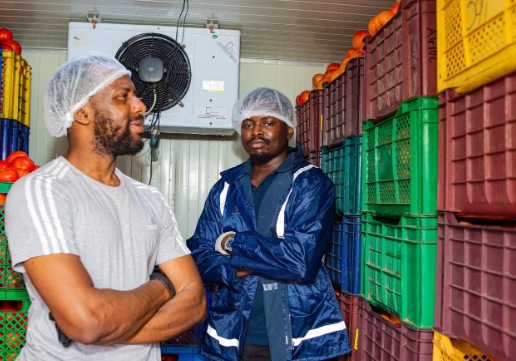
KAMIM will oversee the installation of localized, off-grid solar cold-storage hubs within high-density farming cooperatives. By utilizing thermal energy storage architectures, these systems can maintain sub-zero or controlled-atmosphere baselines independently of standard grid failures.
2. Micro-Grid Integration for Agri-Processing
Beyond mere storage, the project will build clean energy mini-grids dedicated strictly to powering primary processing machinery—such as milling, drying, and sorting units. This shifts agribusinesses away from fossil fuel dependency, locking in predictable, lower operational expenses.
3. Precision Telemetry and Supply Chain Visibility
To optimize performance, the infrastructure will be embedded with IoT sensor arrays. These modules actively stream real-time metrics regarding ambient temperature, humidity levels, and asset utilization directly to a centralized management interface, allowing operators to prevent system failures before they result in spoilage.
The Strategic Execution Map
| Operational Vector | Core Infrastructure Focus | Targeted Economic Outcome |
| Asset Deployment | Off-grid cold hubs & clean mini-grids. | Stabilization of farm-gate pricing and localized value-addition. |
| Technology Layer | IoT monitoring & smart power switching. | Radical reduction of post-harvest losses by up to 50% in pilot zones. |
| Capital Allocation | $2.1 Million deployment runway. | Subsidizing infrastructure onboarding for micro-enterprises. |
“The appointment of KAMIM Technologies highlights a fundamental pivot in the ecosystem,” note regional tech analysts. “We are seeing a clear transition toward hard, atoms-based climate infrastructure that addresses real-world industrial deficits where pure software models fell short.”
By integrating digital asset tracking with physical clean-energy hardware, the HARVIST initiative establishes a scalable blueprint for climate-resilient agriculture across West Africa. The true metric of success for KAMIM Technologies over this implementation cycle will not just be the number of solar panels mounted, but the total volume of nutritional and financial value successfully salvaged between the field and the market.
Sources & References
-
[1] BusinessDay Agriculture Terminal: KAMIM Technologies to Lead Nigeria’s $2.1M HARVIST Clean Agri-Infrastructure Project
-
[2] Innovation Village Repository: KAMIM Leads $2.1M HARVIST Agri-Energy Project in Nigeria