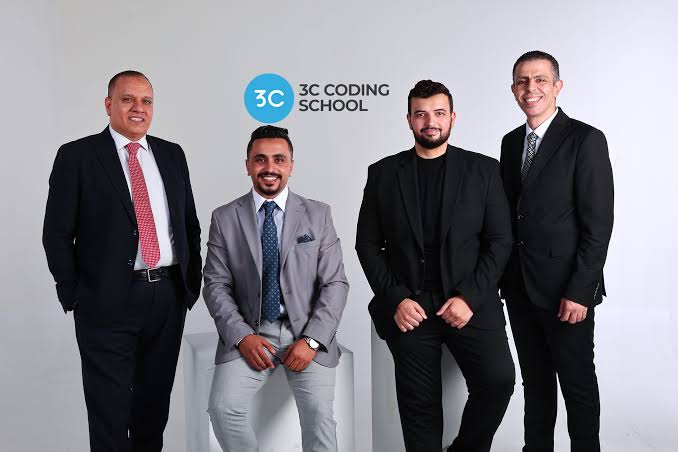
3C Coding School has closed a $3 million seed round, and the most telling detail isn’t the amount, it’s the timing. This is the first outside institutional funding the Cairo-based edtech company has taken since it was founded more than ten years ago. The round was led by MRG Economic Group, chaired by Egyptian businessman Mahmoud Ramadan, with participation from investor Amr Saad and a group of strategic angel investors.
A decade of operating without outside capital is unusual for a company now raising a seed round, a stage most startups reach within their first two or three years. That timeline suggests 3C built a genuinely self-sustaining business before ever needing to answer to institutional investors, and the numbers back that reading up. The company has grown its user base to more than 120,000 students and posted 230% revenue growth, a track record strong enough to make this the second-highest disclosed edtech funding round in Egypt this year, trailing only Enko Education’s $22 million raise.
Founded in 2015 by engineers Hossam Hosny and Ahmed Khallaf, 3C built its curriculum around a premise that goes beyond teaching children to write working code. Hosny has described the company’s founding belief as treating coding not as training for future software engineers specifically, but as a fundamental medium for teaching kids how to think, innovate, and solve complex problems, with programmes spanning web and mobile development, data science, artificial intelligence, machine learning, game development, and cybersecurity, organised into tracks tailored to different ages and skill levels rather than a single one-size-fits-all curriculum.
The new capital is aimed at two specific priorities. The first is geographic: 3C plans to expand into Saudi Arabia, its first move beyond the Egyptian market it has spent a decade building. The second is technical, accelerating development of an AI-powered personalised learning platform that analyses individual students’ learning patterns and progress, gives instructors better visibility into how each student is actually doing, and adapts course content to match a student’s pace and ability rather than pushing everyone through identical material at the same speed.
Both bets carry real execution risk, and it’s worth being honest about that rather than treating expansion as a formality. Entering Saudi Arabia means testing whether the partnerships, family demand, and brand trust that built 3C’s base in Egypt can actually transfer to a different market with its own competitive landscape and consumer expectations. The AI platform faces its own test in parallel: if it can genuinely help students progress faster while giving instructors real insight into how learning is happening, it becomes a meaningful part of 3C’s competitive edge rather than a feature bolted onto existing courses for the sake of the label. Co-founder Ahmed Khallaf has framed the raise itself as a launching pad rather than an endpoint, a distinction that matters given how much of this round’s value depends on what 3C does with it over the next year or two rather than the funding announcement itself.
The broader timing works in 3C’s favour regardless of how the specific expansion plays out. Coding education for children has shifted rapidly from a viewed-as-optional extracurricular activity to something increasingly treated as a basic digital literacy skill, as parents, schools, and governments across the region try to prepare young people for a labour market changing faster than traditional curricula can keep up with. Egypt’s own position, a large young population, a maturing startup ecosystem, and a genuine bridge between African and Middle Eastern markets, gives a well-capitalised Egyptian edtech company a real shot at becoming a regional platform rather than staying a single-country success story.
Whether 3C actually becomes that regional platform will be decided in Saudi classrooms and inside its AI product roadmap, not in this week’s funding headlines. But raising a first institutional round only after proving a decade of organic growth on its own terms is a considerably stronger foundation to expand from than most startups get to build before taking outside money at all.