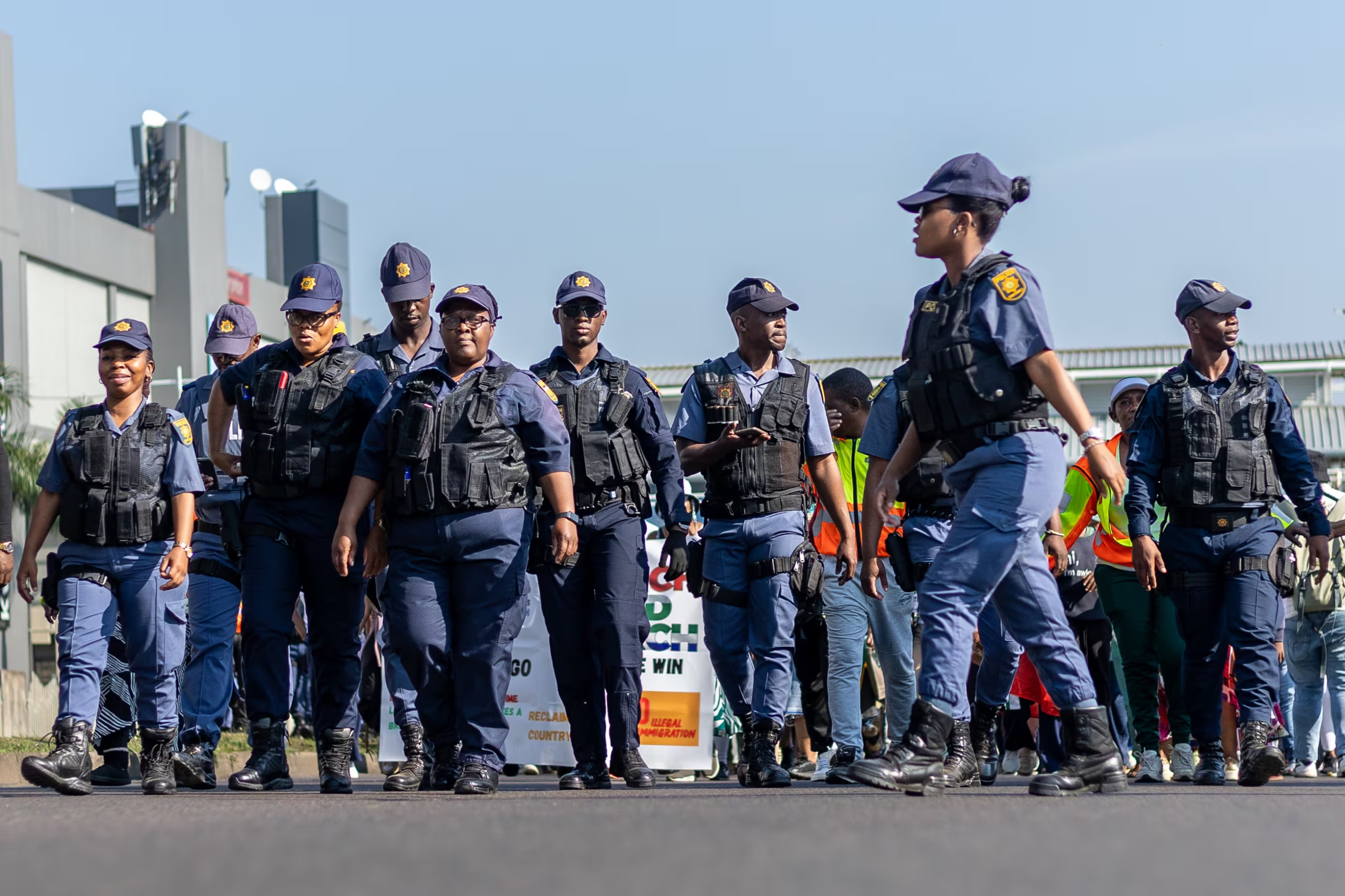
South Africa is undergoing a rapid, quiet transition from traditional, labor-intensive policing to an integrated, tech-driven surveillance apparatus. Faced with a planned nationwide shutdown and anti-illegal immigration protests organized by the “March and March” movement on June 30, 2026, the state has deployed an unprecedented emergency security framework.
This isn’t just a standard public-order policing operation; it is a live trial of a coordinated public-private surveillance web designed to achieve total situational awareness.
The Scale of the Deployment
To secure Gauteng Province and key transit corridors, the Justice, Crime Prevention, and Security (JCPS) Cluster has authorized an extra-budgetary allocation of R600 million ($35.5 million). The technological and human footprint mobilized for this operation highlights a massive shift in strategic scale:
| Security Asset | Scale & Reach | Operational Function |
| CCTV Feeds | 33,000+ Integrated Cameras | Continuous public space monitoring and algorithmic threat detection. |
| Air Support | Drones & Helicopters | Real-time aerial downlinks tracking group movements as they happen. |
| Personnel | 13,000+ State Officers | Strategic deployment to high-risk zones, transit routes, and commercial nodes. |
| Private Forces | Tactical & Armored Units | Standby support from major private security firms to reinforce state efforts. |
Gauteng Police Commissioner Lieutenant-General Tommy Mthombeni made the state’s capabilities explicitly clear to anyone planning to incite violence:
“We have mobilised extensively, and we will have what is called a downlink so that we can observe activities as they happen in real time. The drones and helicopters will be able to identify who is doing what. So, if you get arrested, do not say you were not warned.”
The Ghost of July 2021: Why the State is Over-Indexing
To understand why the South African government is spending R600 million on a single protest cycle, one has to look back to the devastating civil unrest of July 2021. That week-long wave of looting and violence across Gauteng and KwaZulu-Natal left more than 300 people dead, disrupted vital supply chains, and dealt a staggering R50 billion blow to the national GDP.
The 2021 riots exposed severe gaps in the South African Police Service’s (SAPS) intelligence gathering, real-time coordination, and public-order tactics. Security analysts note that back then, police lacked qualified drone operators and direct access to unified urban camera feeds.
By flooding the airspace with drones and deploying AI-powered monitoring, Acting Police Minister Firoz Cachalia has made it clear that the state is treating June 30 as a zero-tolerance line. The strategy is preemptive: identify crowd formation, analyze social media incitement algorithmically, and intervene before a gathering can mutate into unchecked property destruction.
The Public-Private Intelligence Convergence
Perhaps the most significant structural revelation of this operation is how deeply intertwined state policing has become with the private security industry.
South Africa’s private security sector is massive, often possessing faster technological adoption cycles than the state. For the June 30 operations, private giants like Fidelity Services Group and camera network providers like Vumacam are essentially pooling their resources with SAPS.
-
Shared Feeds: State Joint Operational Centres (JOCs) are onboarding feeds from thousands of privately owned community and business cameras.
-
Layered Defense: Private armored personnel carriers and specialized drone pilots are positioned at local commercial nodes, transport hubs, and foreign-owned business clusters to handle immediate defense while state public-order units handle crowd control.
This convergence creates a temporary, highly concentrated surveillance dragnet. While it gives law enforcement the exact “eyes on the ground” they lacked five years ago, it also sets a powerful precedent for how public spaces in South African metros will be monitored moving forward.
Verifiable Sources and Further Reading
-
For a breakdown of the technological integration and police warnings, read the coverage on TechCabal.
-
To see the alignment of private security infrastructure backing SAPS, view the details on eNCA.
-
For detailed local coverage on the helicopter and drone asset distribution, read the SowetanLIVE report.
-
For insights into the wider mobilization of personnel across hotspots, refer to BusinessDay.
You can watch this Newzroom Afrika Broadcast on the R600m Allocation to better understand the government’s operational readiness and budget reallocation for these specific security measures.