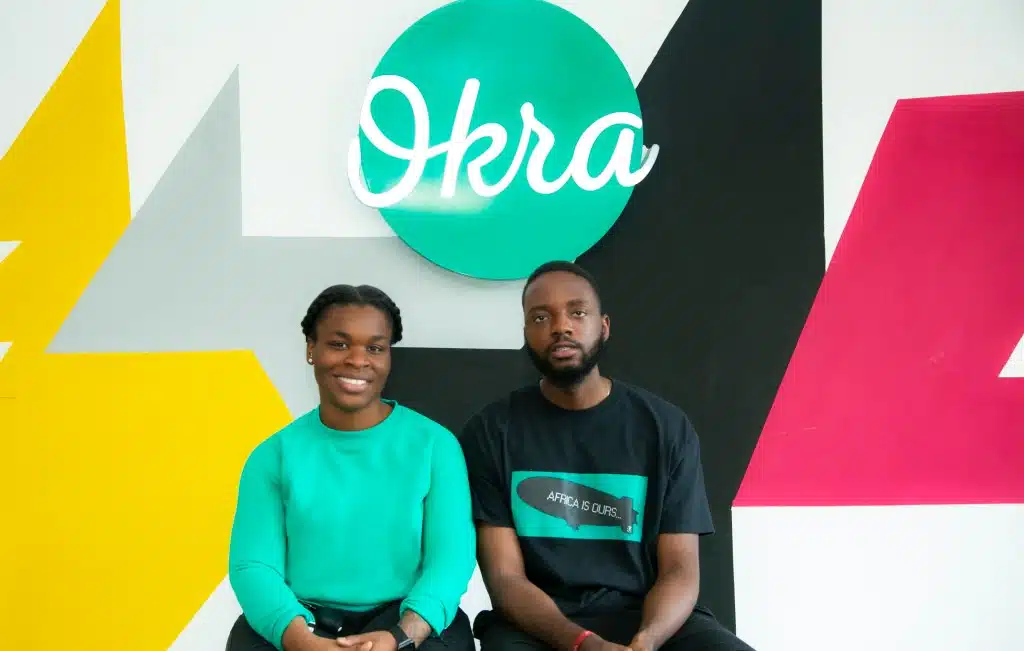
Okra, a Nigerian open banking startup, raised about $16.5 million, signed major banks and fintechs, and still closed in May 2025. Its story shows how a good product can lose its way when a business splits its focus.
Okra built tools that let apps connect to customers’ bank accounts, much like Plaid does in the US. Reports say it later moved into cloud services, as the naira fell and costs rose. Its co-founders left, and its chief executive says it wound down. One report says it will hand back about $5.5 million of unspent money to investors. Four lessons stand out for founders.
It began in 2019. Fara Ashiru Jituboh led engineering and David Peterside led sales and business. They set out to build secure APIs, which are links that let one piece of software talk to another. With them, a fintech could read a customer’s bank data, with consent, and offer loans, payments or savings tools. The firm hired engineers and business leaders from companies such as Google, Disney, Mastercard and PayPal, Nairametrics reports. It charged per API call. By Nairametrics’ account, it reached $1 million in annual recurring revenue within 12 months.
Here is the path the company took, as reported.
| When | What was reported |
|---|---|
| 2019. | Okra is founded in Nigeria. |
| 2020. | TLcom Capital leads a $1 million pre-seed. API usage grows 175% in one quarter, says Silicon Africa. |
| 2021. | A $3.5 million seed round, led by Susa Ventures and Accenture Ventures. |
| Early 2022. | A $12 million round led by Base10 Partners, at a $92 million valuation, says Nairametrics. |
| October 2022. | Co-founder Peterside leaves to start a new venture. |
| Late 2024. | Okra launches Nebula, a cloud service billed in naira. |
| May 2025. | The company decides to wind down. |
| July 2025. | Reports of the closure spread. The CEO is now at UK firm Kernel. |
The money was real. By our sums, the three rounds add up to $16.5 million, which matches the figure Silicon Africa gives. Other reports say “more than $15 million” or “over $16 million.” Investors also included Dropbox co-founder Arash Ferdowsi, Sequoia scouts and Accenture Ventures, says Nairametrics. Clients named in reports include UBA, Access Bank, MTN, Interswitch, Paga, Bamboo, Trove, Renmoney, Branch and AIICO Insurance.
What went wrong? The accounts differ, and no one has shown a single cause. Nairametrics says that after the 2022 round, Peterside grew unhappy with how much the engineers were shipping. A source told it that engineers struggled to deliver the contracts that sales kept winning, and that the firm leaned heavily on screen scraping. That is a method of reading data from a bank’s website when no clean link exists. Peterside left in October 2022, and revenue reportedly shrank.
Then came the pivot. Okra launched Nebula, a cloud platform meant to compete with AWS and Google Cloud, with prices in naira. The idea had a clear pull. Foreign cloud firms bill in dollars, and the naira had lost much of its value. But Silicon Africa says Nebula struggled to win clients from the big providers. It also says the move pulled resources from the core open banking business, which faced rivals such as Mono, OnePipe and Stitch. LaunchBase Africa adds that AWS began to allow naira payments in Nigeria, which it says cut the local price edge by about 20%. That is the site’s view, not Okra’s.
The company itself said little. Jituboh confirmed that “the company made the decision to wind down operations in May.” Silicon Africa quotes the firm as citing “market challenges that proved difficult to overcome.” It also reports that she said the closure was not about a lack of cash, and that Okra had money for about three more years. We found that claim in one source only. The same report says staff got up to six months of pay, and that Okra spent roughly 60% to 75% of what it raised.
The picture is not fully clear. Nairametrics notes that a later LinkedIn post suggested only Nebula was shut, and that Okra was “undergoing internal restructuring.” A company statement also spoke of “exploring new options” for its payments business. Those lines do not match the wind-down account, and no report settles the gap.
So what is the lesson? Our reading is that there are four.
First, protect your core before you chase a second market. Okra’s first product had clients, revenue and strong backers. Nebula asked the team to win against some of the world’s biggest firms. A second bet can work, but only if the first one can run on its own.
Second, watch your currency. Okra earned naira and, for cloud, paid in dollars. When the naira fell, its costs rose. Any African startup that sells in local money and buys in dollars should model that gap before it signs a big contract.
Third, sell only what you can build. Reports say sales kept winning deals that engineers struggled to deliver. A strong pipeline can hide a weak product. Founders should check that the team that sells and the team that builds share the same plan, and the same pace.
Fourth, a clean exit is a skill. If the report is right, Okra chose to stop with money left, paid severance and gave capital back. We cannot say whether that was the best path. But a founder who treats investors fairly at the end leaves a name that helps with the next venture.
Why it matters: Open banking is still young in Nigeria, and the Central Bank of Nigeria had promised a policy framework by August 2025. Okra built early infrastructure, and its exit leaves a gap that rivals and new entrants will try to fill. For founders and investors, the lesson is practical. Infrastructure is slow to earn, currency swings hit hard, and a focused team with clear rules for data usually beats a wide one.
What to watch next: whether the Central Bank of Nigeria publishes its open banking rules, and how they shape the market. Watch how Mono, OnePipe and other API firms grow now that Okra is gone. Watch whether Okra’s payments business, if any, carries on. Watch where Jituboh and Peterside build next. And watch whether other African startups that raised in dollars rethink local cloud and infrastructure bets.
Sources: Nairametrics on the fall of Okra, 11 July 2025; Silicon Africa on Okra’s shutdown, 4 July 2025; LaunchBase Africa, “A farewell to Okra”; Afridigest on Okra’s closure, 13 July 2025; Techpoint Africa’s original report on the closure.
A note for startup founders: Don’t practice on investors. Practice on AI first. RaiseReady by Index Prima is an AI fundraising simulator for African founders: upload your pitch deck, get a readiness score and face a tough AI investor before the real meeting. Find this post, and every post we publish, at raiseready.indexprima.com.