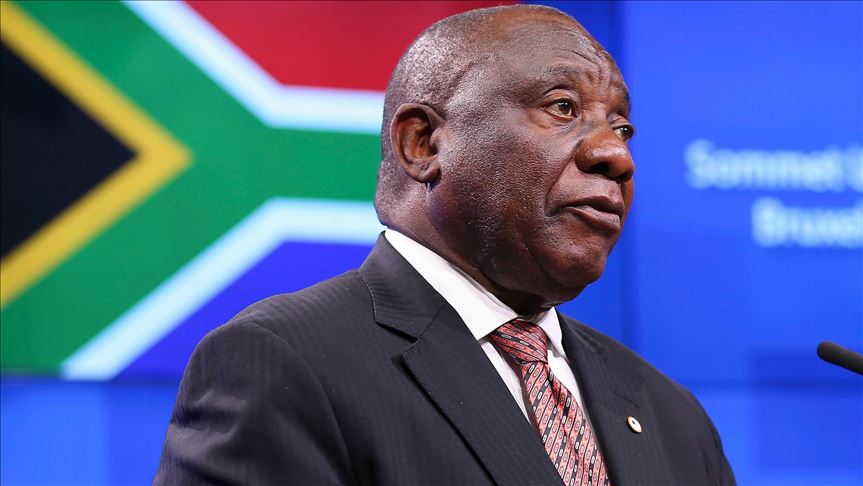
President Cyril Ramaphosa stood at OR Tambo International Airport on Wednesday and switched on a system designed to answer a question that has convulsed South African politics for the better part of a year: who gets to come in, and how does the state actually know. The Electronic Travel Authorisation, or ETA, fuses biometric verification, machine learning, and an upgraded Electronic Movement Control System into what the Presidency is calling the flagship reform of South Africa’s entire digital immigration overhaul. Before the ribbon was even cut, the system had already processed more than 203,000 applications since May — and flagged and rejected more than 5,500 of them as fraudulent.
What the ETA Actually Does
The ETA replaces South Africa’s traditional paper-based visitor visa process with a fully digital one: eligible travellers apply online before they ever board a flight, submitting biometric data that the system checks using machine learning trained to catch fraudulent documents and applications. That verification layer sits on top of eMCS 2.0, an upgraded movement-control system that tracks entries and exits electronically rather than relying on manual stamps and paper trails. As of Wednesday’s launch, the ETA is live for travellers from four countries and remains optional for nationals who don’t currently need a visa to enter South Africa. Government’s own Operation Vulindlela progress report targets a September expansion to cover all countries, though the report’s language is somewhat inconsistent on scope — one section says “all countries,” another the narrower “all eligible countries and additional visa categories.” Draft regulations also propose a R500 (about $30) processing fee for online applications, a charge that was waived during the initial rollout simply because the platform didn’t yet have a working payment system built in.
The Numbers That Matter Most
The most striking figures aren’t about speed or convenience — they’re about what the system caught before it even officially existed. Home Affairs Minister Dr Leon Schreiber says the pilot phase alone processed over 203,000 applications and rejected more than 5,500 as fraudulent, all before Wednesday’s formal launch. That rejection rate, however it’s ultimately contextualised against total volume, is a live measure of how much document fraud has likely been slipping through South Africa’s borders under the paper-based system it’s replacing — and a preview of the volume of scrutiny machine learning is about to apply at a national scale.
Why This Launch Is Happening Right Now
The timing is not incidental. South Africa is currently living through its most sustained wave of anti-immigration mobilisation in years. Groups including March and March and Operation Dudula have organised repeated marches through 2026 calling for the mass deportation of undocumented migrants, protests serious enough to draw condemnation from the United Nations, the African Union, and international human rights organisations. Nigeria, Ghana, and Mozambique have each moved to repatriate citizens out of South Africa in response. In April, at least two Nigerian men died amid the unrest; Nigeria’s government said one of them was beaten by South African National Defence Force personnel, and Nigeria’s foreign minister publicly accused Pretoria of failing to forcefully condemn violence against Nigerian nationals, straining a diplomatic relationship both countries have long described as historically close. Several other governments, including Kenya, Malawi, Lesotho, and Zimbabwe, have issued caution advisories to their citizens living in South Africa.
The South African government has worked to draw a hard line between the two things that keep getting conflated in public debate: concern about undocumented migration as a policy failure, and violence directed at foreign nationals as a separate, unacceptable response to it. Ramaphosa has said publicly that everyone in the country must be there legally — while just as explicitly warning citizens against taking immigration enforcement into their own hands. The ETA, in that sense, is partly a technical upgrade and partly a political argument: that the state, not the street, should be the one deciding who belongs.
Ramaphosa Pitch
Speaking at the launch, Ramaphosa framed the system as something bigger than an IT rollout. “It is a statement about the kind of country we are building,” he told the assembled officials and industry stakeholders, tying the reform to a broader argument that clear government goals, paired with technology and accountability, can deliver visible results. He described the ETA as strengthening both economic openness and national security at once — a system meant to make legitimate travel faster while making it harder for people trying to abuse it to get through.
What Comes Next
The real test of the ETA won’t be Wednesday’s launch event — it will be September, when the system is due to expand toward covering all countries and, per the draft regulations, start charging the R500 fee it currently isn’t. Whether that expansion holds to the “all countries” language or the narrower “all eligible countries” framing will matter for how sweeping the reform actually turns out to be in practice. It’s also worth watching whether the fraud-rejection rate holds steady, climbs, or falls as volume scales nationally — the current 5,500-out-of-203,000 figure is a pilot-phase number, and pilot-phase numbers have a way of not surviving contact with full deployment.
The Harder Question Underneath the Technology
A biometric system can verify who someone is and flag a forged document with more precision than any human official checking a stamp. What it can’t do is settle the underlying argument tearing at South African politics right now — over jobs, public services, and who a country of 65 million people, with an estimated 2.4 million foreign nationals within its borders, believes it owes what to whom. The ETA will almost certainly make it harder to enter South Africa on fraudulent papers. Whether that makes the country’s immigration politics any less combustible is a question no algorithm is positioned to answer.