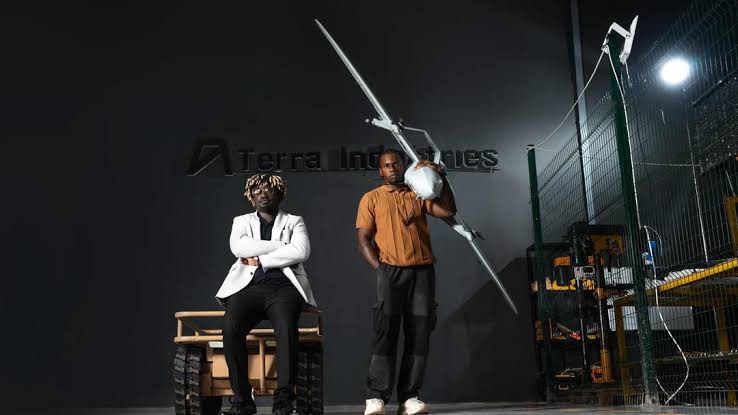
Terra Industries, a defence tech firm founded in Nigeria, has led the seed round of Community Wolf, a South African public safety firm. Its WhatsApp tool says it has over 700,000 users. Terra CEO Nathan Nwachuku has joined the board, and the firms say they will explore sending residents’ reports to Terra’s command centres.
Community Wolf began in 2024 as a free WhatsApp channel. Anyone can report crime there, in their first language, without giving a name. It says it now has over 700,000 users and more than 180,000 recorded incidents. Terra builds drones, sentry towers and ground vehicles to guard mines, power plants and pipelines. This is its first step into public safety, and its second startup investment. It calls the idea “communal security”: people who live near key sites can act as an early warning layer. The amount invested, and the size of the seed round, were not stated.
| Item | Detail |
|---|---|
| Investor. | Terra Industries, lead of the seed round. |
| Company. | Community Wolf, a South African public safety firm founded in 2024. |
| Board. | Terra CEO Nathan Nwachuku joins Community Wolf’s board. |
| Reach. | Over 700,000 users and more than 180,000 recorded incidents, the company says. |
| Use of funds. | To reach more communities near key sites and cities. |
| Plan. | To explore linking the two, so checked reports reach Terra’s command centres. |
| Not stated. | The amount, the size of the round and other investors. |
Nick Mills and Michael Houghton founded Community Wolf in 2024. It began with a WhatsApp channel. It grew into tools for emergency help, family safety and community chat, plus software for security teams. TechCabal reports that it later bought Namola, an emergency app founded in 2014, which will keep running as its own product. The price was not disclosed. Mills said residents and patrol guards both see what is happening, but neither could easily share it. He said: “Community Wolf gives residents a way to report and security operators an integrated platform to manage their communication and response.” Its reports go to responders, mainly private security firms in South Africa.
Nwachuku and Maxwell Maduka founded Terra in 2024. Terra makes drones, sentry towers and ground vehicles that run without crews. All run on its software, ArtemisOS, The Next Web reports. Customers buy the kit, then pay fees for data. Terra has raised fast. It left stealth in January 2026 with $11.75 million, led by 8VC. A $22 million extension followed in February, led by Lux Capital. In August, it added $18 million to close a $52 million seed round. WeeTracker says the company claims a nine-figure valuation. Terra is also opening a London office and a Ghana plant due in the fourth quarter. These are company and press figures. In September, Terra led a $1 million pre-seed round for Aeon, a Nigerian cybersecurity startup. Resilience17 also took part. That move took Terra from physical sites to digital systems. Community Wolf takes it further, to community safety.
A drone company backing a WhatsApp reporting tool may look odd, and Nwachuku explained it. “The people living around critical assets like mines are the first to feel an attack, and they are often the first to see it coming,” he said. Terra’s systems supply intelligence and human patrols respond, but “those alone aren’t always enough”. He added that communal security will be central to protecting lives and key sites. The link could add a human layer to what machines see.
Other South African firms work in the same space. AURA, founded in 2017, raised a €13.5 million Series B in May 2025, co-led by Cathay AfricInvest Innovation Fund and Partech, WeeTracker reports. That took its total to €21 million. Its platform links people to vetted security and medical teams. RapidDeploy, founded in 2016 in Cape Town, raised a $12 million Series A in 2019 from GreatPoint Ventures and Samsung NEXT. It now serves 911 agencies in the United States. South Africa can produce safety tech, and the sector is still young.
Community reporting also raises a hard question. Community crime groups on WhatsApp have drawn criticism in South Africa. A Thomson Reuters Foundation report found that some neighbourhood groups fuel suspicion and racial profiling when no one steps in. An anthropologist quoted there found race-based code names in one Cape Town group. A security analyst linked false reports to real violence. That report did not name Community Wolf, and nothing in the announcement suggests it works that way. But it shows why details matter. WeeTracker sets out two views. The hopeful one is faster response and better data from citizens. The doubtful one asks how reports are checked, and whether private security firms can cope with a flood of them. A report about an innocent person needs a way to be corrected. Someone must answer if an anonymous report is false. Data protection laws, such as South Africa’s POPIA and Nigeria’s data protection law, may ask the same of both firms.
Terra’s pitch is African-built tools that keep data on the continent. Neither firm has said whether that covers community reports.
Why it matters: Security is a real worry across Africa, and many people do not trust official channels. A tool that lets residents report safely, in their own language, can help. A link to a defence firm’s command centres could make tips more useful, since a drone could check one. But it also moves community reports closer to firms that guard mines and power plants. Clear rules on checking reports, privacy and access will decide if people trust it.
What to watch next: how much Terra put in, and who else joins the seed round. Watch what the two firms build, and whether Community Wolf reports reach Terra’s command centres. Watch how they check reports and protect people named in them. Watch whether Terra brings communal security to Nigeria, where it already guards mines and energy sites. And watch whether other African security firms back such tools.
Sources: Tolulope Bamiloye, “Terra Industries Leads Seed Round for South Africa’s Community Wolf, Broadening Public Safety Reach”, WeeTracker, 19 November 2026; African-Startups, “Terra Industries invests in South Africa’s Community Wolf to enter the public safety market”, November 2026; The Next Web on Terra Industries’ $52 million seed round, 17 August 2026; TechCabal on Community Wolf’s acquisition of Namola; Thomson Reuters Foundation on South Africa’s local WhatsApp groups.
A note for startup founders: Don’t practice on investors. Practice on AI first. RaiseReady by Index Prima is an AI fundraising simulator for African founders: upload your pitch deck, get a readiness score and face a tough AI investor before the real meeting. Find this post, and every post we publish, at raiseready.indexprima.com.