For decades, Angola’s macroeconomic narrative has been dictated by a single commodity. According to International Monetary Fund (IMF) data, oil still accounts for roughly 90% of the nation’s exports and nearly 60% of total government revenue. While this hydrocarbon wealth fueled rapid urban development in the post-civil war era, it also left public finances acutely vulnerable to global crude price shocks.
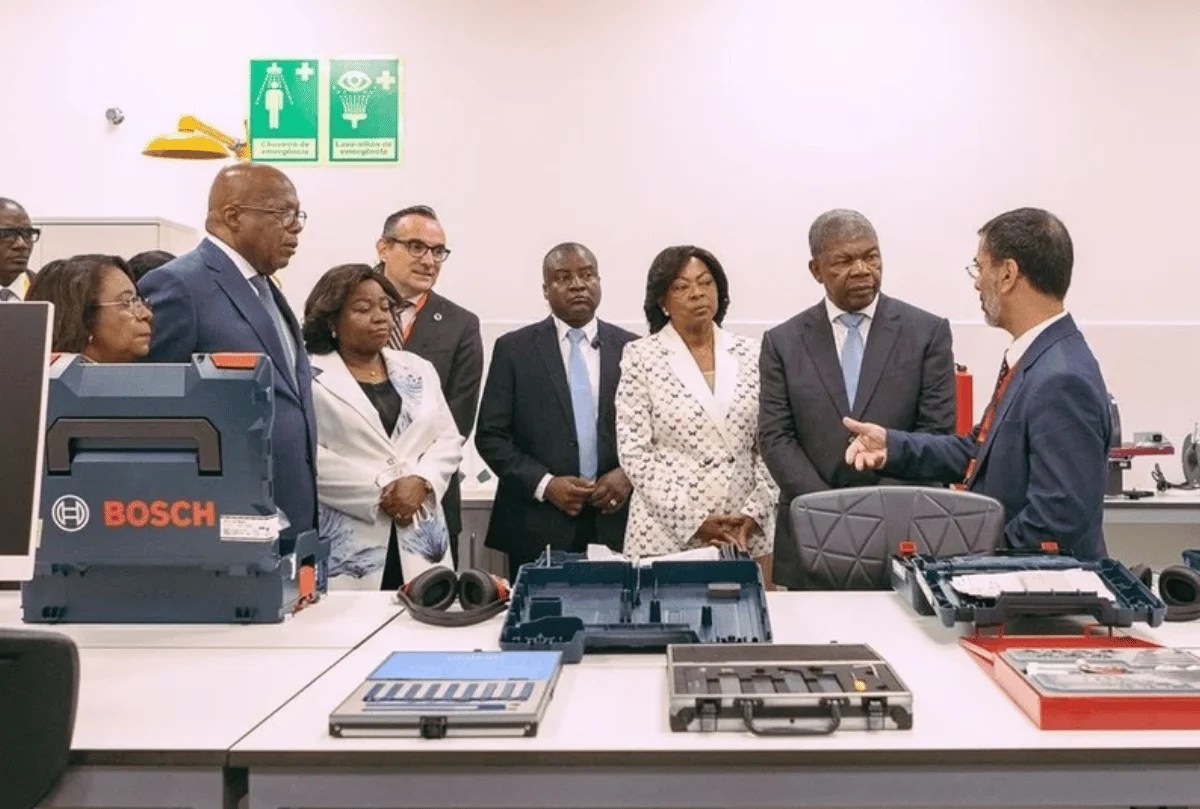
The mid-June 2026 inauguration of the Luanda Science and Technology Park (PCTL / Luanda Tech) marks a fundamental shift in the country’s long-term economic strategy. Officially launched by President João Lourenço alongside leadership from the African Development Bank (AfDB) Group, the $100 million flagship installation represents a deliberate move to transition Angola toward a diversified, knowledge-based economy under its National Development Plan 2023–2027.
Co-funded via a strategic partnership—with the AfDB backing approximately 90% of the capital and the Angolan government providing the remaining 10%—the project moves past standard real estate developments. Rather than building an isolated tech hub, the initiative focuses on correcting the upstream talent, research, and infrastructure deficits that traditionally limit emerging tech ecosystems.
Ecosystem Design: Property Development vs. Structural Transformation
Many speculative tech parks across emerging markets fail because they build co-working spaces without establishing a local pipeline of researchers, labs, or specialized talent. Luanda Tech’s architectural design directly links academic research with commercial application.
| Operational Dimension | Standard Tech Real Estate Hubs | Luanda Tech Ecosystem Model |
| Physical Infrastructure | Basic office rental spaces, high-speed internet, and shared desks. | 9 specialized buildings across 70,000 sqm, including a pharmacognosy lab and green research greenhouses. |
| Ecosystem Linkages | Disconnected from public schools; reliant on existing, pre-trained talent. | Embedded directly next to the Engineering and Social Sciences faculties of Agostinho Neto University. |
| Upstream Pipeline | Minimal integration with primary or secondary baseline education. | 54 modernized science laboratories fully equipped across 18 regional secondary schools. |
| Commercialization Lift | Independent startups paying rent with localized product focus. | Integrated tech business incubators explicitly mapping research nodes to enterprise private sectors. |
The Knowledge-to-Commercialization Loop
To build a sustainable framework that survives long-term commodity cycles, the Science and Technology Development Project (STDP) deploys a multi-tier talent pipeline. The framework systematically elevates human capital from secondary school baselines through to international research applications:
Strategic Implications and Regional Expansion
Located in Luanda’s Maianga urban district, the complex features green infrastructure powered by solar energy arrays, electric vehicle charging networks, and a 250-seat central auditorium. Beyond the physical footprint, its entry into the International Association of Science Parks and Areas of Innovation hooks Angola directly into a global network of technology transfer.
“This is not merely the launch of an important infrastructure asset. It is the celebration of a national vision: a vision of an Angola that invests in knowledge, empowers its youth, strengthens its scientific capabilities, and builds new engines for economic diversification.”
— Pietro Toigo, Country Manager, African Development Bank
The long-term value of Luanda Tech lies in its defense against the brain drain that often stalls African innovation. By providing state-of-the-art facilities like its advanced pharmacognosy labs at home, the state creates an environment where local researchers can solve local issues—particularly in food security, renewable energy, and climate-resilient agribusiness.
With Phase 1 operational, the Ministry of Higher Education, Science, Technology, and Innovation, led by Minister Albano Lopes Ferreira, is already looking toward Phase 2. The next iteration aims to expand this model outward from the capital, constructing specialized technology corridors across Angola’s interior provinces to decentralize industrial development away from coastal economic hubs.
Verifiable Sources and References
-
African Development Bank Group Official Press Release: For complete institutional details on the inauguration ceremony, ministerial addresses, and regional alignment, see the AfDB Luanda Tech Launch Report.
-
Ecofin Agency Macroeconomic Deep Dive: For structural context on Angola’s IMF oil dependency metrics and National Development Plan integrations, review the Ecofin Agency Project Profile.
-
Angop National Media Briefing: For precise structural metrics, geographic layouts within Maianga, and physical amenity asset lists of the complex, explore the Angop Legislative Coverage.