Thirteen education startups from seven African countries have made it from a Top 50 shortlist to a live pitch stage. They will face the judges at the Global EdTech Startup Awards 2026 Africa Semi-Finals in Accra, Ghana, on 20 November 2026.
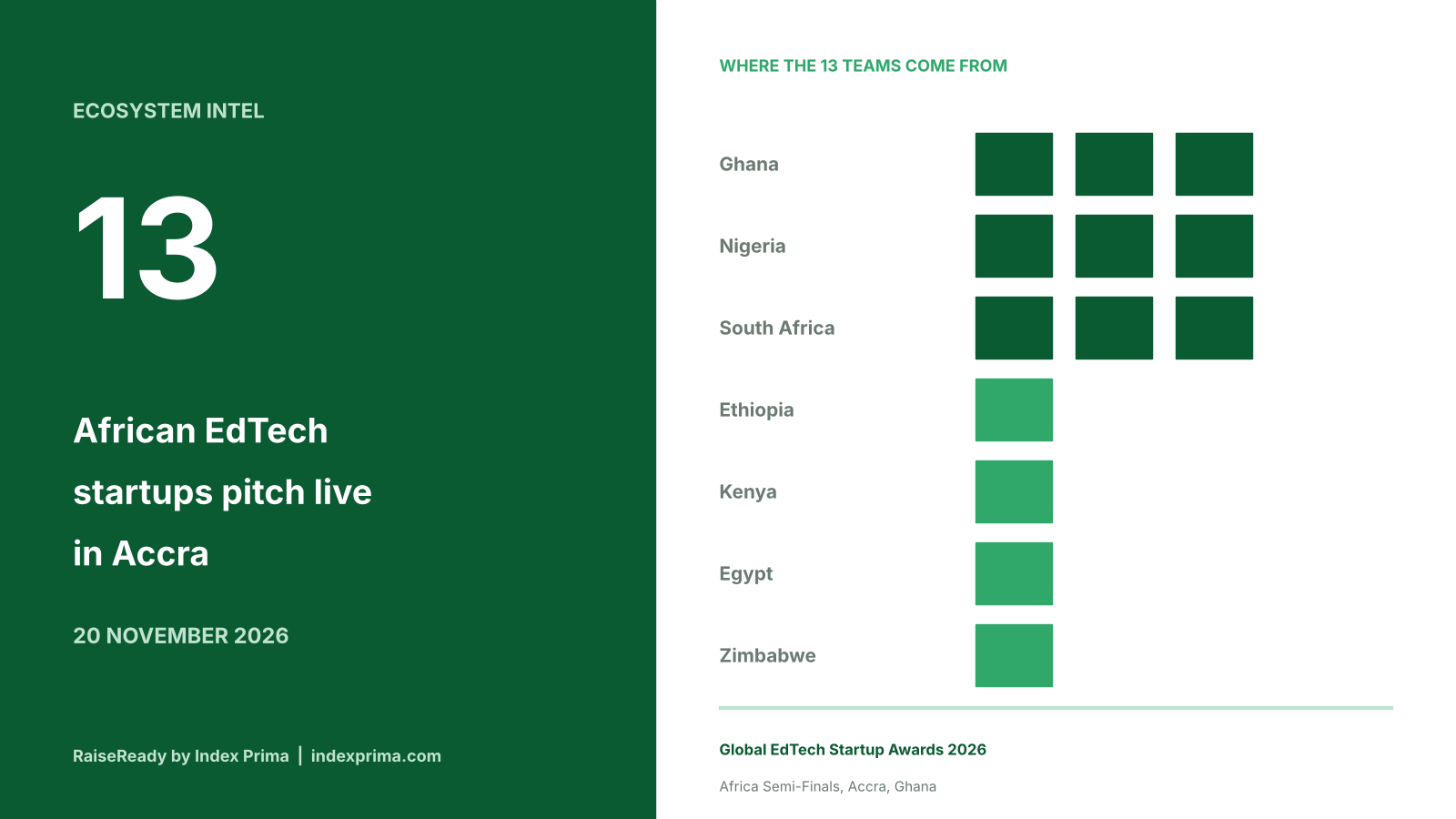
Ghana, Nigeria and South Africa each send three teams. Ethiopia, Kenya, Egypt and Zimbabwe send one each. The winners move closer to a global finals week in London in January.
Here is the short version. The Global EdTech Startup Awards, known as GESAwards, is a worldwide contest for education technology ventures. Startups apply online, regional partners run semi-finals, and the best teams go on to the global finals. Africa’s semi-final is in Accra. It is just under two weeks away, so founders, schools and investors who want to meet these teams should plan now.
Who runs the awards? GESAwards says it is powered and organised by MindCET Labs, with a network of regional partners on six continents. It says it has connected more than 9,000 startups from 155 countries. Judging looks at the pain point a product solves, how new its teaching approach is, how easy it is to use, whether the business can last, and whether the product works. The 2026 call closed on 15 September, and regional semi-finals run from October to November.
Who made the Accra list? This table shows the 13 teams, with a line on what each does where we could confirm it.
| Startup | Country | What we could confirm |
|---|---|---|
| AfrikaTikkun. | South Africa. | A non-profit that serves children and youth through nine centres, with education, skills and job placement. It reports reaching more than 325,000 young people in 30 years. |
| Classpiler. | Ghana. | We found no public details. |
| Cloudnotte. | Nigeria. | School management and digital learning software for K-12 schools, based in Port Harcourt and founded in 2021. |
| Cubbes App. | Nigeria. | A study app for university students with course materials, AI tutoring and flashcards. It reports more than 50,000 students at over 100 institutions. |
| Efiwe. | Nigeria. | A mobile coding platform with an offline mode, launched in August 2025 by Chidi Nwaogu. |
| GiFTED. | Ghana. | We found no public details. |
| Globedock Academy. | Ethiopia. | A digital learning platform whose Learning Loop channel hosts more than 450 lessons. |
| LoHo Learning. | Kenya. | The Elimu Pepe platform with an AI learning tool, e-books and a maths tutor. It is part of Longhorn Publishers. |
| PraxiLabs. | Egypt. | Virtual science labs for schools and universities. It raised a $3M Series A in October 2026. |
| Sciency Learning Africa. | Zimbabwe. | Low-cost STEM kits and online courses in robotics and coding. |
| The Marking App. | South Africa. | Grading by phone camera, a free digital library, and an AI tutor. Founded in 2020 by Kabelo Mahlobogwane. |
| Thomaagye EdTech Solutions. | Ghana. | We found no public details. |
| Zaio Tech. | South Africa. | Tech bootcamps built around job placement. It reports 131 placements since January 2025. |
The list shows how wide the field is. Some teams sell to schools. Cloudnotte runs school operations, and LoHo Learning serves schools, parents and government. Others go straight to learners. Cubbes helps university students study, Efiwe teaches coding on a basic phone, and Zaio trains young people for tech jobs. PraxiLabs and Sciency Learning Africa tackle a different gap: schools with no science labs. And The Marking App goes after a quieter problem, the hours teachers spend on marking.
Money is part of the story too. PraxiLabs, founded in 2016, raised $3 million in Series A funding in October, led by EdVentures with Sawari Ventures and angel investors. The money will go to AI features and growth across the Middle East and Africa. For the rest, public funding details are thin, so a stage like Accra can matter. Cubbes was backed by Antler, and Cloudnotte is part of the Mastercard Foundation EdTech Fellowship.
Take the user numbers with care. Most figures above are the teams’ own claims and have not been checked by anyone else. Judges will test them on stage.
Why it matters: Africa has one of the youngest populations on Earth, and too many classrooms lack teachers, labs and books. These 13 teams are building for that gap from within. A semi-final in Accra puts them in front of a global network at a moment when African edtech is drawing fresh interest. For founders, the lesson is clear. Judges ask whether the pain is real, whether the product works and whether the business can last. Bring proof, not slides. For investors and school leaders, a live pitch is a fast way to compare teams side by side and to see who can answer hard questions.
What to watch next: which teams are named winners on 20 November, and how many move on to the global finals in London in January. Watch for prize details from the organisers, which we could not find for the Africa round. Watch whether the three Ghanaian teams that have little public profile share more about their products. And watch whether PraxiLabs’ new funding helps it expand into the rest of Africa.
Sources: GESAwards, About; Medjouel on the 2026 timeline; CcHub Future of Learning on Cloudnotte; Techbuild Africa on Cubbes; WeAreTech Africa on Efiwe; Shega on GlobeDock Academy; MIT Solve on LoHo Learning; af.net on PraxiLabs’ Series A; Royal Academy of Engineering on Sciency Africa; WeAreTech Africa on The Marking App; TechCabal on Zaio; Afrika Tikkun 30-year release.
A note for startup founders: Don’t practice on investors. Practice on AI first. RaiseReady by Index Prima is an AI fundraising simulator for African founders: upload your pitch deck, get a readiness score and face a tough AI investor before the real meeting. Find this post, and every post we publish, at raiseready.indexprima.com.