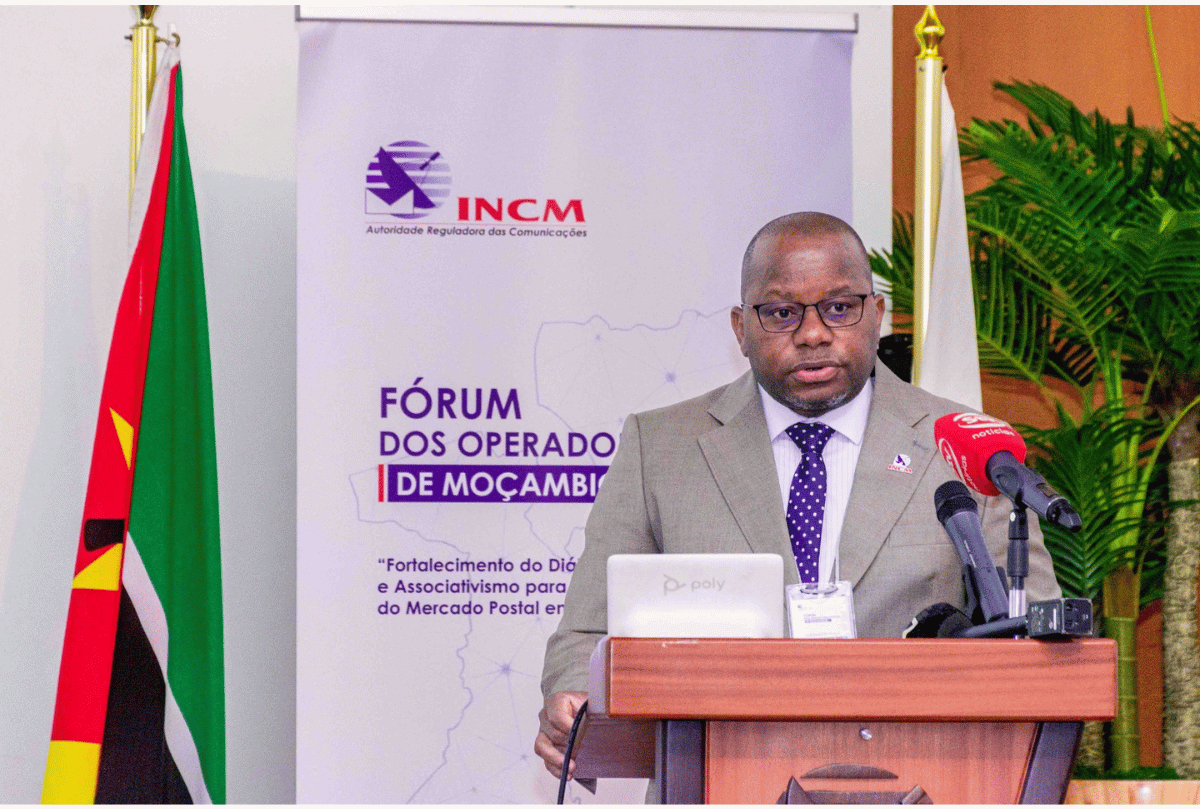
Anyone who carries parcels for money in Mozambique may soon be treated as a postal operator, even if they work through a delivery app. That was the message from the country’s communications regulator at the first Mozambique Postal Operators Forum, held in Maputo on October 9, World Post Day. Euclides dos Santos, head of the postal department at the Communications Regulatory Authority (INCM), called informality a major obstacle to organising the market and said individuals providing postal services must obtain the right licences, even when they operate through licensed digital platforms. The regulator also said some people offer delivery through digital platforms without the licences required, which raises concerns about oversight, security and consumer protection. For a founder running a courier marketplace, a social commerce business or a last-mile app, that is a direct signal about where compliance is heading.
The numbers are thin. According to the report on the forum, Mozambique has 38 licensed postal operators, but there is no published estimate of how many informal couriers there are, how many parcels they carry or what share of deliveries they handle. We also could not find out what a licence costs, how long it takes to get one or whether INCM plans a simplified category for individual riders. The call for formalisation is a stated policy direction, and a signed rule or enforcement drive has not been announced. Treat it as a warning, not a deadline.
The regulator’s own tools deserve a closer look. Massingue Apala, the INCM executive administrator for regulation, market regulation and statistics, pointed to the Postal Sector Development Strategy, the Postal Security Regulation and the Regulation on the Provision and Operation of Postal Services. He said modernising the sector would need investment in technology, wider geographical coverage and stronger cooperation among operators. One detail needs care: the Postal Security Regulation appears on INCM’s website as a draft proposal from the Ministry of Communications and Digital Transformation, dated March 2026, with the decree number and approval date left blank. If that is the same text, it has not been adopted yet, despite the forum report describing it as introduced. The draft would require a unique tracking code for every item with a record of each stage and who handled it, stricter chain-of-custody controls for items with declared value, incident reporting, insurance, business continuity plans and cybersecurity protections for operators that use electronic platforms. It also lists prohibited items, including cash, tobacco products and counterfeit goods, and proposes fines of 25 to 150 minimum wages. It does not explicitly address informal couriers or marketplaces, so how it would apply to app-based riders remains an open question.
The forum’s operators raised practical issues that map to product opportunities. Nuno Rangel of Rangel Logistics Solutions said consumers should have reliable information about shipments, including delivery timelines and updates along the way. Dário Nuvunga of Portador Diário said limited investment holds back technology and the integration of logistics into e-commerce platforms, called for financing for technology projects and proposed a shared parcel-tracking platform across the postal network. Participants also discussed the high cost of delivering to remote areas, international e-commerce, closer links between operators and digital platforms, and a possible association for postal operators. These are statements from operators at a forum, not data, and nobody published figures on costs or demand.
The background explains why the sector is in motion. Mozambique’s state postal company, Correios de Moçambique, was in liquidation from 2021 and closed its facilities permanently on June 1, 2025, with its activities transferred to CORRE, a new designated postal operator whose shareholders, per its website, are Correios de Portugal and Empresa Nacional de Correios de Moçambique. INCM gave CORRE the universal postal service licence in October 2024, which requires affordable prices, service at all points in the national territory and equal treatment of users. Online shopping is still early: a U.S. Commerce Department guide says Mozambique had about 6.92 million internet users in January 2023, about 20.7% of the population, that limited card access keeps many people from shopping online and that most consumers pay through mobile money such as M-PESA, mKesh and e-Mola. Those figures are several years old, so check current ones before using them in a pitch deck.
For founders, the sensible response is to ask early, not wait for enforcement. Delivery platforms should find out from INCM whether they or their riders need licences, and whether partnering with a licensed operator could cover them. Courier and logistics startups can look at tracking, since the draft rules and the forum both point to it. Sellers who rely on WhatsApp and a motorbike rider should expect more questions about who is delivering their goods. Worth watching are the final text of the Postal Security Regulation, any licensing option for individuals and whether the proposed association of postal operators is formed.
Sources: TechAfrica News on the INCM postal operators forum; INCM draft Postal Security Regulation (proposal); Club of Mozambique on the closure of Correios de Moçambique and CORRE; 360 Mozambique on CORRE’s universal postal licence; U.S. Commerce Department, Mozambique e-commerce guide; INCM.
A note for startup founders: you can find this post, and every post we publish from here on, at raiseready.indexprima.com.