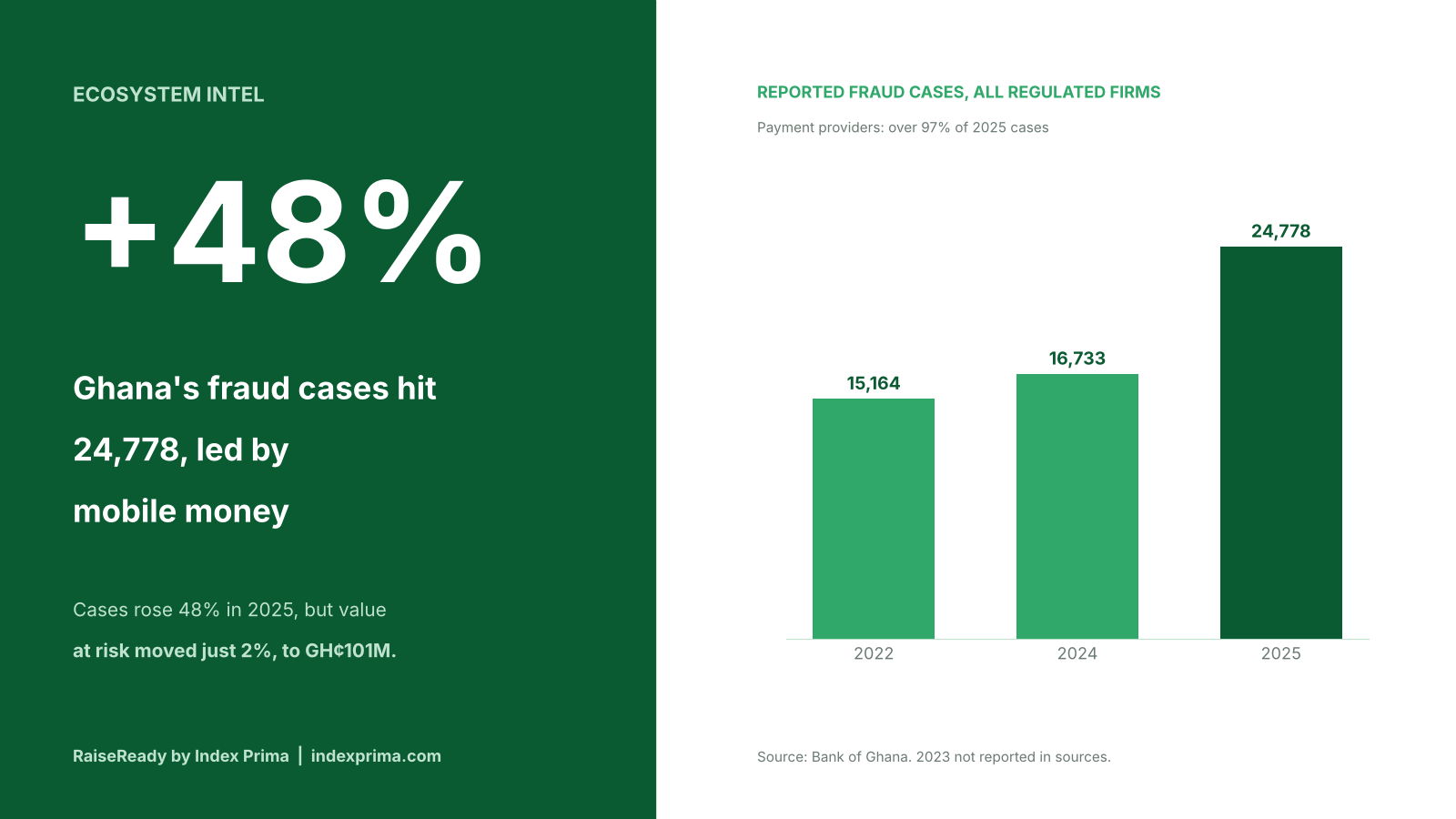
Ghana recorded 24,778 fraud cases in 2025, up 48% in one year and 63% since 2022. Yet the money at risk barely moved, from GH¢99 million to GH¢101 million. The reason is that the crime has changed shape: far more cases, each one smaller, and almost all of them on mobile money.
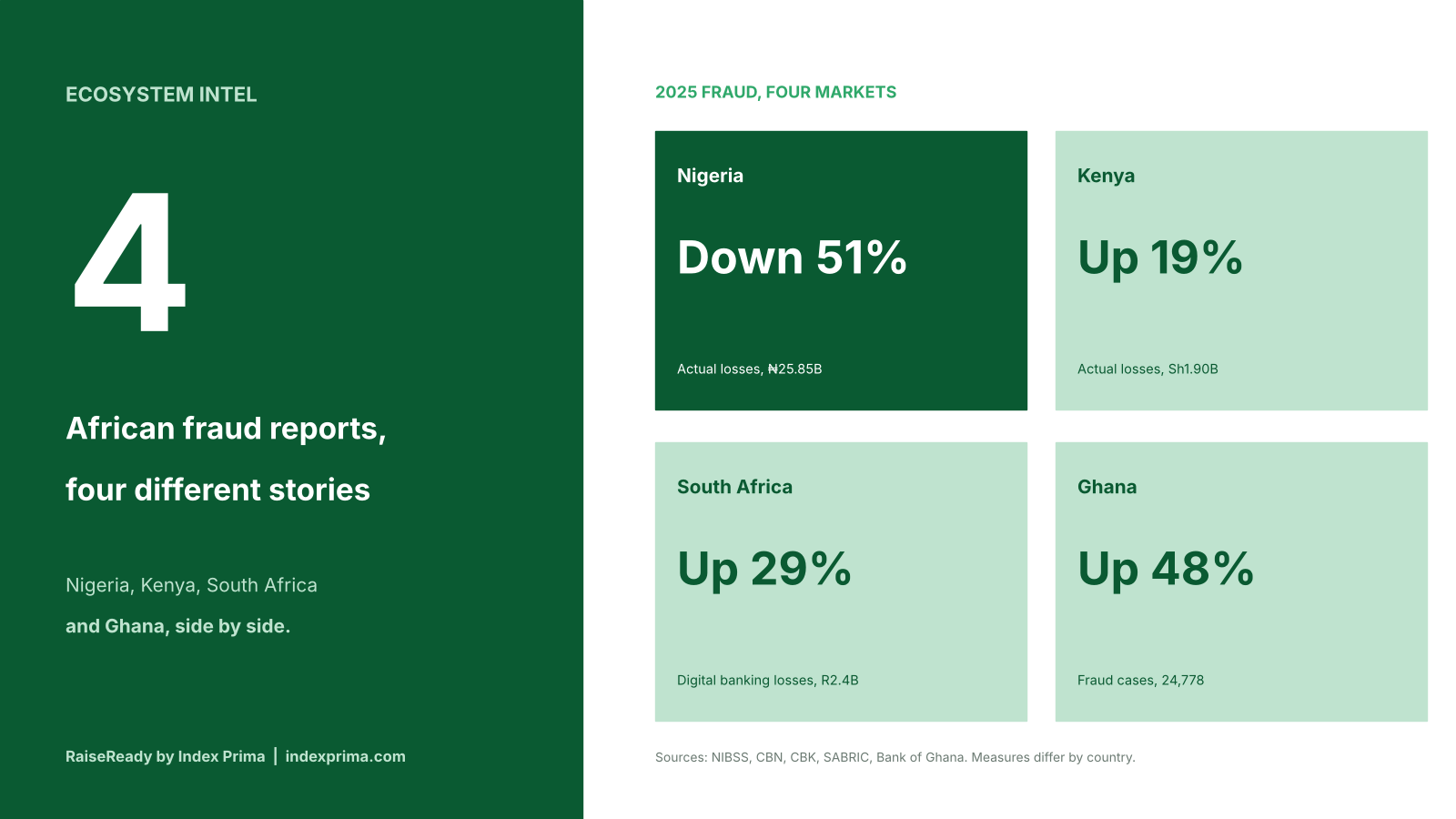
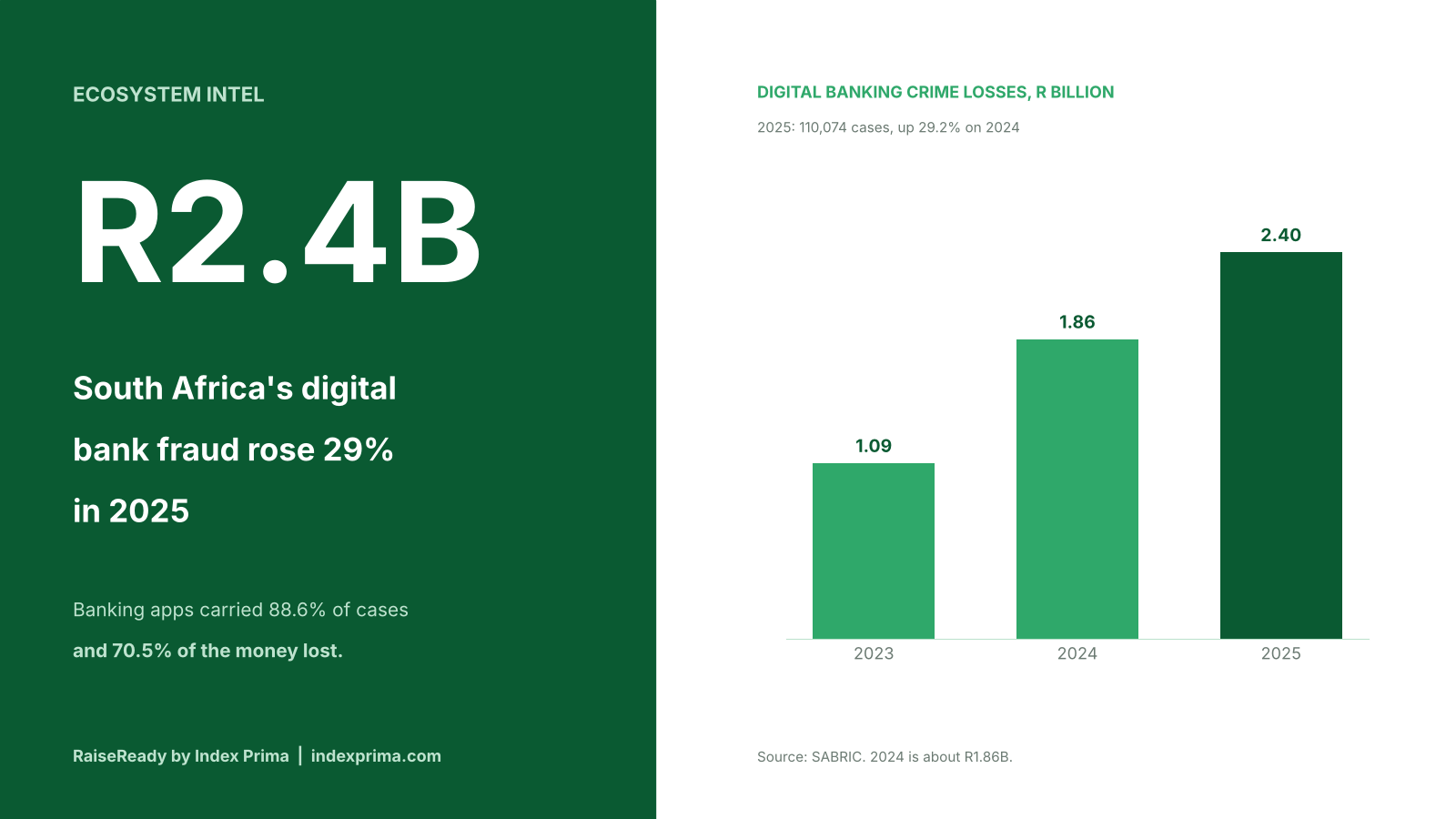
Nigeria’s fraud losses fell, Kenya’s hit a record, and South Africa’s grew on the back of banking apps. Ghana shows a fourth pattern. This report reads the Bank of Ghana’s 2025 Fraud Report, together with industry data from the Ghana Association of Banks. Four findings stand out. First, banks are winning the old fight: their cases fell by a third. Second, payment service providers (PSPs), which include mobile money operators, now carry over 97% of all cases. Third, one GH¢36 million case in a bank distorts the cash theft numbers. Fourth, once money leaves a bank, little of it comes back, with banks and savings and loans firms recovering only about 5%.
Start with the national picture. The Bank of Ghana counts fraud across banks, specialised deposit-taking institutions (SDIs) and PSPs. It reports “value at risk”, which is the amount exposed to fraud, not the amount finally lost.
| Year | Reported cases | Value at risk | Value per case |
|---|---|---|---|
| 2022. | 15,164. | GH¢82M. | About GH¢5,400. |
| 2024. | 16,733. | GH¢99M. | About GH¢5,900. |
| 2025. | 24,778. | GH¢101M. | About GH¢4,100. |
The last column is our own sum. It shows the shift clearly. In 2025, cases jumped 48% while value rose only 2%, so the average case at risk fell by about 31%. Ghana is not seeing a few huge heists. It is seeing a flood of small ones. The Bank of Ghana says the fraud “progressively migrated towards the PSP sector”, and the split by sector shows it.
| 2025 sector | Cases | Change in cases | Value at risk | Change in value |
|---|---|---|---|---|
| PSPs. | 24,124. | Up 54%. | GH¢37M. | Up 95%. |
| Banks. | 472. | Down 34%. | GH¢57M. | Down 24%. |
| SDIs. | 182. | Down 47%. | About GH¢8M. | Up about 77%. |
PSP cases rose from 15,673 to 24,124, and their value at risk nearly doubled from GH¢19 million to GH¢37 million. By our sums, the average PSP case rose from about GH¢1,200 to about GH¢1,500. So these are small amounts, taken from many people. That fits what the Bank of Ghana says about method. Eric Cab-Beyuo, who heads the bank’s Fraud Investigations and Reporting Unit, said: “The fraudsters don’t usually use many hacking techniques. They just play on our minds.” He described fake calls that trick people into giving up sensitive information. He also described fake texts that say the person has won a raffle or promotion they never entered. Once a scammer has a wallet PIN or a one-time code, the money moves.
Now the banks, where the story is more mixed. Bank cases fell from 716 to 472, and SDI cases fell from 344 to 182. Together, that is 654 cases, down from 1,060, or about 38% fewer by our sums. Banks and SDIs also improved their staff controls. Staff involved in fraud fell 40%, from 365 to 219. Staff dismissals fell 52%, from 155 to 75. But 139 of the 219 staff cases, or 63%, were about cash theft and cash suppression, which is the hiding or taking of cash held by the institution. So the biggest bank risk is still on the inside.
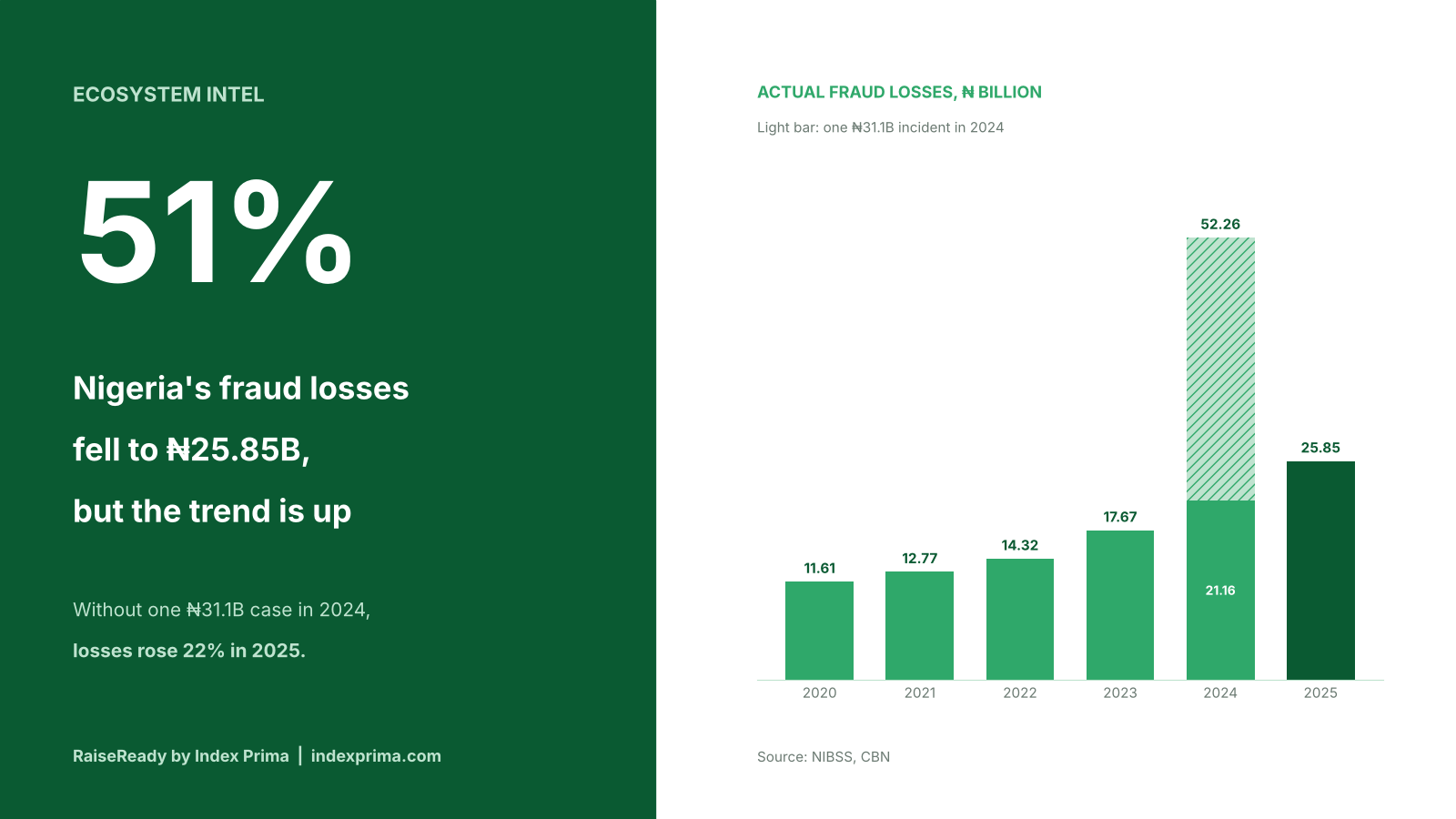
That brings us to the outlier. Cash suppression was the costliest fraud type for banks in 2025. Reports put it between GH¢40.7 million and GH¢42.4 million, up from between GH¢2.3 million and GH¢3.9 million the year before. The central bank says one case of about GH¢36 million drove most of the jump. Take it out, and cash suppression comes to roughly GH¢4.7 million to GH¢6.4 million. If that case sits inside the banks’ GH¢57 million at risk, the rest of the figure is about GH¢21 million. By our sums, that would be a fall of about 72% from GH¢75 million in 2024. The Bank of Ghana says the same in words: without the large case, the value would have dropped significantly. It credits banks’ internal controls and its own supervision. This is the Ghana version of Nigeria’s ₦31.1 billion case. One event can swing a year, so read the trend with the outlier set aside.
The other costly bank and SDI fraud types were smaller.
| Fraud type, 2025 | Value at risk | Note |
|---|---|---|
| Cash suppression. | About GH¢42.4M. | One case of GH¢36M. |
| Forgery and document falsification. | GH¢5.26M. | Includes one SDI loss of GH¢4.1M. |
| E-money fraud. | GH¢4.89M. | Bank losses up 32%. |
| Fraudulent withdrawals. | GH¢3.97M. | Up from GH¢1.82M. |
| Burglary. | GH¢2.92M. | GH¢1.74M banks, GH¢1.18M SDIs. |
Cash suppression is the only line where the Bank of Ghana’s figures differ by source, so we show the higher one.
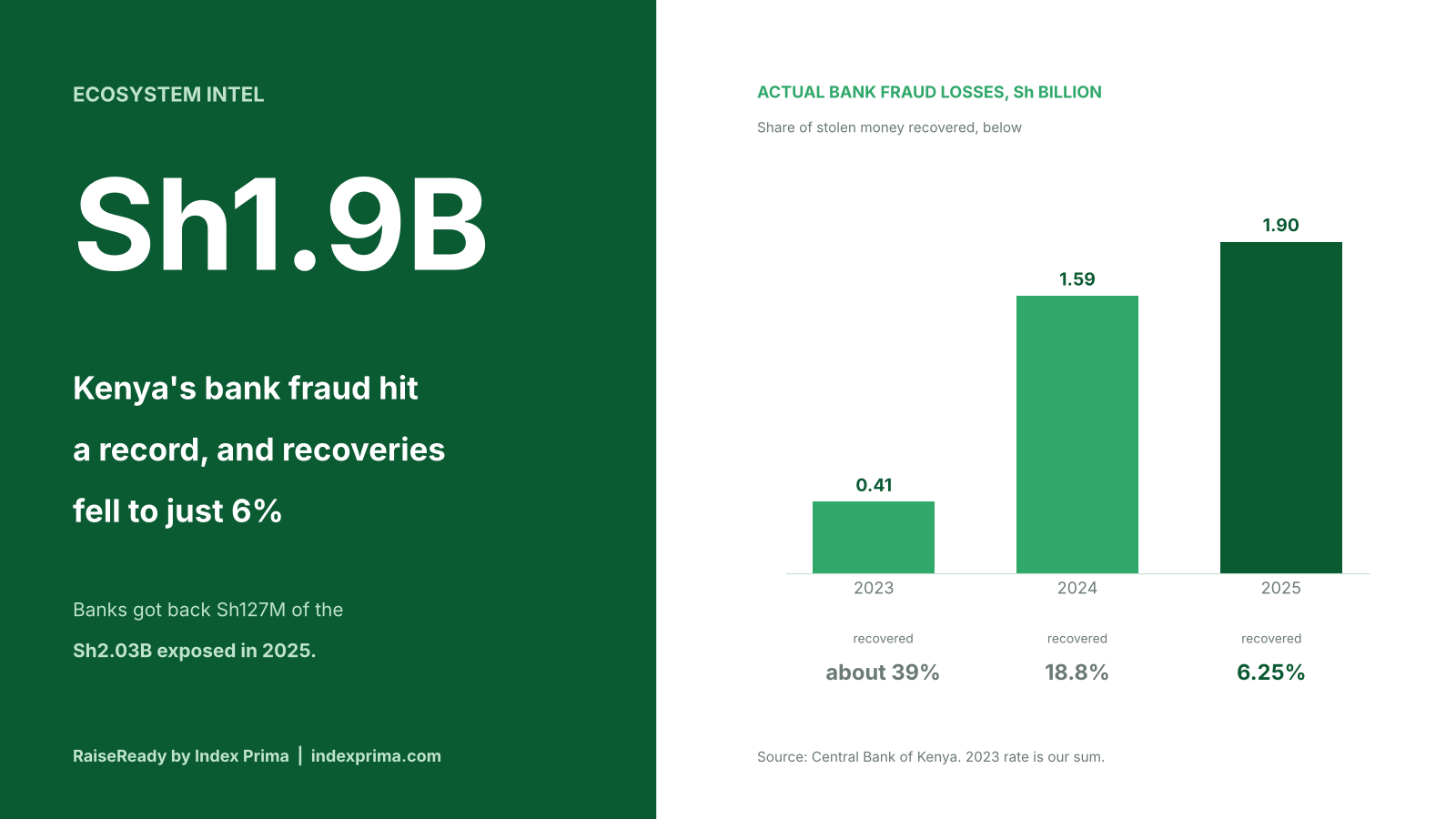
Now the part that worries many analysts: getting the money back. Banks and SDIs had GH¢68.2 million exposed to fraud in 2025. They recovered about GH¢3.7 million, or about 5%, which left net losses of GH¢64.5 million. That is not far from Kenya’s 6%. For mobile money, the picture may be worse. Jon Sarpong of the INNOVA Institute writes in Citi Newsroom that recoveries are “near zero” for mobile wallets, instant transfers and e-money. That is his view, not a Bank of Ghana figure, and the central bank report does not give a recovery rate for PSPs.
Is the picture changing in 2026? The Ghana Association of Banks publishes its own quarterly fraud data from member banks. For January to March 2026, it counted 73 cases, with GH¢14.05 million attempted and GH¢11.05 million lost after recoveries of about GH¢1.0 million. That is a recovery rate of about 7.2%. The report notes that fewer banks reported as the quarter went on. The number fell from 20 of 23 in January to 13 in February and 14 in March. So the totals may understate the true level. Within the quarter, the pattern is clear.
| Typology, Jan to Mar 2026 | Cases | Net loss |
|---|---|---|
| Cash suppression and theft. | 9. | GH¢5.00M. |
| Card and POS. | 18. | GH¢3.24M. |
| Forgery. | 4. | GH¢1.92M. |
| E-transfer. | 7. | GH¢297,000. |
| Mobile money. | 23. | GH¢142,000. |
Mobile money was the most common case type in these bank reports, at 23 of 73 cases, or about 31%. But it made up only about 1.3% of net losses. Cash suppression, with 9 cases, made up about 45%. By our sums, the average mobile money case lost about GH¢6,200, against about GH¢556,000 for a cash suppression case. This is a different data set from the Bank of Ghana’s, so do not set it beside the 24,778 cases. But it supports the same lesson. Many small cases on mobile money and a few large cases inside banks make up two different problems, and each needs its own fix.
What are officials doing? The Bank of Ghana has called for an industry-wide system to fight fraud across banks, fintechs and mobile money platforms. It has also questioned whether punishment for digital fraud is a strong enough deterrent. Its stated aim is to protect trust in a cash-lite economy, where more people pay by phone each year. The central bank advises users never to share a PIN, one-time password or bank details with anyone who claims to be from a bank or telecom firm. Victims should contact their bank or mobile money provider at once to freeze the account, and report to the police, including the Cybercrime Unit.
Sarpong’s argument is worth weighing. He says the headline “overstates the picture”, because fraud has not just grown, it has evolved. Banks have won the fight they prepared for, with branch controls and teller checks, and now face a new one. He calls for real-time scoring of payments, device checks and biometrics in place of text codes, and shared fraud data so that mule accounts are flagged fast. Those are his proposals, drawn from Canadian examples. They are not Bank of Ghana policy.
A caution on all of this. The Bank of Ghana’s report covers cases reported to it by regulated firms. Victims who never report, or who lose money to scammers outside the regulated system, are not in it. The industry total of GH¢101 million and the bank and SDI figure of GH¢68.2 million are also not fully reconciled in the coverage we saw.
Why it matters: Ghana’s numbers say that the average fraud victim is now a mobile money user, not a bank client. A rise of 48% in cases, with value at risk flat, means more households are hit for small sums that feel large to them. For ordinary Ghanaians, the steps are plain. Never share a PIN or one-time code. Treat any prize message as a trap. Call your provider from a number you trust, and freeze the account at once if something looks wrong. For mobile money firms, the lesson is that the volume of cases now sits with them, and they should publish loss and recovery data as banks do. For banks, it is to keep working on the inside, since staff cash theft is still the costliest bank risk. For the regulator, it is to close the data gap on PSP losses and recoveries.
What to watch next: the Bank of Ghana’s next fraud report, to see whether PSP cases keep rising. Watch whether the central bank publishes recovery rates for mobile money. Watch whether more banks report to the industry body, since reporting fell in early 2026. Watch for new rules or a shared fraud system across banks, fintechs and mobile money, as the central bank has called for. Watch whether another very large insider case appears in the figures. And watch whether average case values at PSPs keep rising, which would signal bigger scams on wallets.
Sources: MyJoyOnline on the Bank of Ghana’s 2025 Fraud Report and 5% recoveries; Graphic Online on 75 bank staff dismissed as fraud cases surge 48%; MyJoyOnline on the four-year rise in fraud cases; MyJoyOnline on the Bank of Ghana’s Cab-Beyuo on mobile money fraud; Pulse Ghana on the top five fraud types; Citi Newsroom on Ghana’s banks and the new fraud fight; Ghana Association of Banks on the 2025 fraud report; Ghana Association of Banks fraud report for January to March 2026.
A note for startup founders: Don’t practice on investors. Practice on AI first. RaiseReady by Index Prima is an AI fundraising simulator for African founders: upload your pitch deck, get a readiness score and face a tough AI investor before the real meeting. Find this post, and every post we publish, at raiseready.indexprima.com.