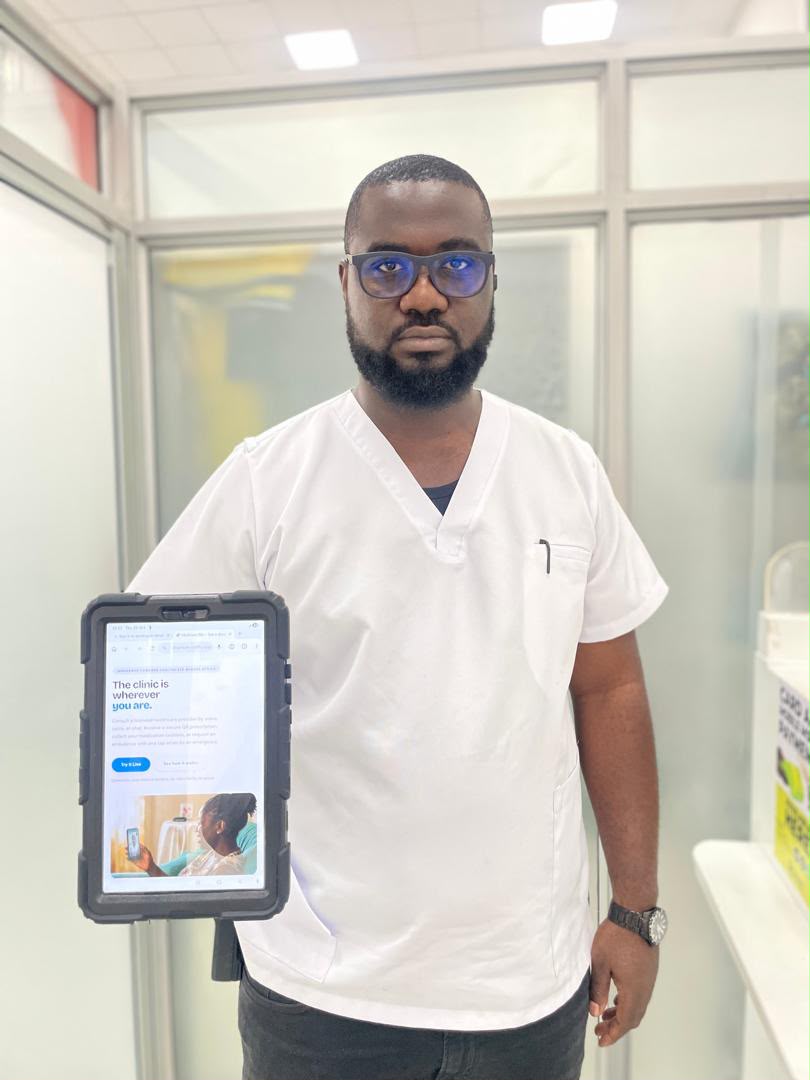
In an exclusive interview with Index Prima, Zambian healthcare professional Patrick Kasama explained how he used AI tools to build Medicare.zm, a platform that aims to stop one prescription from being used twice. He is not a trained software engineer, and he says he built a working prototype before he had a team or funding.
Medicare.zm gives each electronic prescription a single-use QR code that a pharmacy scans before it hands over medicine. The platform also offers teleconsultation, so patients can see a doctor without a clinic visit when that is safe. Kasama says it is still a prototype with no paying customers and no insurer partner. His next goal is a pilot with one insurer in one Zambian city.

Kasama went for care using his own medical insurance and found it harder than he expected. “Despite having insurance, the process was not as seamless as I expected,” he says. That made him ask why people who are covered still struggle to get the care they are entitled to. Then he looked at the other side. He points to pressure on insurers such as NHIMA over unpaid bills and claims, and he wondered how much of that spending could be managed with better checks.
Why must every patient walk into a clinic, where each consultation carries a fee? He says a minor rash, a medicine review or a follow-up can often be handled remotely. He also points to COVID-19 and Ebola, when fewer unnecessary visits meant less exposure to infection. Patients who need an examination, tests or urgent care would still be sent to a facility.
Here is how the platform works today, as he describes it.
| Step | What happens |
|---|---|
| Consultation. | An insured patient asks a provider for a consultation on the platform. |
| Prescription. | The doctor issues an electronic prescription with a unique, single-use QR code. |
| Pharmacy. | The pharmacist scans the code to check the prescription before dispensing. |
| Result. | Once used, the code cannot be used again, which helps flag duplicate or invalid prescriptions. |
The idea is to link the consultation, the prescription and the dispensing in one record. Kasama wants insurers to see that record one day, so they can tell needed spending from avoidable spending. The prototype shows the patient, doctor and pharmacy steps. Links with insurers are still part of the plan.
 Most founders are told to assemble a team or raise money first. Kasama did the opposite. He used AI-assisted development tools to turn what he knew about healthcare into a working product, and then used it to start talks with possible partners. A real product, he says, was easier to discuss than an idea. It also showed him where the code needed work. He works with a technical expert, Elijah Mawele, on the product’s direction.
He first pictured a platform with telemedicine, emergency help, pharmacy services, insurance and symptom checking. It was hard to explain what mattered most. So he asked which problem an institution would adopt and pay to fix. The answer was prescription checks and a trail for every transaction. “A startup does not need to solve every problem on day one,” he says. “It needs to solve one important problem exceptionally well.”
His proudest number is 8 out of 10. In his customer interviews, he says, eight of ten people were very unhappy with the current situation. He does not oversell it. He calls it early proof that the problem is real, and not proof of adoption or paying customers.
Trust has been the hardest barrier. A working demo was not enough for the people he spoke to. They wanted to know how it would fit with SmartCare, Zambia’s existing digital health system. They asked how patient data would be kept safe and who would answer for clinical decisions. He chose to build those answers into his plan, and he is now working on a route for data protection, patient consent and audit trails. He says he has spoken with health sector officials, and that these were conversations with individuals, not formal meetings.
On money, he says the work has been founder-led and paid for by personal resources and AI tools. There is no recurring revenue and no disclosed outside investment. He says he has learned from the UniPod and timbuktoo AI Programme, where he made it to the final shortlisted “Top50 innovators”, being the only Zambian innovators and encouraging more Zambians to take up opportunities like these and bring solutions that solve real life problems, he adds.
The next 12 months have one aim: to turn the prototype into a tested pilot with an insurer, its partner clinics and its pharmacies. He plans to track prescriptions checked, duplicate attempts and how fast claims are handled. He names four risks: slow adoption by institutions, regulation, trouble linking with existing systems, and a lack of money and technical skill.
Some days he has asked himself whether he was moving the right way, especially when trying to get serious attention for an early-stage idea. He has had to learn new technology, business skills and how to speak with decision-makers, without the resources of larger firms. “I am still learning, and MEDICARE.zm is still evolving,” he says. He believes Africa should do more than use health technology built elsewhere. “We should also be building solutions that understand our own healthcare systems,” he says.
Why it matters: Kasama’s own story shows that health cover does not always mean easy care. Insurers want to tell needed spending from avoidable spending, and he says that starts with a trusted prescription. His idea is narrow on purpose: check the prescription before the medicine leaves the shelf. It is also a reminder that health workers, with AI tools in hand, can start building health technology themselves. The stage is early. There is a prototype and a clear next step, and there are not yet customers or contracts.
Sources: Exclusive Index Prima interview with Patrick Shilukwe Kasama, founder of Medicare.zm, November 2026; Medicare.zm.
A note for startup founders: Don’t practice on investors. Practice on AI first. RaiseReady by Index Prima is an AI fundraising simulator for African founders: upload your pitch deck, get a readiness score and face a tough AI investor before the real meeting. Find this post, and every post we publish, at raiseready.indexprima.com.