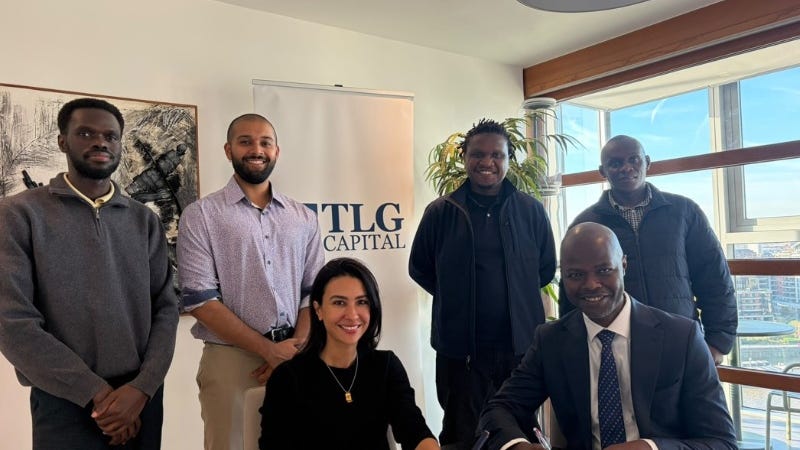
Down To Earth Technologies (DTE), a Nairobi firm that builds networks and cyber defences for big organisations, has secured a $3 million debt facility from TLG Capital. The money is meant to help it take on larger projects across East Africa.
It is a loan, not an equity round, so the founders keep their shares. The managing director says it lets the firm plan years ahead instead of months.
Here is the short version. TLG Capital, an investment firm that backs businesses across sub-Saharan Africa, signed what it calls a “scaling debt facility” with DTE. DTE will use it as working capital: cash to fund a growing pipeline of projects, bid for larger infrastructure contracts, deepen ties with technology vendors and expand in East Africa. The company says it serves more than 100 enterprise clients in six countries. The rate, the length of the loan and any security were not made public.
Here is the deal at a glance.
| Item | Detail |
|---|---|
| Borrower. | Down To Earth Technologies, a Nairobi-based ICT systems integrator. |
| Lender. | TLG Capital. |
| Amount. | $3 million, described as a scaling debt facility. |
| Use of funds. | Working capital for projects, larger contracts, vendor partnerships and regional growth. |
| Clients. | More than 100 enterprises in banking, telecoms, government, healthcare and education, the company says. |
| Countries. | Kenya, Uganda, Rwanda, Tanzania, Ethiopia and Djibouti. |
| Vendor partners. | Cisco, Palo Alto Networks, IBM, Infoblox, Dell, HPE and Red Hat. |
| Team. | Grew from eight staff in 2019 to nearly 80, according to the managing director. |
| Not stated. | The interest rate, the term, the security and how fast the money will be drawn. |
What does DTE do? It is an ICT systems integrator. That means it designs, installs and supports the networks, servers and security tools that a bank, a hospital or a ministry runs on. It does not own towers or fibre. It buys and fits equipment from global makers and keeps it running for the client. A 2022 profile in CIO Africa said the firm was founded in 2011 and had 30 staff and 15 contractors then. It also said managing director Vincent Milewa hopes to build a Kenyan-born answer to Indian service giants such as Wipro and Tech Mahindra.
Why would such a firm need debt? Integrators carry heavy costs before they get paid. They must buy hardware, pay engineers and meet vendor terms, often months before a client settles an invoice. Milewa put it plainly. He said most funders in the region lend for short periods, and that “TLG is breaking that norm: their flexibility allows us to plan two or three years ahead instead of 90 days at a time.” Isha Doshi, co-founder and partner at TLG Capital, said “DTE is a trusted partner to critical institutions in East Africa and beyond.”
Our reading is that the loan is about cash flow, not about building new assets. A larger bid means more equipment to buy up front and a longer wait for payment. Multi-year debt lets a firm like DTE say yes to such work. That is our view, not the company’s.
The wording of some headlines needs care. Some reports describe the money as funding “digital infrastructure projects”. In DTE’s case, that means the networks, security and data centre systems it installs for clients. It does not mean the firm is building its own physical networks. The company also says it wants to support upcoming enterprise investments in regional data centres, Startup Researcher reports.
DTE’s growth is a useful sign. Going from eight staff in 2019 to nearly 80 is tenfold growth in about seven years, by our sums, though earlier profiles give slightly different starting counts. The firm also works across six countries, which is a wide reach for a company of its size. It is a reminder that African tech is not only apps. Much of the continent’s digital growth rests on firms that plug the cables, secure the systems and train the staff.
TLG Capital is no stranger to this kind of deal. It has recently announced a $5 million facility for Zambia’s Shona Capital and a $3 million investment in Nigeria’s Drive45. It has also teamed up with Future Africa on a $25 million venture debt fund. Those show a pattern of flexible debt for firms that are past the idea stage but not yet big enough for bank loans.
Why it matters: Many African firms that sell services, not software, struggle to get growth funding. Banks often want hard collateral, and venture investors want rapid scale. Debt that fits project cash cycles can fill that gap. If DTE uses the money well, it could win larger public and private contracts that now go to foreign integrators. The risk is that a loan must be repaid whatever happens. Large contracts can be paid late, and currency swings can raise the cost of imported equipment.
What to watch next: the loan terms, if either side shares them. Watch which large contracts DTE wins after the funding. Watch whether its headcount and country footprint keep growing. Watch how it works with its vendor partners as it scales. Watch its role in regional data centre projects. And watch whether other African integrators and service firms get similar debt from private lenders.
Sources: Africa Private Equity News, “TLG Capital provides $3M debt facility”, 13 November 2026; Startup Researcher, “TLG Capital backs Down To Earth Technologies with US$3 million facility”; CIO Africa profile of Down To Earth Technologies, February 2022; The Condia on TLG Capital and Shona Capital; The Condia on TLG Capital and Drive45; TechCrunch on the Future Africa and TLG Capital venture debt fund.
A note for startup founders: Don’t practice on investors. Practice on AI first. RaiseReady by Index Prima is an AI fundraising simulator for African founders: upload your pitch deck, get a readiness score and face a tough AI investor before the real meeting. Find this post, and every post we publish, at raiseready.indexprima.com.