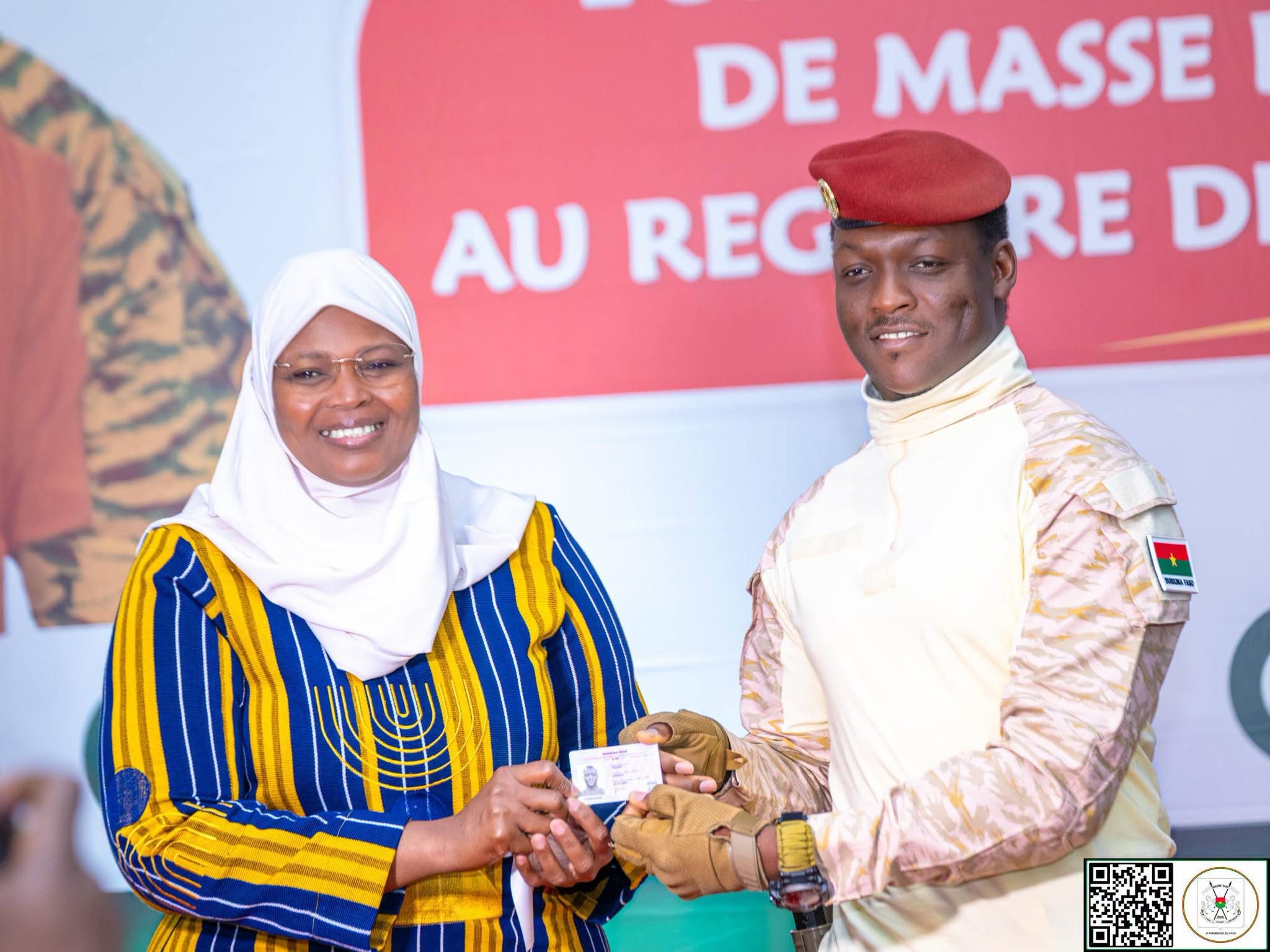
Burkina Faso has begun registering everyone who lives in the country for a permanent 12-digit digital identifier. President Ibrahim Traoré was the first to enrol, at a launch in Ouagadougou on 11 November.
Each person gives a photo, ten fingerprints and both irises. The government says the number will help public services recognise the same person and cut duplicate records.
Here is the short version. The National Register of Unique Electronic Identifiers will give every person a random number that stays with them for life. Enrolment is free and open to citizens and to foreigners who live in or pass through the country. It will roll out in stages through 966 kits, with mobile teams for displaced people, older people and people with disabilities. The number does not replace the national identity card or the passport. It is a shared reference that different agencies can link to. Officials say the data will sit on state servers in Burkina Faso and be run by national engineers.
Here is the programme at a glance.
| Item | Detail |
|---|---|
| Launch. | Wednesday 11 November 2026, Ouagadougou. |
| What is issued. | A random 12-digit identifier, kept for life. |
| Data collected. | Name, date of birth, sex, a facial photo, ten fingerprints and both irises. |
| Cost. | Free. |
| Who can enrol. | Burkinabè citizens, and foreigners living in the country or in transit. |
| Rollout. | 966 kits in stages, plus mobile teams for displaced people, older people and people with disabilities. |
| Legal base. | Law No. 027-2024/ALT of October 2024, and a decree of 30 July 2026. |
| Programme. | Part of WURI, the West Africa Unique Identification for Regional Integration and Inclusion programme, funded by the World Bank. |
| Not stated. | The total cost, a full enrolment target and the detailed data protection rules. |
What does the number do? Today, one person can appear in many government files under slightly different details. A common identifier lets an agency pull up a person’s core record without making a new identity each time. The government says this can help track who receives social and farm support, limit repeat sign-ups and reduce wrong payments. Traoré pointed to the trouble of tracking farm aid when one person holds several registrations. One report says he spoke of possible savings of tens of billions of CFA francs from data sharing.
Why collect so much biometric data? The system uses fingerprints and irises to check that the same person is not enrolled twice. That is the main way such registers stop duplicates. A pilot phase registered more than 16,000 people in towns and villages, according to Minister of Digital Transition Aminata Zerbo. The government wants to register as many people as it can before the end of 2026. Zerbo has framed the register as a matter of digital sovereignty, saying the country needs a system that its own experts run. Traoré urged residents to report anyone who asks for money to enrol.
This is not Burkina Faso’s only new ID. The country also issues a biometric card shared with Mali and Niger, the Alliance of Sahel States. That card costs 3,500 CFA francs and lasts ten years. The new number is separate. It is free, and it is not a card.
The project has a long history. It began in 2018 under WURI, which aims to build ID systems in West Africa that work together. Parliament passed the law in October 2024. Cabinet adopted the decree in July 2026 to set out how registration and number issuing would work. Burkina Faso now joins others on the continent with national digital ID, including Nigeria’s NIN, Ghana’s Ghana Card and Ethiopia’s Fayda.
The hard questions are about trust and safety. A register that holds the fingerprints and irises of a whole population is a rich target. Officials have not said which independent body will oversee it, how long data will be kept, which agencies may see it, or how a person can correct a wrong record. Officials say the data stay on national servers, which can help with control. It does not by itself answer who may access it, or for what. Our reading is that these rules will decide whether people trust the number as much as the technology does.
Why it matters: A good ID can open doors. It can help people get aid, open bank accounts and prove who they are to private firms as well as to the state. That is especially true for displaced people and rural families who often lack papers. But a mass biometric register also raises the stakes if data leaks or is misused. The benefit depends on strong data protection, fair access for people who are hard to reach, and clear limits on who can use the number.
What to watch next: how many people enrol by the end of 2026, and who is reached first. Watch whether mobile teams get to displaced and rural communities. Watch for published rules on data access, retention and correction. Watch which public services and private firms start to use the number. Watch how it links to the shared Sahel ID card and to other West African systems. And watch whether the promised savings show up in aid and payment records.
Sources: Samira Njoya, “Burkina Faso: What you need to know about the new unique digital identifier”, 13 November 2026; ID Tech Wire, “Burkina Faso begins mass biometric enrollment for unique ID number”, November 2026; Benin Web TV, “Burkina Faso launches free unique identifier and plans 966 kits”, November 2026; Biometric Update, “Burkina Faso approves operational framework for WURI digital ID rollout”, 3 August 2026.
A note for startup founders: Don’t practice on investors. Practice on AI first. RaiseReady by Index Prima is an AI fundraising simulator for African founders: upload your pitch deck, get a readiness score and face a tough AI investor before the real meeting. Find this post, and every post we publish, at raiseready.indexprima.com.