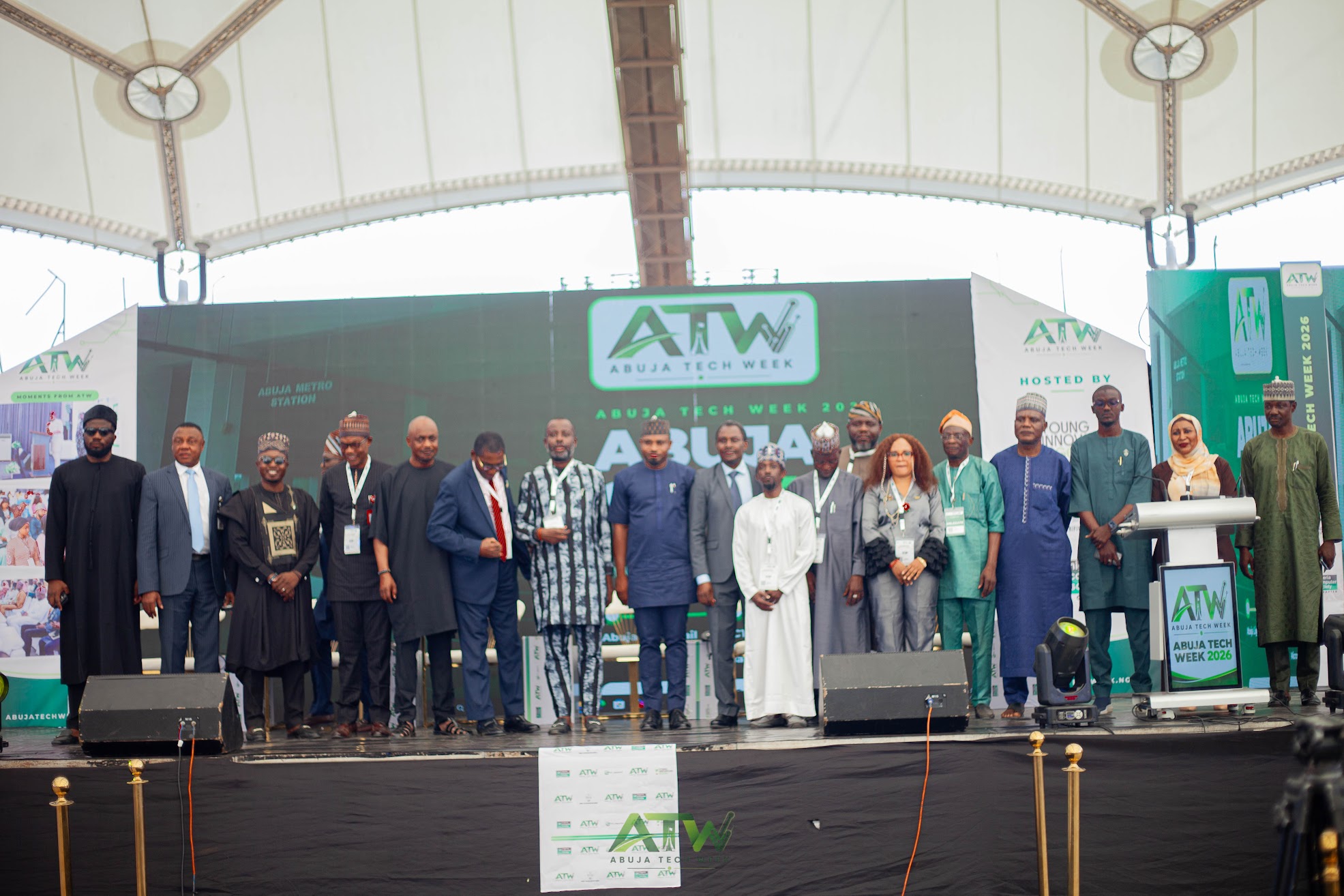
Nigeria does not lack smart-city plans, policies or conferences, says the communiqué from Abuja Tech & Digital Economy Week 2026. What it lacks is a way to carry them out, and the week’s participants made 8 sets of resolutions, from power and electric vehicles (EVs) to data, AI, money and skills.
The communiqué follows the 24 November dialogue at the Velodrome, National Stadium, Abuja. Young Innovators of Nigeria (YIN) ran it with the Nigeria Computer Society. The Rural Electrification Agency co-hosted. It sets one test. The next edition will open by asking “what has changed since the last time we met?” The week also saw the launch of the Nigerian AI Governance Forum and ten young teams pitching to judges. Its message to founders is plain. Pick one use case, prove people will pay and show your numbers.
| Item | Detail |
|---|---|
| Event. | Abuja Tech & Digital Economy Week (ATDEW) 2026. |
| Theme. | Energizing Smart Mobility: Powering Cities of the Future. |
| Date and place. | 24 November 2026, Velodrome, National Stadium, Abuja. |
| Convener. | Young Innovators of Nigeria. Co-host: Rural Electrification Agency. |
| Who came. | Ministries, regulators, the African Development Bank, the British Council, investors and young innovators. |
| Main finding. | A smart-city blueprint exists. The gap is execution. |
| Next check. | Progress report against the resolutions at the next edition. |
The communiqué rests on four foundations. They are clear policy, links between systems, bankable investment and partnerships that build real skills. It says none can be dropped. A city is smart only if it improves lives, it adds. Nigerian cities are not Singapore, Houston or California. Solutions must fit waterways, weak power and poor networks. Its first policy resolution is telling. It asks government to retrieve the smart-city framework that NITDA wrote and Lagos State took up. Then it wants to know if it was ever adopted as policy. Our reading is that a plan may exist on paper while no one is sure who owns it.
Energy comes first. Participants cited national output at a recent low of about 900 MW, against a need of at least 10,000 MW. By our sums, that is about 9% of the need. Other reports vary. AllAfrica reported 4,020 MW on 9 November, against 13,625 MW installed, and the power minister put output at about 5,000 MW. The numbers differ, but the point holds. Every data centre, EV, phone network and AI system needs power. It wants power and connectivity treated like roads. Hydro plants must work, and solar, mini-grids and storage should be part of city life.
On quality, it says more than 60% of products at solar exhibitions were called substandard. It asks the Standards Organisation of Nigeria and others to enforce standards for solar and power kit. For EVs, it advises AC chargers first, since they suit a weak grid and a hot climate, with fast DC chargers only where needed. It wants chargers in malls and along main roads, so charging is as easy as using an ATM or POS terminal. Swapping petrol cars for electric ones will not cure traffic jams alone, it adds, so public transport and logistics need a rethink. EV imports are tariff-free, and it urges local assembly with young people involved.
Data and AI governance get the most detailed asks. Participants praised the Nigeria Data Protection Commission for getting private firms to comply. They want every organisation to appoint a Data Protection Officer and to state where data is stored, who can see it and how it is used. Then came the launch of the Nigerian AI Governance Forum (NAIGF). It calls itself independent, non-regulatory and multi-stakeholder. The Global Network for Cyber Solutions convenes it under Dr Segun H. Olugbile. Its chairman, Dr Olusola Teniola, presented an open letter to President Bola Ahmed Tinubu. The letter makes seven asks. They include formal recognition of the forum and a presidential directive on roles. They also include contact offices in ministries and a public-interest charter. The last is a timed roadmap, with a yearly report, for Pillar 5 of the National AI Strategy. The letter proposes a 90-day consultation. The forum pledges at least 40% women and 30% youth in its structures.
Read that part with care. NAIGF is not a government body, and the communiqué records no reply from the Presidency. The 90-day clock starts only when government convenes the talks. Participants “endorse” the process and urge early convening. That is a request, not a promise. The wider stage is real, though. The communiqué says the UN Global Dialogue on AI Governance held its first session in Geneva in July, with 163 countries. The ITU confirms the session opened on 6 July. The next one is set for May 2027 in New York, per the communiqué.
Money and small firms get a hard look. The communiqué says the 95% financial inclusion target has not been met since about 2020. It cites about 130 million documented adults against a population near 250 million. Pension and insurance cover are each below about 10%. By our sums, 130 million is about 52% of 250 million. The two numbers do not measure the same thing. Participants want inclusion measured by access, use and quality. They want products made for informal workers, traders and rural users. They also want small firms linked through shared platforms, simpler tax steps and cheap AI tools. One line stands out: tax duties should be so well explained that a demand is not mistaken for fraud.
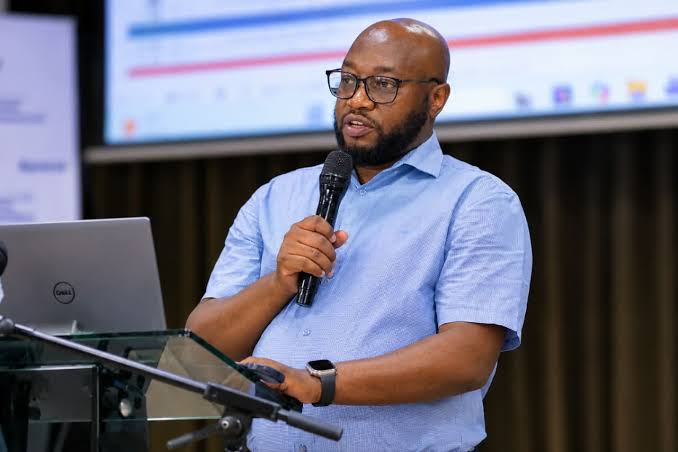
The ten teams in the National Innovation Challenge show what young Nigerians are building. Index Prima’s founder, Solomon Yateghtegh, sat on the judging panel of five. The judges’ advice came up again and again: choose one use case, check that users will pay, and write down unit economics before you scale.
| Team | What it does | What judges said |
|---|---|---|
| NaviaRide. | Shared commutes with NIN checks and a safety device. It says 20 car owners are on board, 150+ riders wait, and it is raising $500,000. | Focus on two routes. Aim for 1,000+ daily riders in 18 months. |
| VoiceReach. | AI by voice call and SMS in Yoruba, Igbo, Hausa, Pidgin and English. No smartphone needed. | Publish pilot results and price tiers. |
| Veyora Hydrophonics. | Soilless farming kits from waste pipes, at ₦21,000 a unit. | Set bulk prices and record yields. |
| ProtiBox. | Fish farming that reuses water and turns waste into fertiliser. | Name the core product. State water-safety limits. |
| Tap-A-Ride. | Fixed-fare tap-to-pay bus and event transport. | Research low-income and non-app users. |
The other five teams worked on renting, solar water pumps, export tracking, drone delivery of medical supplies and food-waste data. Teams with users, such as NaviaRide and VoiceReach, got advice on scale. Teams with prototypes were told to validate first. FoodWaste AI, for one, was told to test with farmers because it had no proof yet that they would pay. It also asks for stronger paths from project to seed funding. These include investor-judged showcases across the 36 states.
The follow-up list gives the week a calendar. A UK delegation meets the Minister of Education on AI and EdTech from 1 to 5 December, and Nigerian voices are invited. It says outcomes will go to the UN, the African Union and the internet governance forum in Kenya. Our reading is that this points to the Internet Governance Forum in Nairobi from 14 to 18 December, but the text does not say so. The organisers promise projects with owners, dates and goals.
Why it matters: Nigeria’s smart-city, EV and AI plans will only help people if power, standards, data rules and money line up. This communiqué helps because it names the gaps and gives each group a job, from ministries to founders. The test is simple. A year from now, can anyone point to a policy adopted, a charger installed or a firm funded because of it?
Sources: Abuja Tech & Digital Economy Week 2026, Official Communiqué, issued 26 November 2026; AllAfrica, “Nigeria: Power Outages Remain Despite Rise in Generation, Ministerial Promise”, 10 November 2026; ITU, “Global Dialogue on AI Governance”, 6 July 2026; Premium Times, “GNC launches Nigeria forum for AI governance to secure Nigeria’s digital future”, May 2026.
A note for startup founders: Don’t practice on investors. Practice on AI first. RaiseReady by Index Prima is an AI fundraising simulator for African founders: upload your pitch deck, get a readiness score and face a tough AI investor before the real meeting. Find this post, and every post we publish, at raiseready.indexprima.com.