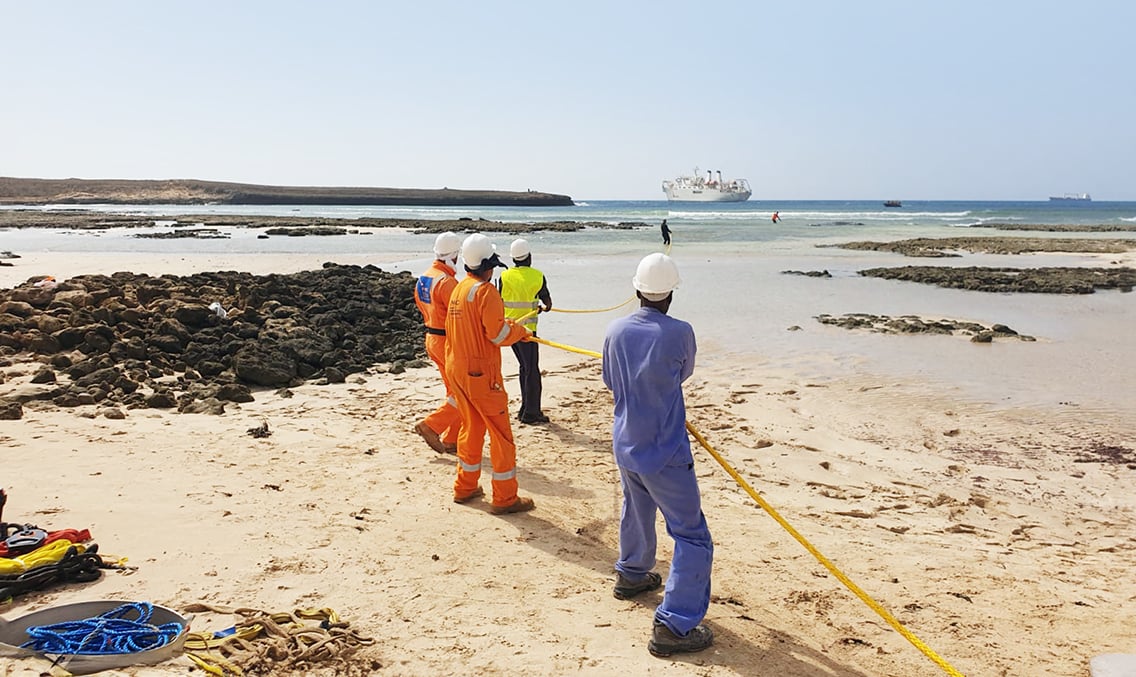
Djibouti plans to connect 104 public sites to fibre by December 2026, including Peltier Hospital, schools and government offices, in the next phase of its Djibouti Digital Foundation programme. It follows a pilot at 33 sites, and the World Bank’s latest report shows the programme still has ground to cover before it closes in June 2027.
The $10 million programme is funded by the International Development Association, the World Bank’s concessional lender, and was approved in December 2021. In a World Bank report from February 2026, 29 institutions had better internet access as of 30 September 2025, against a target of 60 by June 2027. Those 29 sites reached 6,275 users, against a goal of 20,000. Djibouti is a landing point for international subsea cables, yet the World Bank says affordability, quality and access still need work.
| Item | Detail |
|---|---|
| Programme. | Djibouti Digital Foundation (DFN), funded by the World Bank’s IDA. |
| Funding. | $10 million credit, approved 2 December 2021. Closes 30 June 2027. |
| This phase. | 104 sites, including Peltier Hospital, schools and administrative buildings. Due by December 2026. |
| Pilot. | 33 government agencies: 11 in the capital and 22 in the regions. |
| Progress (30 Sept 2025). | 29 institutions with better access, against a target of 60. 6,275 users, against 20,000. |
| Training. | 316 people with new digital skills, against a target of 300. |
| Spending (Oct 2026). | About 80% committed and 56% disbursed, per the programme coordinator. |
| Not stated. | Site list, cost per site, who supplies the fibre and the price paid by agencies. |
The programme also aims to improve telecoms rules, build digital skills and bring in competition and private investment step by step. At Peltier Hospital, technicians are laying fibre between buildings, a step needed to spread the connection through the whole site. The government plans to finish this phase by December 2026. Early signs of impact are small but real. In June 2025, the Djiboutian Information Agency reported that a link at a high school in Arta let staff print report cards at once and speak with the Ministry of Education more easily. A health centre in the same region also got fibre.
By our sums, the numbers tell a story of a late start and a big push. The 29 sites are about 48% of the 60-site target, and the 6,275 users are about 31% of the 20,000 target. Skills training already beat its goal at 316 people. If the 104 new sites are counted the same way as the 29, the site target would be passed more than twice over. Each site reached about 216 users on average so far, by our sums. At that rate, 104 more sites could reach more than 22,000 people. That is an illustration, not a forecast, and it depends on how the World Bank counts sites and users. The pilot count of 33 agencies and the report count of 29 institutions also differ, and the gap is not explained.
A World Bank status report with data to August 2024 showed the programme had spent 43% of its money. It rated progress as moderately satisfactory and overall risk as high. Parts of the skills work, such as a coding academy and the plan to add digital skills to school courses, had not started at that point. The telecoms regulator, ARMD, had awarded two licences. By October 2026, programme coordinator Hawa Youssouf Kayad said 26 of 35 planned activities were done. Communications Minister Mohamed Abdoulkader Moussa Helem urged faster delivery of the programme and of the regional EARDIP project.
Price is the hard test, and the status report listed the cost of 1 GB of mobile data at $1.26, up from $1.12 at the start, against a target of $0.80. That figure was current to August 2024, so newer data may differ. The World Bank’s 2024 review of Djibouti’s digital economy found that the country still has room to improve “affordability, quality and access to digital services.” Ecofin cites the World Bank as saying 65% of Djiboutians used the internet in 2024, against 74% worldwide. Connected hospitals and schools help, but public sites are a small share of users. Lower retail prices and more competition will decide whether the other 35% come online.
The Eastern Africa Regional Digital Integration Program (EARDIP) has $20 million for Djibouti. It plans cross-border links, 12 new 4G sites and fibre loops to Dikhil, Tadjourah and Obock. It cannot start until commercial, environmental and social studies are approved, and no date is given. Together, the two programmes are worth $30 million.
For startups and service firms, the real prize is what runs on the new links. Online school records, hospital systems and government forms need software, support and training. Local firms that can build these services have a clear first customer in the state. They will need to know how procurement works and who pays for the connection once the project money ends. Who will run and fund the links after June 2027 has not been made public.
Why it matters: A country that hosts international subsea cables should not leave its own hospitals and schools offline. Public sites with steady fibre can run records, payments and online services that citizens use every day. The test is whether the programme finishes on time, keeps the links running and turns better access into lower prices for everyone.
What to watch next: whether Peltier Hospital and the 104 sites are live by December. Watch the next World Bank progress report for new site and user counts. Watch whether more telecoms licences are issued and whether prices for mobile data fall. Watch for approval of the EARDIP studies and a start date for the fibre to Dikhil, Tadjourah and Obock. And watch who pays to run the links after June 2027.
Sources: Samira Njoya, “Djibouti is extending fiber optics to connect government offices, schools and hospitals”, Ecofin Agency, 24 November 2026; Osiris, “Djibouti: 30 millions pour le numérique, des réalisations encore attendues”, 26 October 2026; Dawan Africa, “Djibouti communication minister calls for faster rollout of $30 million digital projects”, October 2026; World Bank, “New project to support the emergence of a digital economy in Djibouti”, 2 December 2021; World Bank, Implementation Status and Results Report, Djibouti Digital Foundations Project (P174461); World Bank, “Djibouti digital economy: opportunities and challenges for growth and development”, 15 May 2024.
A note for startup founders: Don’t practice on investors. Practice on AI first. RaiseReady by Index Prima is an AI fundraising simulator for African founders: upload your pitch deck, get a readiness score and face a tough AI investor before the real meeting. Find this post, and every post we publish, at raiseready.indexprima.com.