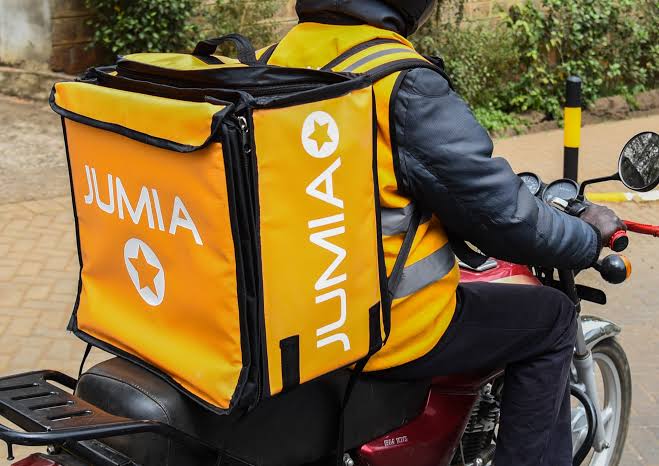
Jumia Food grew for a decade across Africa, sold $64 million worth of food in nine months, and never reached profitability, Jumia says. In December 2023, its owner pulled the plug in seven countries, Nigeria among them.
The story is a warning for any founder who confuses growing orders with building a business. Jumia says food delivery never reached profitability. It was once the fastest-growing part of the company, yet it was shut down to protect Jumia’s path to profit. Four lessons stand out, and they still apply as new food and grocery startups rise and fall across the continent.
It began in Lagos. Jumia Food started in 2013 as Hellofood, one of the online companies built by Africa Internet Group, a Berlin-based venture. Joe Falter, a British former McKinsey consultant, launched it from a hot Lagos office. He spent his days meeting restaurant owners and delivery firms. Within about three years, Hellofood said it was in 10 African countries with more than 4,500 restaurants across 15 cities. Many restaurants did not answer calls or deliver on time, Falter said, so the company built its own team of riders. At the time, its riders handled nearly 70% of deliveries in Nigeria. He described delivery as “like a completely different business.” In 2016, the group renamed Hellofood as Jumia Food.
Then came the boom years. Here is how the story looked from the outside, according to reports.
| When | What was reported |
|---|---|
| 2013. | Hellofood launches in Nigeria. |
| 2016. | Renamed Jumia Food with the rest of the group. |
| 2020. | Food orders in Nigeria grow 25% to 30% a month during the first COVID months, says the country manager for Jumia Services. |
| 2021. | Jumia Food grows 82% in a year, Techpoint reports. |
| Q3 2022. | Food orders up 38% year on year, and 20% of all items sold. It is Jumia’s second-biggest category after fashion. |
| Q4 2022. | First cuts: food delivery ends in Egypt, Ghana and Senegal. |
| 14 December 2023. | Jumia says it will end food delivery in seven markets by the end of the month. |
The final decision came on 14 December 2023. Jumia said it would close Jumia Food in Nigeria, Kenya, Uganda, Morocco, Tunisia, Algeria and Ivory Coast. In its words, the business was “not aligned with the current operational landscape” and had never reached profitability. Food was about 11% of Jumia’s sales value in the first nine months of 2023. By Techpoint’s count, that was $64 million of $581 million. That is the value of goods sold, not revenue. Jumia’s chief executive, Francis Dufay, said food delivery is “a segment that’s very difficult across the world, with very challenging economics and big losses.” He said it “does not offer the same upside potential” as Jumia’s core business. A senior finance executive, Antoine Maillet-Mezeray, said the move was about spending capital where returns look better.
Why did the numbers not work? Reports point to a mix of causes. Delivery needs riders, fuel and marketing. Dufay named intense competition and heavy marketing spend. Reports on the shutdown also cite weak spending power, rising fuel prices, traffic jams and poor road and address systems, all of which make deliveries slow and costly. Techpoint says that in 2023, active customers and orders fell as Jumia cut the discounts it had used to win buyers. That suggests a business that grew on incentives. Bolt Food left Nigeria and South Africa in the same month, citing a weak economy, inflation and competition.
What happened to Jumia afterwards? The group kept its online shop and its payments arm, and it says it chose margins over volume. In the second quarter of 2026, it reported an adjusted EBITDA loss of $8.7 million, down 36% from $13.6 million a year earlier. EBITDA is a measure of operating profit before some costs. The company says it expects to break even on that measure in the fourth quarter of 2026 and to make a full-year profit in 2027. It also raised $50 million, with $25 million from the International Finance Corporation. Those are company targets, and they are not results. Nothing we reviewed ties the food exit to these numbers, so we do not claim that it helped.
Demand did not vanish when Jumia Food did. Chowdeck and Glovo, which run as marketplaces that connect customers to existing restaurants, stores and riders, kept going. WeeTracker reports that Chowdeck hit one million monthly orders in October 2025, raised $9 million in August 2025 and became profitable by late 2025. These are reported claims. The same report lists others that did not last. GoLemon, a Lagos grocery start-up, stopped taking orders on 29 July 2026 after 28 months. FoodCourt paused in March 2026 after staff strikes over unpaid wages, and Eden Life paused its consumer delivery business in February 2026. WeeTracker’s view is that firms that own kitchens, stock and delivery carry heavy fixed costs that high inflation and fuel prices make hard to bear.
So what is the lesson? Our reading is that there are four.
First, orders are not profit. Jumia Food grew 82% in one year and 38% in another. Neither rate fixed the gap between what an order earned and what it cost to deliver. Growth only helps if each extra order moves you closer to a profit.
Second, own as little cost as you can. Falter’s own words, that delivery is “a completely different business,” came true. Running riders and marketing in cities with traffic, fuel swings and weak addresses piled on costs that no app can control. The reported survivors keep their model lighter.
Third, bought customers leave. When Jumia cut discounts, active users and orders fell. A startup should know how many customers stay at full price before it spends more on getting them.
Fourth, a business inside a bigger group lives by the group’s goals. Jumia’s chief executive framed the exit as a choice to put capital and management time into physical goods. A founder who relies on a parent company, or a single big investor, should ask what that backer needs to see.
Why it matters: Nigeria’s online food delivery market was worth about $1.14 billion in 2025, WeeTracker says, and it is forecast to reach $2.73 billion by 2034. Demand is real. The hard part is turning it into a profit, in a place where fuel, currency and roads shift every year. Jumia Food’s ten years show how a famous brand with deep pockets can still fail at it. For founders and investors, that is a reason to look at the cost of each delivery before the size of the user base.
What to watch next: Jumia’s third-quarter results and whether it reaches its break-even goal in the fourth quarter. Watch whether Chowdeck stays profitable as it grows and whether Glovo keeps its place. Watch whether more full-stack food and grocery startups pause or close. Watch whether investors keep funding delivery start-ups that own their kitchens and fleets. And watch whether Jumia ever returns to food, since it has shown no sign of doing so.
Sources: Jumia Group, “Jumia discontinues food delivery across seven markets”, 14 December 2023; TechCrunch on Jumia’s food delivery exit; Techpoint Africa on the Jumia Food shutdown; WeeTracker on why Jumia Food shut down; WeeTracker on Nigeria’s food delivery graveyard; TechCabal on Jumia Food’s 2020 order growth; How We Made It In Africa on Hellofood; TechCabal on the Jumia rebrand; Jumia’s second quarter 2026 results.
A note for startup founders: Don’t practice on investors. Practice on AI first. RaiseReady by Index Prima is an AI fundraising simulator for African founders: upload your pitch deck, get a readiness score and face a tough AI investor before the real meeting. Find this post, and every post we publish, at raiseready.indexprima.com.