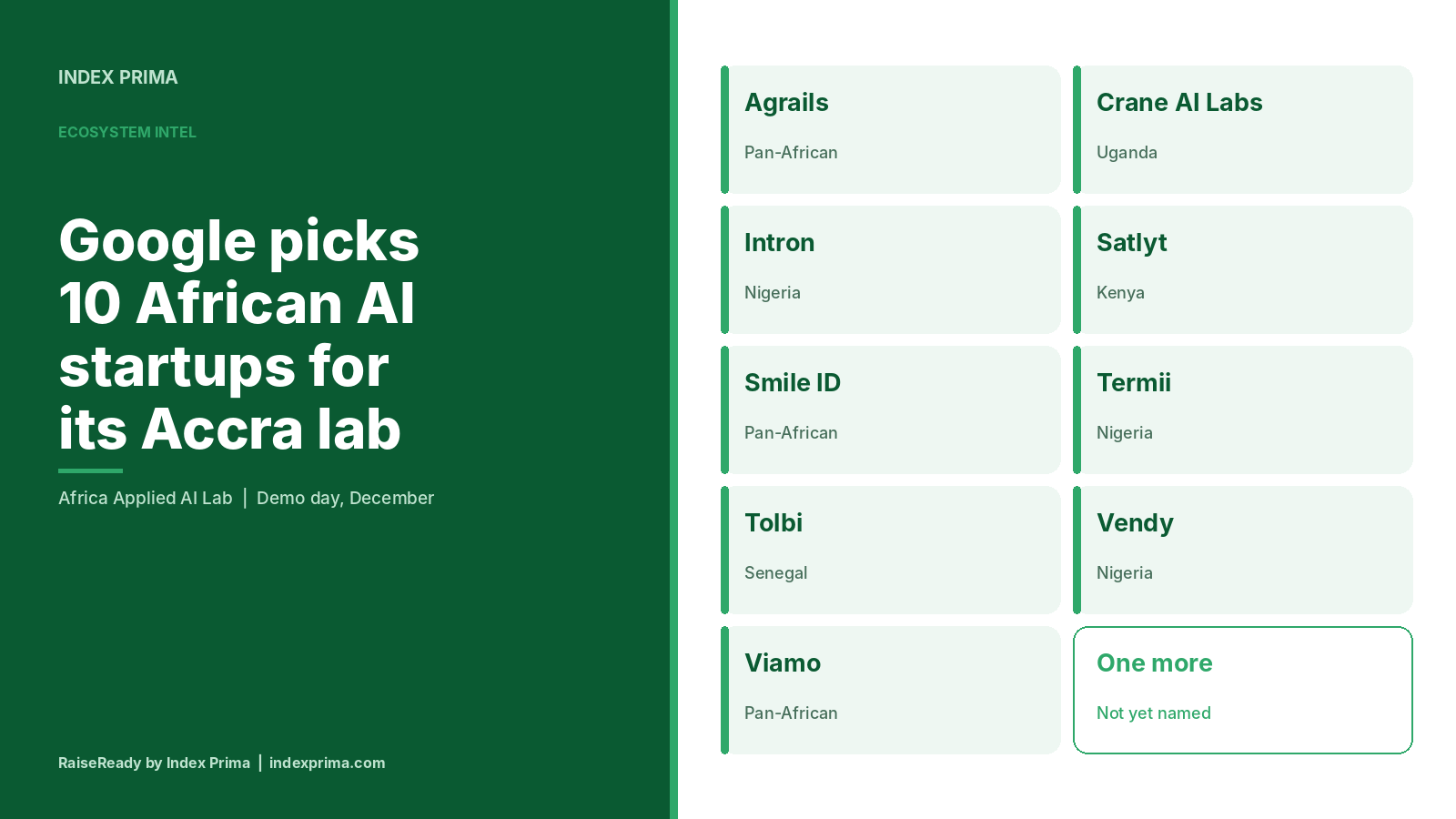
Satellites collect huge amounts of data, but sending all of it back to Earth is slow and costly. Satlyt, a space technology startup founded by Kenyan-American engineer Rama Afullo, wants to change that. On October 1, 2026, the company announced an $8 million seed round, which one Kenyan report converts to about KSh1.04 billion. The round was led by non sibi ventures. Other backers include TLCOM, Antler, Launch Africa Ventures, Enza Capital and Axian Investment. Several more funds and existing investors also took part.
The idea is simple. Satlyt does not build satellites. It builds software that lets a satellite process data and run AI programs on board. The satellite then sends back answers instead of raw files. Afullo likens it to an open “Android” next to SpaceX’s closed system. The longer goal is to link spacecraft from different operators into what the company calls virtual AI data centres in space. For now, the data centre idea is a goal. Coverage says current work focuses on computing inside single satellites, and a shared system across two satellites is planned for next year.
Afullo’s background is reported slightly differently. TechCrunch says he worked in Google’s cloud business and then had a brief stint at SpaceX’s Starlink in 2024. Several other outlets call him a former Google and SpaceX product manager. Antler’s founder story adds that he also worked at Tesla. He told TechCrunch he pitched the idea inside SpaceX and was turned down. Satlyt was founded in 2024, according to Space in Africa and other outlets.
What has the company actually shown? It says its software has flown on two demonstration missions. Earlier this year it ran Google DeepMind’s Gemma model on a Momentus spacecraft. Afullo says this cut the size of a transmission about onboard software errors by more than 60%. One outlet adds that telemetry data fell by up to 97%, but we found that figure in only one report. These results are the company’s own claims. No independent test has been published. Afullo also estimates savings of hundreds of thousands of dollars per satellite each year, which is an estimate, not a measured result.
The NASA and government links need careful reading. A Payload report says Satlyt won a NASA research contract worth $4 million. It covers new ways for space computers to cope with delays and weak links. Other reports confirm NASA is involved but give no amount. TechCrunch says NASA is paying Satlyt to test cloud computing methods in space, again with no figure. So the $4 million comes from one source, and we could not check it against NASA’s own records. The government deals need the same care. Satlyt signed a partnership with the Kenya Space Agency in April 2025. In June 2026 it signed an MoU with Angola’s national space programme office, GGPEN. Neither report discloses financial terms or says whether the deal is binding or commercial. Neither names a satellite or a deployment. These are signs of interest, not confirmed contracts or completed missions.
Launch day is the next real test. TechCrunch reported that Satlyt’s software was set to fly on a SpaceX rocket. It rides on a spacecraft built by Indian startup TakeMe2Space, next to the first prototype of Google’s Project Suncatcher. Customers on that mission include NASA, the surveillance startup Stellerian and TakeMe2Space itself. One outlet names the mission as Transporter-18. We found no report yet that the software reached orbit and ran well. Satlyt’s own announcement says launch and working in orbit are separate milestones.
Where does Africa fit in? The headquarters are in Sunnyvale, California, with a Nairobi base that holds a large share of the engineers, according to the funding announcement. Some older pieces describe the company as San Francisco-based. The leadership is described as Kenyan-American. So Satlyt is better called Kenyan-founded and US-based than a purely Kenyan company. For African founders, the useful lesson is the route taken: global investors, agency partnerships at home and a product that works on other companies’ hardware.
The money will go toward its virtual data centres, bigger engineering and customer teams, and more deployments on other operators’ spacecraft. Satlyt has not shared revenue, prices or contract values. Watch for the launch result, the two-satellite demo, paying customers beyond pilots, and whether the Kenya and Angola deals become funded projects.
Sources: Space in Africa on the seed round; Via Satellite; TechCrunch report, as reproduced by AIChief; Payload; The Condia; Innovation Village; Space in Africa on the GGPEN agreement; Space in Africa on the Kenya Space Agency partnership; Antler founder story.
A note for startup founders: Don’t practice on investors. Practice on AI first. RaiseReady by Index Prima is an AI fundraising simulator for African founders: upload your pitch deck, get a readiness score and face a tough AI investor before the real meeting. Find this post, and every post we publish, at raiseready.indexprima.com.