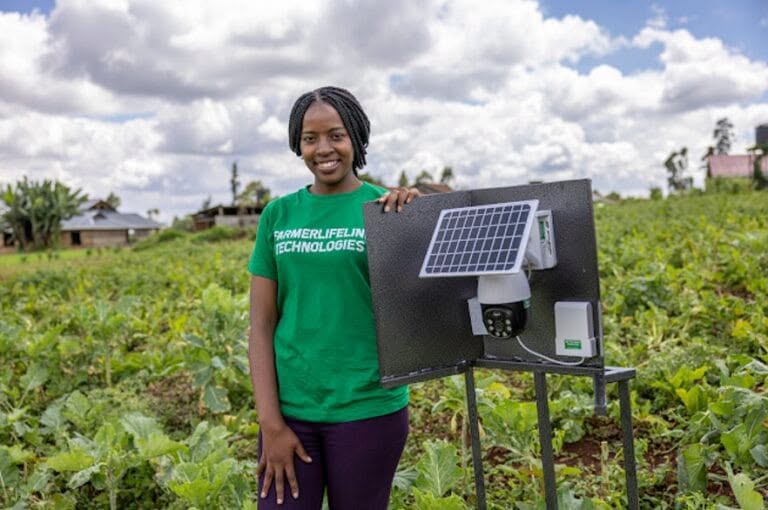
Kenyan agritech startup Farmerlifeline Technologies has won the third Innovate Africa Challenge and a $50,000 grant. The money will pay for six months of real-world use of its AI crop cameras.
Founded by Esther Kimani, the company installs solar-powered AI cameras in fields. They watch crops, spot pests and diseases early, and send farmers text alerts in local languages with advice on what to do. The challenge was run by Smart Africa with the United Nations Food and Agriculture Organization, or FAO, and drew 11 finalist teams from five countries.
Here is the win at a glance.
| Detail | What was reported |
|---|---|
| Winner. | Farmerlifeline Technologies, Kenya. |
| Prize. | $50,000 implementation grant. |
| What it funds. | A six-month deployment of the technology. |
| Finalists. | 11 teams from Ghana, Kenya, Malawi, Rwanda and Uganda. |
| Where they pitched. | A bootcamp and final session in Kigali, Rwanda. |
| Organisers. | Smart Africa and FAO, with support from Norad, Norway’s development agency. |
The point of the grant is to move from contest to field. The third edition ran under the theme “From Ideation to Deployment.” The rules asked for teams with solutions already tested through pilots or customer use, at an early funding stage. Smart Africa says the aim is to back AI tools that are ready for use at scale. The six-month period will test how the system performs in real farming conditions and whether it can reach more communities. The reports do not say which farms, regions or partners will host the rollout, and they do not name the other winners or runners-up.
How does the product work? A camera sits in the field and uses AI to watch for signs of pests and disease. When it spots a threat, the system sends an alert to the farmer, with treatment advice, so they can act before damage spreads. The company’s own website says customers can lease a device, buy one, or buy data reports. It also says its devices serve about 5,100 customers in four Kenyan counties, a figure we could not check from other sources.
The company has big goals. It says it wants to support 250,000 farmers in rural African communities by 2027. It also aims to raise farm productivity by at least 45% and to help those communities have safe and enough food all year. These are targets, not results. The six-month deployment is a chance to show what the technology does in the field.
This is not the company’s first time at the contest. Smart Africa’s page on an earlier edition, held in 2024, lists Farmer Lifeline Technologies among the top eight finalists. That year the winner was Strathmore Research and Consultancy Centre in Kenya, for an AI weather station, and the runner-up was NjordFrey of Rwanda. A second try that ends in a win is a good story for founders who lose a pitch and keep building.
Why does this kind of tool matter? Pests and plant diseases can ruin a harvest before a farmer sees the first sign. A camera that spots trouble early, and a text message in a language the farmer speaks, can turn a loss into a fix. Text works on basic phones, which many smallholder farmers use. That fits the contest’s focus on tools that work in places with weak internet.
Why it matters: Africa has no shortage of agritech pilots. What it lacks is money and partners to take proven tools into farms at scale. A $50,000 grant is small, but it is tied to a six-month real-world test, with backing from the FAO and Norad. If Farmerlifeline shows that its cameras and alerts help farmers save crops, it will be better placed to raise more and to work with governments. The test is whether the results show up in the fields, and not only on the stage in Kigali.
What to watch next: where the six-month deployment takes place and how many farmers it reaches. Watch for results, such as pests caught early, crops saved and yields. Watch whether the company’s claims about customers, counties and farmer numbers are backed by independent data. Watch whether the FAO, Smart Africa or national governments help it grow after the grant. Watch whether it raises more money. And watch who wins the next edition of the challenge.
Sources: African-Startups on Farmerlifeline Technologies winning the Innovate Africa Challenge grant; TechAfrica News on Farmerlifeline’s win; AgriFocus Africa on the third Innovate Africa Challenge; Smart Africa on the Innovate Africa Challenge; Farmerlifeline Technologies.
A note for startup founders: Don’t practice on investors. Practice on AI first. RaiseReady by Index Prima is an AI fundraising simulator for African founders: upload your pitch deck, get a readiness score and face a tough AI investor before the real meeting. Find this post, and every post we publish, at raiseready.indexprima.com.